About Vicia bithynica (L.) L.
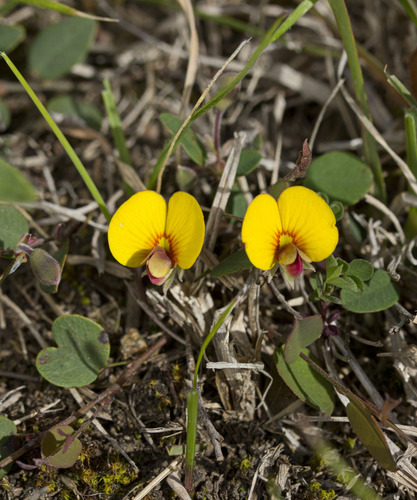
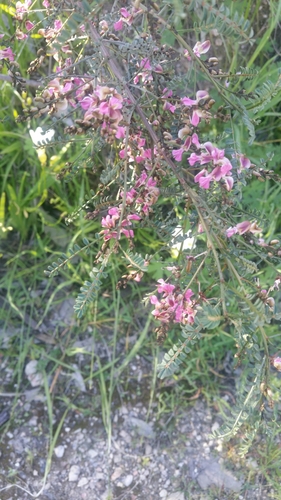
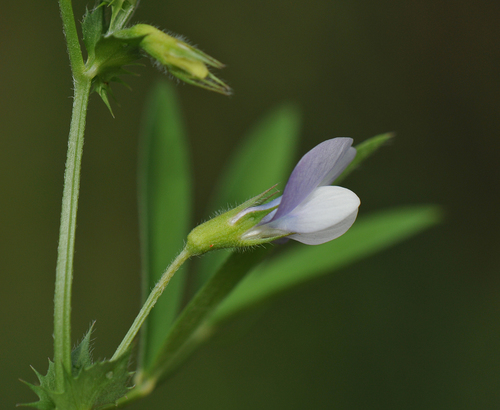
Vicia bithynica (L.) L. is an annual species with climbing stems that scramble or climb to around 60 cm in height. Its leaves grow alternately along the stem, reach up to roughly 9 cm long, bear 2–3 pairs of leaflets, and terminate in branched tendrils. The leaf petioles are 2 cm long, with a large, ovate, toothed stipule at the base. Flowers grow in pairs on 5 cm long peduncles that branch from leaf axils, though they may sometimes occur singly. The petals are purple and white, measure 2 cm long, and the flower structure includes 10 stamens and 1 style. The fruit is a hairy legume pod up to 5 cm long, containing 4 to 8 seeds. This species has 14 chromosomes. Vicia bithynica is not cultivated for consumption by humans or livestock. Its seeds contain high levels of vicine, which causes favism in susceptible individuals. Vicia bithynica is often described as occurring in woodland and scrub, but Bennett & Maxted reviewed habitat data from many herbarium specimens and concluded it is most common in calcareous grassland. Other sources describe it as an agricultural field weed. In Greece, it is a native therophyte found in dry scrub (phrygana) and grassland. In Britain, at the northern edge of its natural range, it grows in coastal undercliffs, the backs of beaches, bare ground, hedges, and old railway lines. Vicia bithynica is widespread across the Mediterranean region and Europe, ranging as far north as Scandinavia. Isolated populations exist in the Azores, United States, Australia, and New Zealand. It is common and considered native to Turkey, as it is to Malta, and becomes rarer moving further north. In Britain, it is classified as Vulnerable and is decreasing in abundance, but it receives protection in several Sites of Special Scientific Interest, including Sheppey Cliffs and Foreshore, and Swanscombe Peninsula.