About Viburnum prunifolium L.
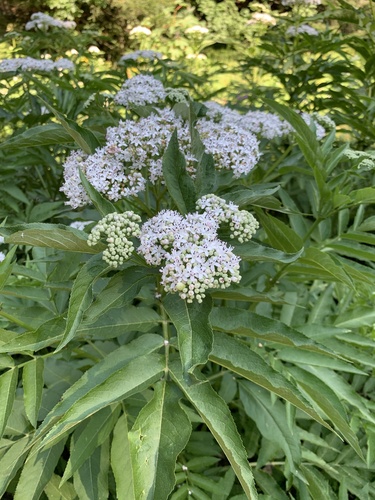
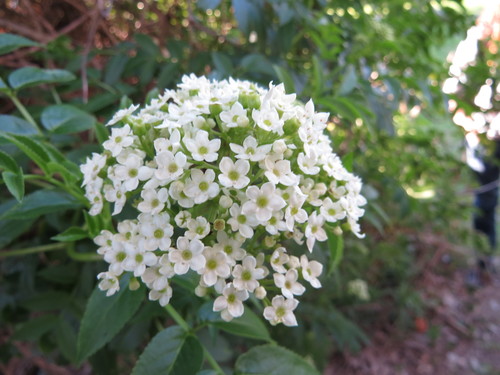
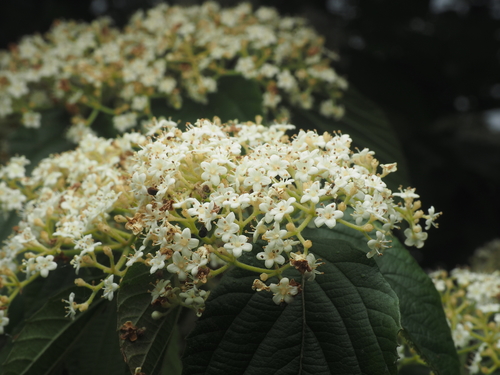
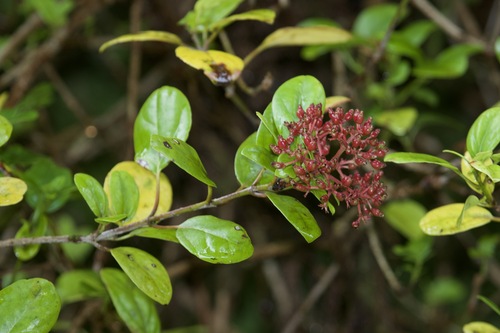
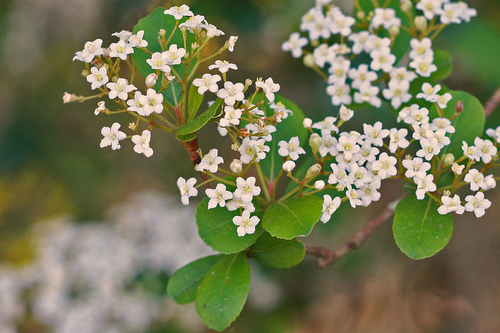
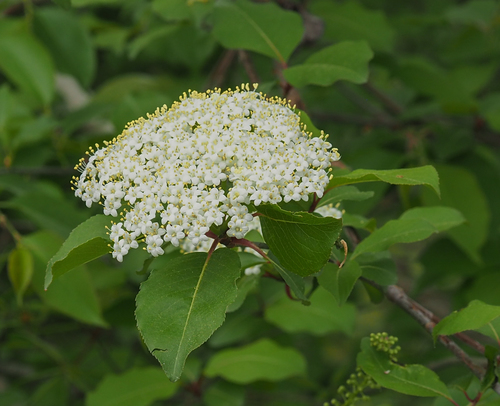
Viburnum prunifolium L., commonly known as black haw, has the following characteristics. Its flowers are creamy white, 9 mm in diameter. The calyx is urn-shaped, five-toothed, and persistent; the corolla is five-lobed with rounded lobes that are imbricate in bud. Five stamens alternate with the corolla lobes, with slender filaments, and pale yellow, oblong, two-celled anthers that open longitudinally. The ovary is inferior and one-celled, with a thick pale green style, a flat stigma, and a single ovule. Flowers grow in flat-topped cymes 10 cm in diameter, appearing from mid to late spring. The fruit is a 1 cm-long drupe that is dark blue-black with a glaucous bloom. It hangs on the plant through winter, becomes edible after frosting, and is eaten by birds. The fruit's stone is flat, smooth, and broadly oval. Black haw prefers sunny woodland with well-drained soil and adequate water wherever it grows.
Black haw contains salicin, a chemical relative of aspirin, like many other plants including common food plants and culinary herbs. People who are allergic to aspirin should not use black haw. Additionally, because of the link between aspirin and Reye syndrome, young people and people with viral diseases should not use this plant. The chemicals in black haw relax the uterus and so may prevent miscarriage, but salicin may be teratogenic. For this reason, pregnant women should not use black haw in the first two trimesters, even though it has traditionally been used to prevent miscarriage. Furthermore, anyone using herbs for medical purposes should only do so under the supervision of a qualified medical professional. Black haw is not included on the U.S. Food and Drug Administration (FDA) "generally recognized as safe" list.
Black haw has both ornamental value for pleasure gardens, providing attractive fall color and early winter food for birds, and documented medicinal properties. It has hybridized with Viburnum lentago in cultivation to produce the garden hybrid Viburnum × jackii. Its wood is brown tinged with red, heavy, hard, and close-grained, with a specific gravity of 0.8332.
The Meskwaki people eat the fruit of black haw raw, and also cook it into jam. For centuries, black haw has been used for medicinal purposes, primarily to treat gynecological conditions. The bark of the plant is the part used for treatments. Active chemical components include scopoletin, aesculetin, salicin, 1-methyl-2,3 dibutyl hemimellitate, and viburnin; tannin is also a component. Native Americans used a decoction of black haw to treat gynecological conditions such as menstrual cramps, to aid recovery after childbirth, and to treat symptoms of menopause. As a folk remedy, it has been used to treat menstrual pain and morning sickness. Due to its antispasmodic properties, the plant may also be useful for treating cramps of the digestive tract or bile ducts. Historically, black haw's primary use was to prevent miscarriages; today, its primary use is to prevent menstrual cramps. The salicin content in black haw may also be useful for pain relief.