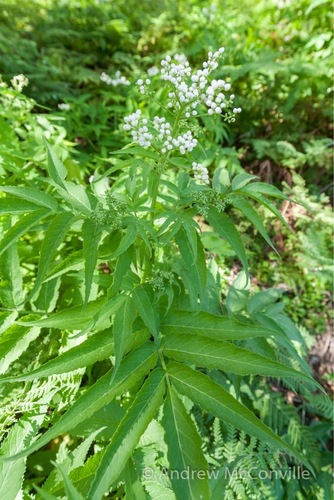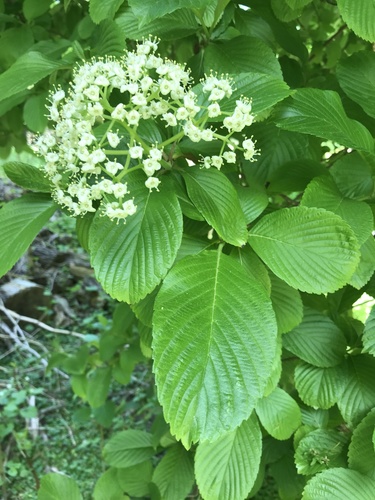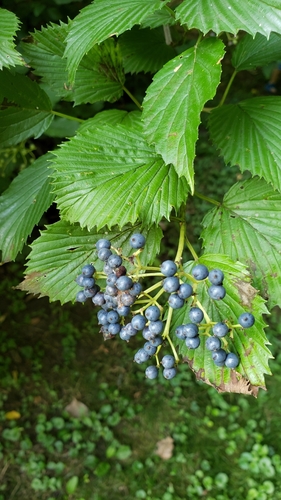
About Viburnum dentatum L.
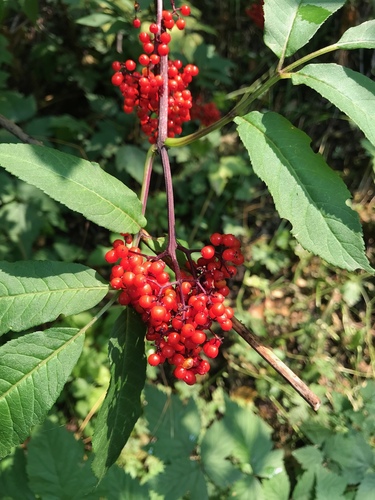
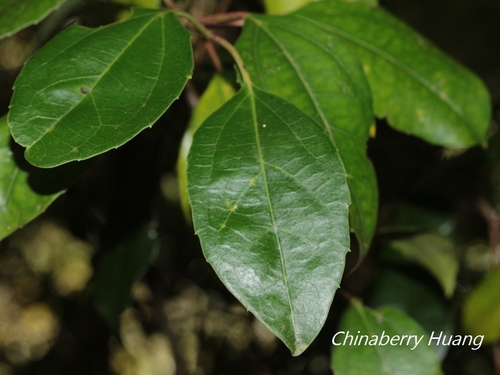
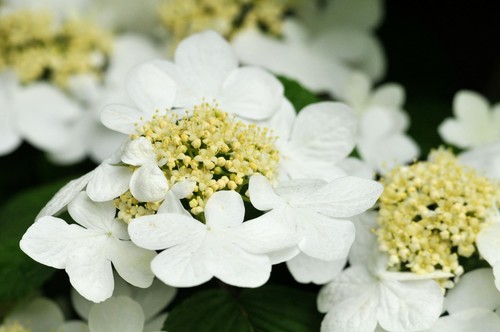
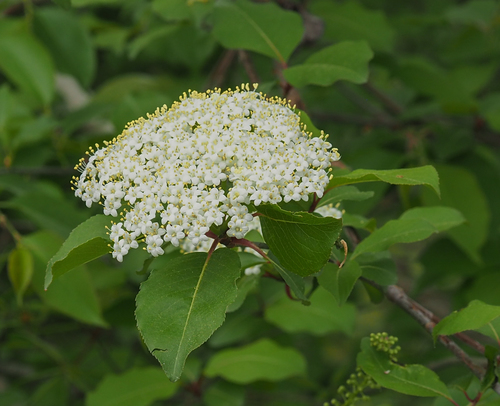
Viburnum dentatum L., commonly known as southern arrowwood, arrowwood viburnum, or roughish arrowwood, is a small shrub native to eastern United States and Canada, ranging from Maine south to northern Florida and east to eastern Texas. Like most species in the Viburnum genus, it bears opposite, simple leaves and produces fruit in the form of berry-like drupes. Its foliage changes color from yellow to red in late fall. Localized variations of this species are common across its entire native geographic range. Frequent differences between variations include leaf size, leaf shape, and the location of fine hairs on leaf undersides and petioles. V. dentatum grows in a variety of habitat types, including upland mixed woodlands, mesic pine-oak woods, hardwood hammocks, and floodplains. The larvae of some moth species feed on V. dentatum; known species that do this include the unsated sallow (also called arrowwood sallow, scientific name Metaxaglaea inulta) and Phyllonorycter viburnella. It is also eaten by the viburnum leaf beetle (Pyrrhalta viburni), an invasive species originating from Eurasia. The shrub's fruits are a food source for songbirds. Its berries are 41.3% fat by content, and have a blue appearance. The major pigments present in the fruit are cyanidin 3-glucoside, cyanidin 3-sambubioside, and cyanidin 3-vicianoside, though the total mixture of pigments is very complex. Historically, Native Americans used the young stems of V. dentatum to make arrow shafts.