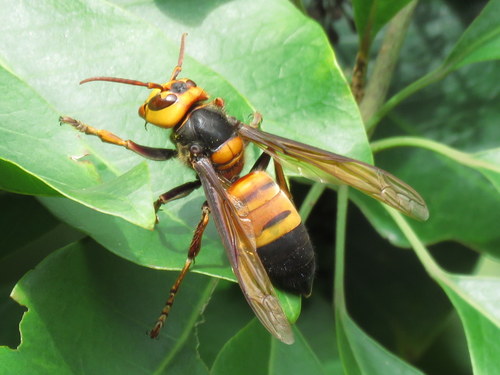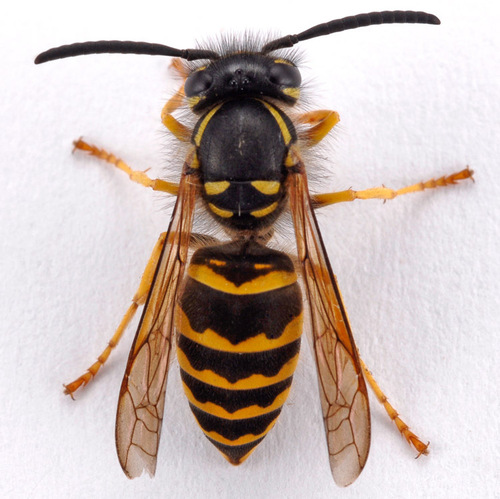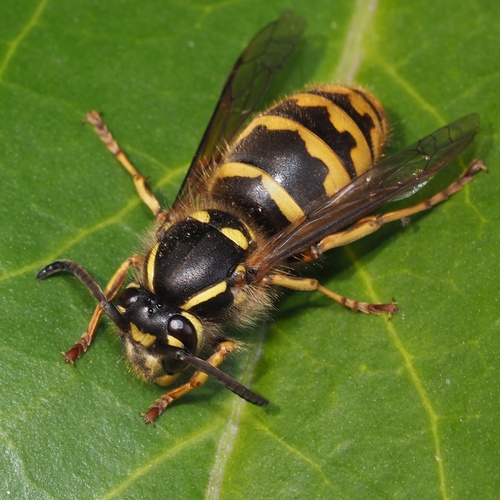
About Vespula vulgaris (Linnaeus, 1758)
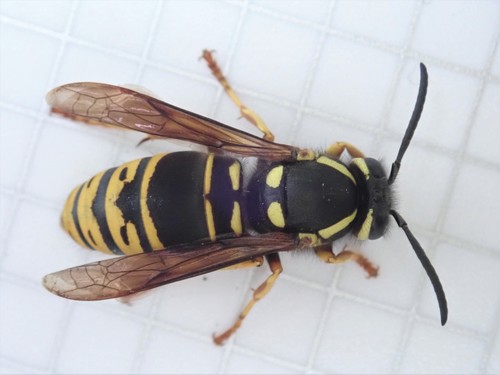
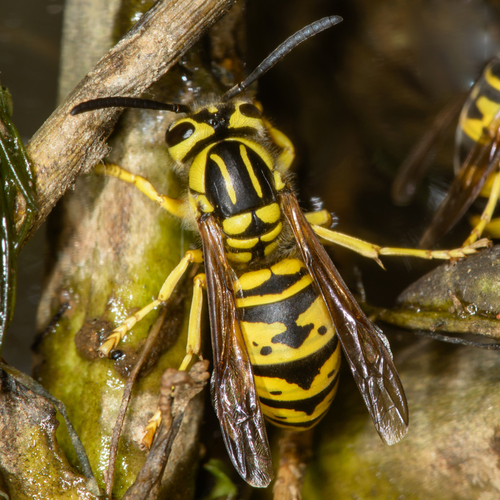
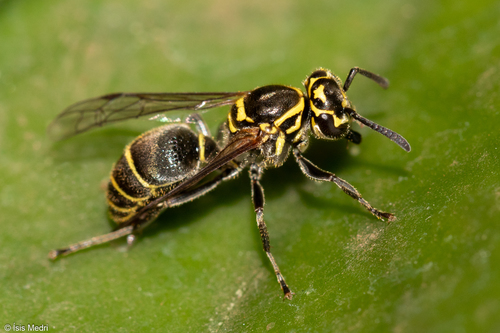
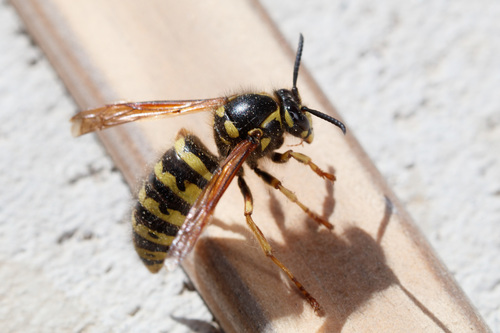
Description and identification Adult worker Vespula vulgaris measure 12–17 mm (0.5–0.7 in) from head to the tip of the abdomen, with an average weight of 84.1 ± 19.0 mg. Mature queens measure around 20 mm (0.8 in) in length. The species has aposematic black and yellow colouring, with almost parallel yellow bands on the pronotum and black dots and rings on the abdomen. Queens and workers look very similar to Vespula germanica, but the two can be distinguished when viewed head-on: V. vulgaris lack the three black dots found on the face of V. germanica. Instead, V. vulgaris queens and workers each have a single black mark on the clypeus, which is typically shaped like an anchor or dagger. Identification can still be difficult, because this clypeal black mark sometimes appears broken, which makes the species look very similar to V. germanica again. It is best practice to use multiple identifying characteristics, and to consult experts if you have any doubt about identification. Males are even more difficult to distinguish from males of closely related species. Male V. vulgaris cannot be confidently identified with the naked eye; the only reliable way to confirm an identification is to examine the distinct shape of the aedeagus tip and the lateral processes of the male's genitalia.
Distribution and habitat V. vulgaris is native to the Palearctic realm. It has been found across a wide range of countries, including the United Kingdom, Germany, India, and China. It is an invasive species in New Zealand, Australia, and South America. Before 2010, V. vulgaris was thought to also be present in North America, but both molecular and morphological data showed that specimens previously identified as V. vulgaris in North America were actually Vespula alascensis. Vespula alascensis was previously considered a taxonomic synonym of V. vulgaris, but is now recognized as a separate species.
V. vulgaris is highly adaptable to different environments, and thrives in most habitat types, including prairies, grasslands, natural and planted forests, and shrublands. It also lives successfully in urban areas, including gardens, orchards, and buildings. It requires moderately warm temperatures, because its foraging activity depends on temperature and only occurs when temperatures are above 2 °C (36 °F).