About Vespula squamosa (Drury, 1770)
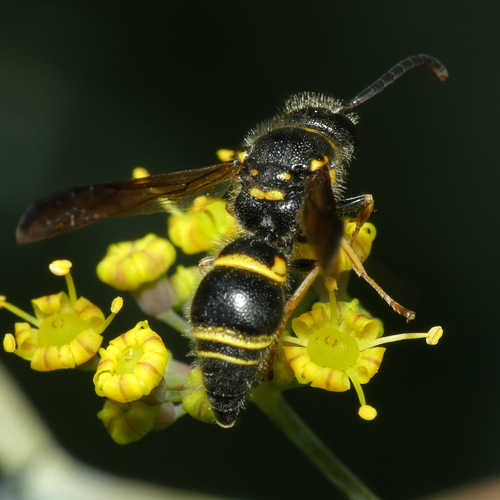
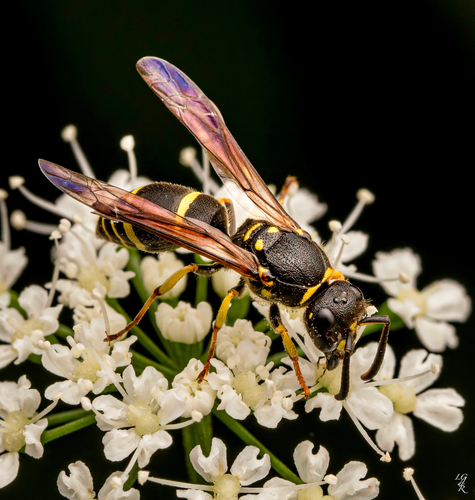
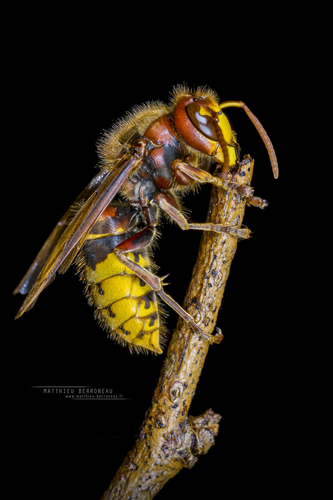
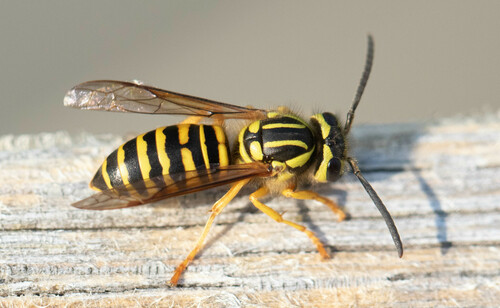
Vespula squamosa, commonly called the southern yellowjacket, is typically around 0.5 inches (1.3 cm) long. It can be identified by a black body with yellow striping across its entire body, clear wings, and a hairless body. Males and workers resemble other yellowjacket species, but the queen has a distinct appearance: she is significantly larger than males and workers, and her body is more orange in color. Both Vespula squamosa and Vespula sulphurea have two stripes on their scuta, which sets these two species apart from other Vespula species. Southern yellowjackets are generally distributed across the eastern United States, ranging south into Mexico and Guatemala, west as far as Texas, and east to the Atlantic Ocean. Their habitats are generally located in regions with fairly warm weather, and sometimes tropical climates. Nests of this species are most commonly found in human-altered unnatural habitats such as yards, parks, and roadsides, though some colonies occur in pine forests. Vespula squamosa has a parasitic relationship with Vespula maculifrons, and this relationship can allow V. squamosa colonies to form in hardwood forests, the typical habitat of V. maculifrons. Most Vespula squamosa nests are built underground, but some nests are found above ground or inside building walls, often near existing Vespula maculifrons nests.