About Vespula rufa (Linnaeus, 1758)
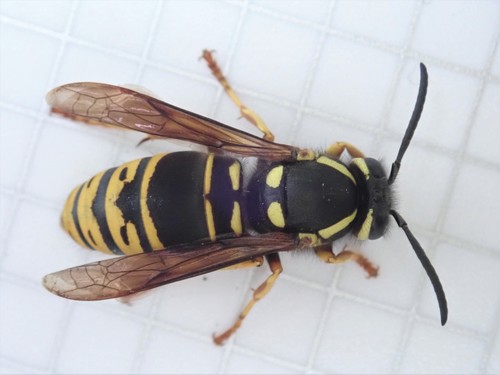
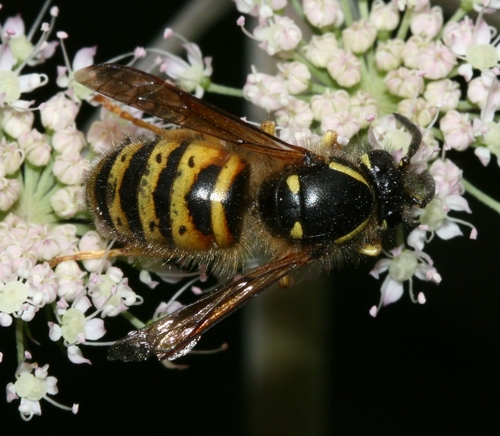
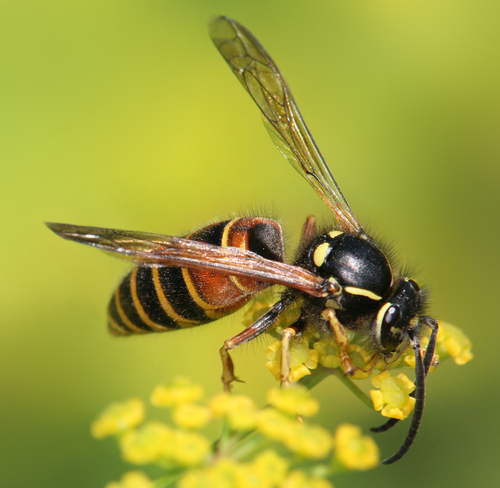
Vespula rufa (Linnaeus, 1758), the red wasp, can be identified by the reddish-brown markings on its back. For specimens of this species with reduced abdominal spots, the relevant tissue is segmented into three parts and has four "anteriorly directed lobes." This species has three main types of color patterns. It lacks the long yellow lines found on V. squamosa and V. sulphurea. Workers and queens of Vespula rufa differ in their color patterns, even though their basic color scheme is the same. Workers have more extensive black coloration, and less yellow or white, than queens, meaning queens display more yellow color than workers. In workers, the yellow tissue of the abdominal segment is thin and divided into three sections, while the yellow tissue segments in queens are larger. In queens, lateral divisions turn into black spots. However, this pattern is not consistent: workers often have their divisions replaced by black spots, and queens occasionally have the less patterned appearance typical of workers. Differences in color pattern correspond to body size: larger workers tend to be more colored, while smaller workers tend to be less colored. Fore wing length varies by caste and sex: workers have the smallest fore wings, at 10.0-11.0 mm, followed by males at 11.0-12.0 mm, and females have the longest fore wings at 12.5-13.0 mm. Vespula rufa is found in the Palearctic realm and the northern parts of North America. Confirmed locations with this species include England, Ireland, the Netherlands, Russia, Turkey, Mongolia, and China. This is a common wasp species. In general, Vespula rufa builds its nests below ground, often in cavities or along the underside of a roof. Its nests are most often found underground near the surface of dry banks. Nests are constructed from mineral soil and leaf litter in shaded environments. They may also be built using old tree remains and tree roots.