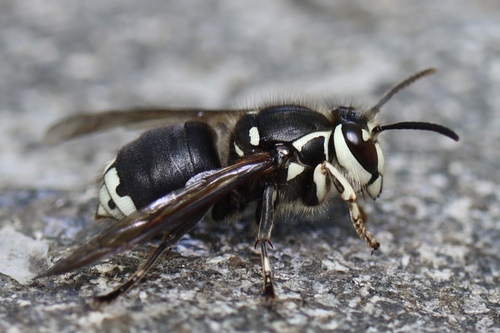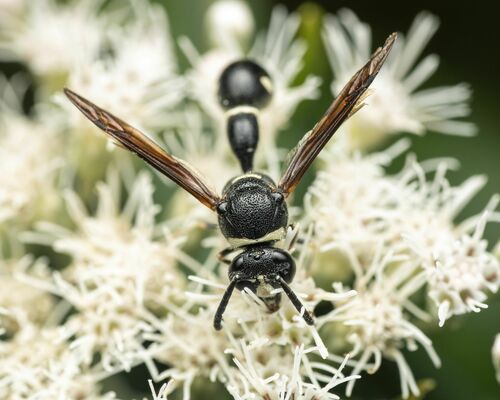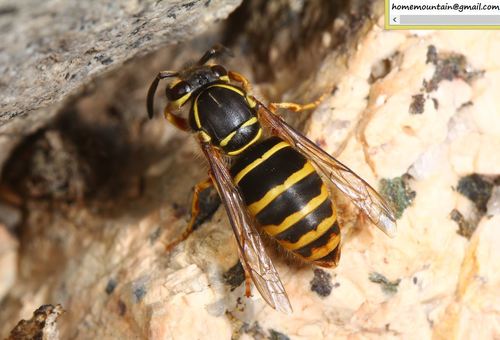
About Vespula flaviceps (Smith, 1870)
Vespula flaviceps (Smith, 1870) is a species of social wasp belonging to the genus Vespula. Studies suggest that queens of this species may mate with multiple males and use sperm more evenly, though the reason for this behavior is not yet well understood. It is native to Eastern Asia and Japan. It occurs most prominently on the Japanese Islands, and is also present in South Korea and the southern part of Primorsky Krai. Its populations may be threatened by invasive raccoons, which prey on it during summer and autumn. This wasp lives in forests. During a two-year study conducted in Japan, Vespula flaviceps was observed to be one of the predominant species in the natural deciduous forests of northern Kanto. In 2001, it was officially recorded as a predominant species in this area; along with two other species, it made up 91% of all social wasps caught in a sampled forest. However, when attracted with a different bait, this species was found to be far less abundant than Vespa species. Vespula flaviceps is popularly used as food in Central Japan. All life stages of the wasp are consumed, but its larvae are considered a special delicacy. Small colonies may be collected and relocated into artificial hives near human dwellings to be harvested for food. Humans sometimes even shelter these colonies over winter, which benefits both people and the wasps, as cold protection greatly improves the wasps' survival chances. In some regions of Japan, Vespula flaviceps is served in a dish with rice. In the Chubu area, which includes Nagano, Gifu, and Aichi, a dish of larvae prepared with rice is considered a delicacy, eaten during special events especially autumn festivals. Vespula flaviceps can be prepared cooked, fried, or pickled. Larvae and pupae are often taken from nests and seasoned with soy sauce, sugar, and artificial seasonings. In recent years, collection of this species for food within Japan has decreased, while importation from Korea has increased.