About Vespula atropilosa (Sladen, 1918)
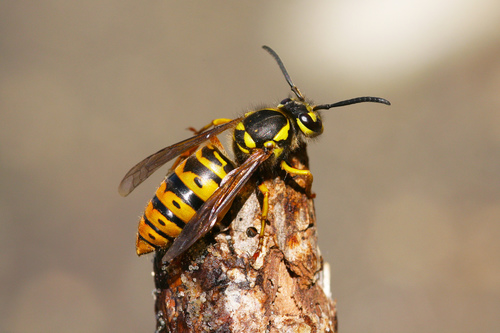
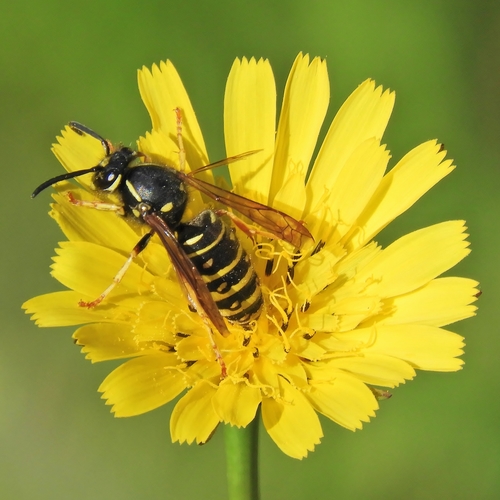
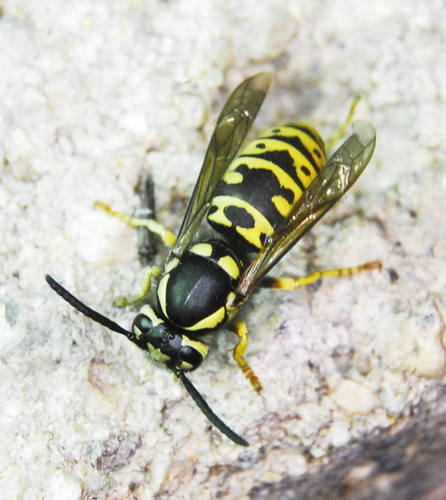
Vespula atropilosa, first described by Sladen in 1918, is a black and yellow wasp that grows to between 10 and 15 mm in total length. In some regions, males of this species display two distinct abdominal color patterns: a xanthic pattern with less black than yellow, and a melanic pattern with less yellow than black. Key features of the head include a malar (zygomatic) space that is less than half the length of the penultimate antenna segment, an incomplete occipital carina, and a two-toned scape: the ventral portion is yellow, while the dorsal portion is black. For the rest of the body, the metasomal tergites are covered in long, straight hair. The black central region at the apex of the second gastral tergum is pointed, and the male aedeagus is shaped like a saddle. This wasp occurs in western North America, across Canada and the United States. Its range covers the Western and Midwestern United States, extending from Seattle south to Arizona, and reaches as far east as Wisconsin and Illinois. In southern Canada, it can be found in the provinces of Alberta and British Columbia. It lives primarily in prairie and grassland habitats.