About Vesperus luridus (Rossi, 1794)
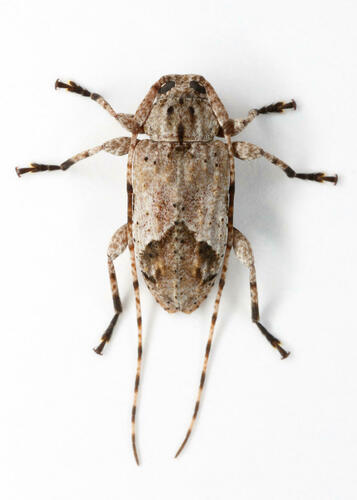
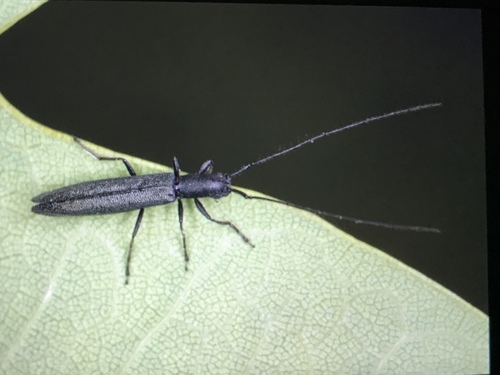
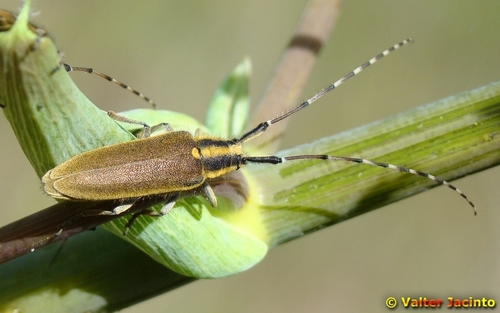
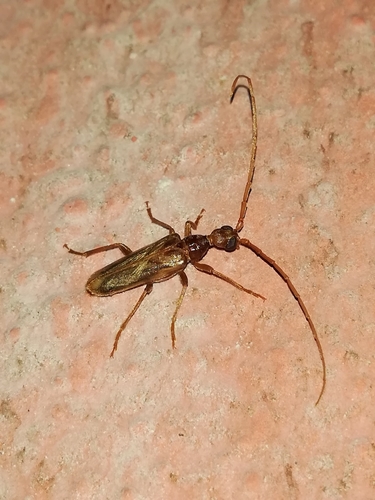
Vesperus luridus (Rossi, 1794) exhibits clear sexual dimorphism in body size and traits. Males have a body length from the front to the elytral apex of 12–18 millimeters (0.47–0.71 inches), while females reach 16–22 millimeters (0.63–0.87 inches). The body is slender, and elytra are elongated. The basic body coloration is brownish or yellowish diaphanous, and both sexes share the same color. Males are smaller, have functional wings, fully elytra-covered abdomens, and much longer antennae than females. In contrast, females are larger, have greatly reduced wings (brachyptery), and display a swollen abdomen (physogastrism) that holds enlarged ovaries. Their elytra only partially cover the large abdomen, leaving abdominal tergites visible. Adults of this species are nocturnal, and can be found from late summer to autumn. Flying males become active at dusk and are attracted to artificial light. The larvae of these beetles have specific adaptations for living underground. They feature unusual larval hypermetamorphosis, with polymorphic larval instars. Larvae are polyphagous, but primarily feed on Grape-vine (Vitis vinifera) and Common Olive (Olea europaea). They are considered harmful to grape cultivation, because they dig tunnels into grapevine roots. This species occurs in Croatia, France, Italy (including the islands of Sardinia and Sicily), Kosovo, Montenegro, Serbia, and Voivodina.