About Veronica montana L.
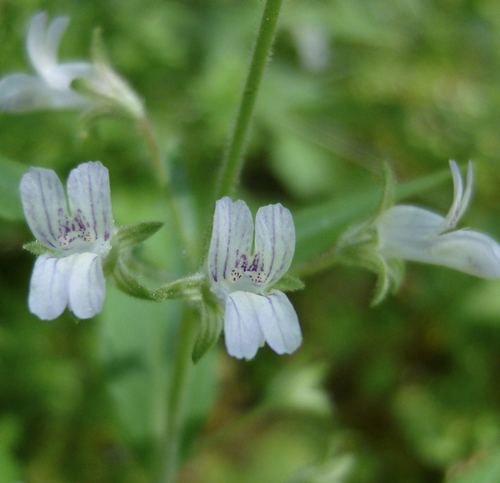
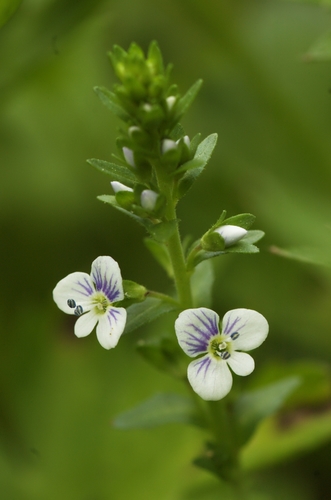
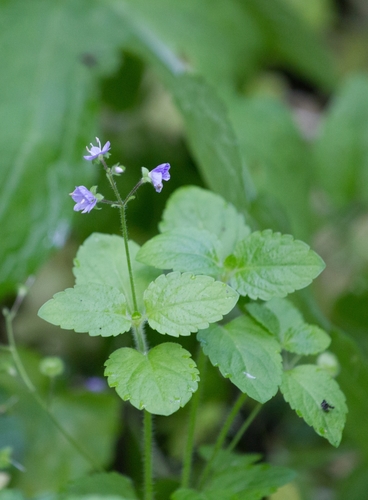
Veronica montana L. is a perennial plant that grows up to 20 cm tall. It has a sprawling growth habit that lets it spread across the forest floor. Its stems are covered in tiny, soft glandular hairs, and stems that come into contact with damp soil can develop roots. The leaves are ovate, toothed, also covered in hairs, and grow in symmetrical pairs along the stem. This plant produces multiple lilac-coloured flowers from late spring to early summer; the flowers are quite small, measuring around 7 mm across. Photographic examples of this species can be viewed on iNaturalist. It has two similar species: Veronica chamaedrys has duller, hairier, narrower leaves that are usually almost unstalked, and its stem hairs are typically concentrated in two lines; Veronica persica has solitary flowers that emerge from the stem alongside leaf stalks. The native range of this species stretches from Europe to Western Transcaucasus, and also includes Northwestern Africa. Confirmed native occurrences are recorded in Albania, Algeria, Austria, the Baltic states, Belarus, Belgium, Bulgaria, Corsica, the Czech Republic, Denmark, France, Germany, Great Britain, Greece, Hungary, Ireland, Italy, the Netherlands, North Caucasus, Poland, Portugal, Romania, Sicily, Slovakia, Spain, Sweden, Switzerland, South Caucasus, Tunisia, Turkey, Ukraine, and Yugoslavia. This species, commonly called wood speedwell, is most often associated with long-established, damp deciduous woodland, and is generally found in lowland habitats. It grows in areas with neutral to mildly acidic soils, and can also be found in shaded hedgerows, and occasionally spreads into gardens. It tolerates a wide range of soil substrates, including loam, heavy clay, and sandy soils.