About Verbena officinalis L.
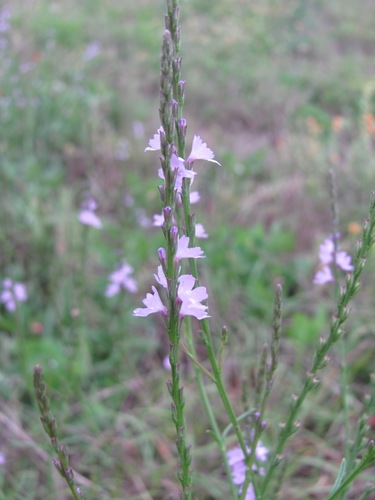
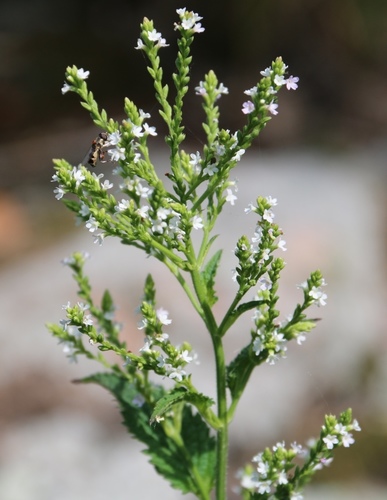
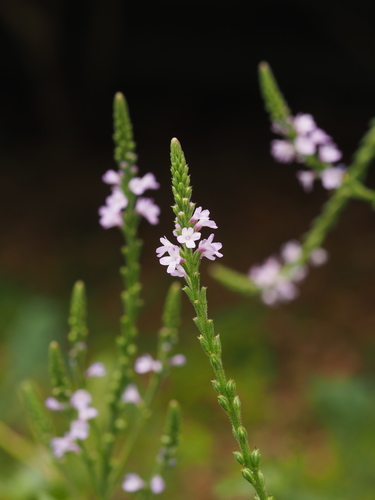
Verbena officinalis L., commonly known as common vervain or common verbena, is a perennial herb native to Europe. It has an upright growth habit and reaches up to 70 cm (28 inches) in height. Its leaves are lobed and toothed, and delicate spikes hold clusters of two-lipped mauve flowers. This species prefers limey soils. It is occasionally grown as an ornamental plant, but more often cultivated for the potent properties some herbalists claim it has. It can be propagated by either root cuttings or seed, and is widely naturalized outside its native range, including in North America. Common vervain has held an elevated status since classical antiquity. It has long been linked to divine and other supernatural forces, and also has an equally long history of use as a medicinal plant. Herbal capsules made from this plant are used as a soporific, in the same way as the better-known valerian. In traditional Austrian medicine, the herb of Verbena officinalis is used internally as tea or liqueur to treat infections and fever. Medical use of common vervain most commonly takes the form of herbal tea, and Nicholas Culpeper’s 1652 work The English Physitian discusses its folk uses. "Vervain", almost certainly referring to this species, is one of the original 38 Bach flower remedies, prescribed to address over-enthusiasm. In modern times, it is sometimes considered a powerful aid for poets and writers, as its relaxing effects can help relieve writer’s block. Use of this plant is not considered safe during pregnancy, because it may trigger miscarriages. While common vervain is not native to North America, it has been introduced to the continent, and the Pawnee people have adopted it for use as an entheogen enhancer and in oneiromancy. It is often referred to as the North American version of Calea zacatechichi. In western Eurasia, the terms "verbena" and "vervenain" usually refer to this species, which is the most widespread and common member of the mostly American Verbena genus growing in the region. In Ancient Egypt, it was called "tears of Isis", and later became known as "Juno's tears". In Ancient Greece, it was dedicated to Eos Erigineia. In early medieval Europe, some accounts record that common vervain was used to staunch Jesus’ wounds after his body was removed from the cross, leading to names like "Holy Herb" or (in Wales) "Devil's bane". Due to its association with the Passion of Christ, it became an ingredient in ointments used to drive out and repel what were described as demonic illnesses. Vervain flowers are engraved on cimaruta, which are Italian anti-stregheria charms. In the 1870 work The History and Practice of Magic by "Paul Christian" (Jean-Baptiste Pitois), common vervain is used to prepare a mandragora charm. Two British Royal Navy vessels were named after this plant: a World War I-era Arabis-class sloop called HMS Verbena, and a World War II Group 1 Flower-class corvette that shared the same name. Another World War II Group 2 Flower-class corvette was named HMS Vervain. Common vervain is the only Verbena species that is widely found as a native plant in England, though it remains possible that the vessel names reference popular ornamental verbenas such as garden vervain.