About Verbascum blattaria L.
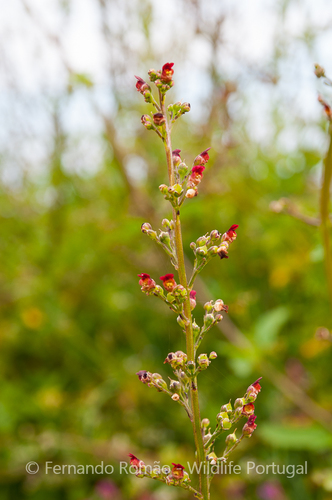
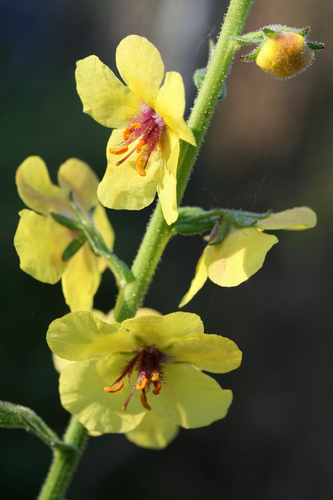
Verbascum blattaria L., commonly called moth mullein, is a biennial plant. In its first year after germination, it produces a basal rosette of leaves, with an extremely short stem. Rosette leaves are oblanceolate with deeply toothed edges, attached to the stem by short petioles. The full rosette can reach 16 inches (41 cm) in diameter, with individual leaves growing up to 8 inches (20 cm) long. This species forms a fibrous root system with a deep taproot. In its second growing year, it produces a slender, erect unbranched flowering stem that reaches 1 1/2 to 3 feet (1/2 to 1 meter) in height. Leaves grow alternately directly from this stem; they are similar to rosette leaves but smaller, elliptical with shallowly toothed edges and sharply pointed tips, growing up to 5 inches (13 cm) long. Both rosette and stem leaves are dark green and glabrous, or hairless. Flowers form on a loose raceme in the second growing year, with each flower attached individually to the stem by a pedicel that is typically less than 1 inch (2.5 cm) long. Each flower has five petals and five anther-bearing stamens, and reaches 1 inch (25 mm) in diameter. Flowers may be yellow or white, usually with a faint purple tinge. The stamens are orange, covered in purple hairs that resemble moth antennae. Flowering occurs between June and October of the second year. After flowering, the plant produces a small, simple spherical fruit that is less than 0.5 inches (13 mm) in diameter, dark brown, and holds numerous dark brown seeds. The fruit develops, matures, and drops from the plant all within the second year of growth. In some regions, finches are known to eat and distribute the plant's seeds. Moth mullein is native to Europe, Asia, and North Africa, and has become naturalized across most of North America following its introduction. It was first recorded in Pennsylvania in 1818, and in Michigan in 1840. It has since been found in nearly all of the continental United States, as well as southern Canada and Hawaii. It grows most abundantly along the East Coast of the United States. While it occupies a wide range of habitats, it is most commonly found in open areas including pastures and meadows, and can also grow in open woods. It prefers rich soils, but tolerates dry, sandy, and even gravelly soils. Moth mullein does not have a long history of widespread use even in folk medicine. However, a 1974 study found that when Aedes aegypti mosquito larvae were exposed to a methanol extract of the plant, at least 53% of the larvae were killed. It has also long been recognized as an effective cockroach repellent, and its specific epithet blattaria comes from blatta, the Latin word for cockroach.