About Veltheimia capensis (L.) Redouté
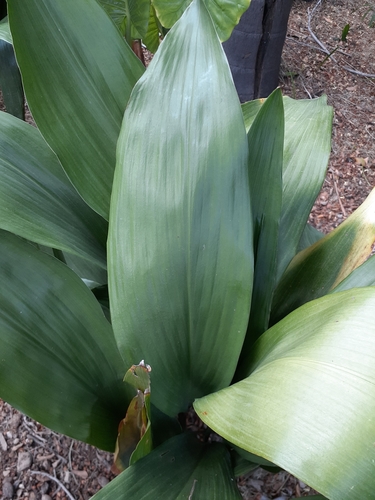
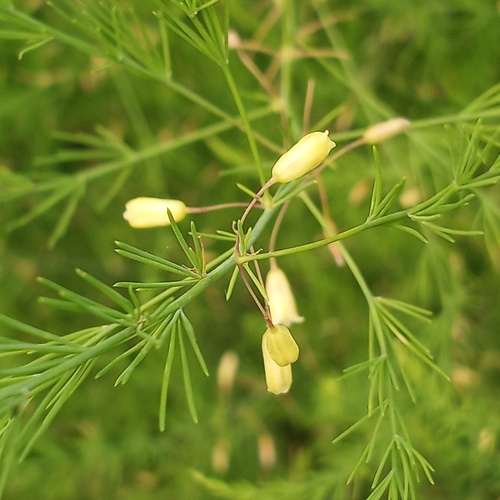
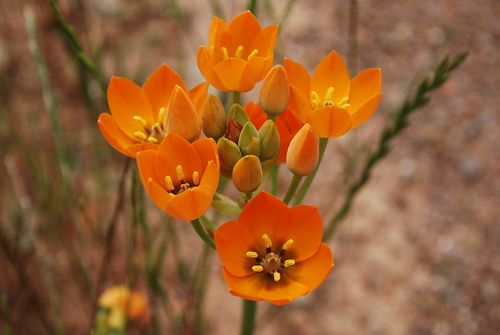
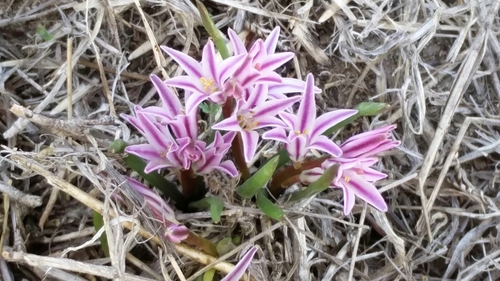
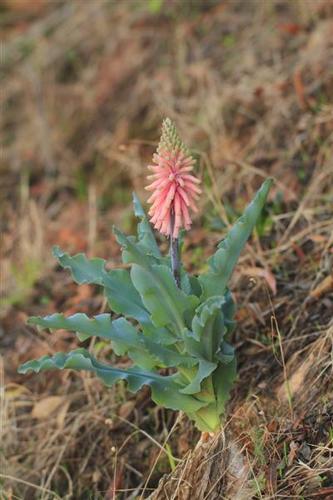
Veltheimia capensis (L.) Redouté has narrowly lance-shaped, thick, bluish-green leaves. The average leaf measures 30 cm (12 in) long and 4 cm (1.6 in) across. Leaves stay bluish-green through spring, summer, and autumn, and grow in a whorled arrangement around the stem. Its stems are also thick, green with hints of purple. The plant's most distinctive feature is its flower arrangement. It produces flower rosettes arranged in a pendent-shaped raceme inflorescence. Individual flowers are tubular, averaging 2–3 cm (~1 in) long. Flower color ranges from white with red spots to pink with green or red markings, and it generally flowers in spring and early summer. V. capensis grows naturally in the dry, arid climate of the northern Western Province in south-western South Africa. Its native range covers the rocky slopes of Namaqualand and extends into parts of the Little Karoo. This species germinates best at 19–24 °C (66–75 °F), but can also grow at temperatures as low as 5–7 °C (41–45 °F). It prefers moderately fertile, well-drained soil with a pH between 5.5 and 7.5. Suitable soil textures for growth include clay loam, loam, loamy sand, sandy clay loam, and sandy loam. V. capensis is valued as a drought-resistant ornamental plant. Because it cannot tolerate temperatures below 5–7 °C (41–45 °F), it must be grown under glass in temperate regions. It has received the Royal Horticultural Society's Award of Garden Merit.