About Vasconcellea pubescens A.DC.
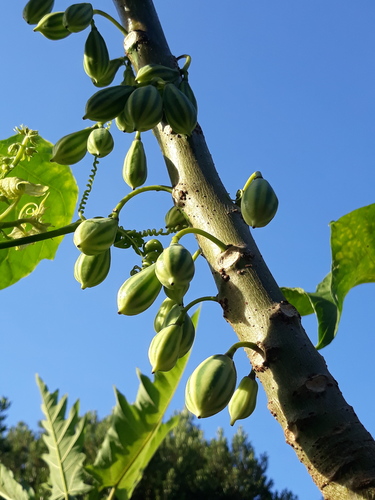
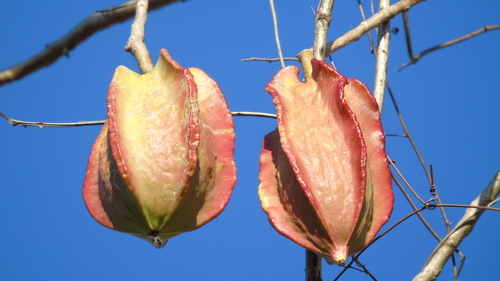
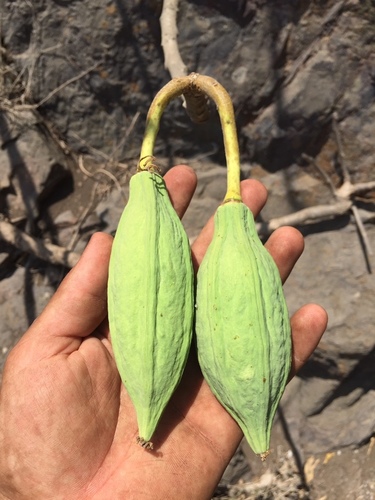
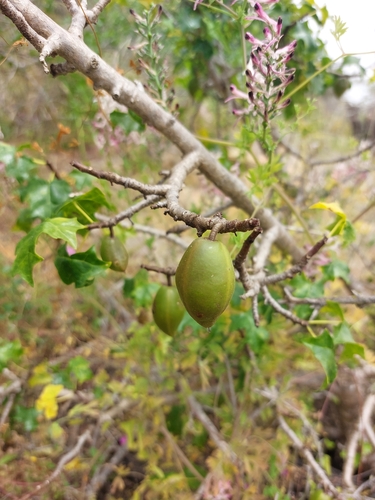
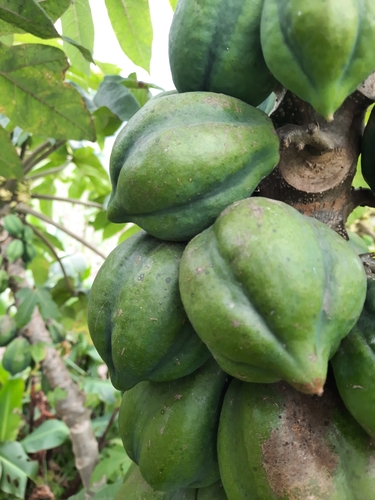
Vasconcellea pubescens is an evergreen pachycaul shrub or small tree. It averages around 5 metres (16 ft) tall, and can grow up to 10 metres (33 ft) tall. It has one central stem and 5-7 lobed palmate leaves. Thick pubescence is present on the underside of each leaf and the petiole; petioles are long, and the upper surface of the leaf has no pubescence. This species grows quickly, which is why it is considered invasive in some regions, and it ecologically prefers higher altitudes. Most plants are dioecious, but monoecious and even andromonoecious individuals can occur. The presence of different flower sexes appears to depend on the season. Fruits grow in a spiral arrangement along the trunk, and a single tree can produce 50 to 60 fruits per year. Each fruit measures 6–15 centimetres (2.4–5.9 in) long and 3–8 centimetres (1.2–3.1 in) broad, with five broad longitudinal ribs running from the base to the apex. Unripe fruits are green, and mature to yellow or orange. The fruit pulp is edible, similar to papaya; it is usually cooked as a vegetable, but is also eaten raw. In cultivation, this plant grows across a temperature range of 10–28 °C (50–82 °F), and prefers an average temperature of 17 °C (63 °F). V. pubescens is sensitive to cold: when temperatures drop below 2 °C (36 °F), stem and leaf damage can occur, and the entire plant may die. It is still more cold tolerant than common papaya. Mountain papaya requires well-drained soil. Well-established plants can tolerate prolonged drought, but younger, smaller plants cannot tolerate drought. The preferred soil pH range is 6.5 to 7, but it can tolerate pH between 4.5 and 8.4. The mountain papaya fruit is most often eaten cooked, though some people eat it raw. Its pulp is naturally sourish, so it is commonly sweetened with sugar, or used in preserves, jams, juices, and ice creams. It can also be added to soups and stews to add rich, fruity flavor. The fruit's strong, fruity aroma is considered one of its most important attributes, caused by complex volatile compounds in the flesh. The papain enzyme found in the milky latex of immature fruits and leaves is often used in the culinary industry as a meat tenderizer, since it is a digestive enzyme. Traditionally, mountain papaya fruit is also made into an infused drink alongside passion fruit, apple, and other fruits, often sold by street vendors. Mountain papaya fruit has high potential for commercial use in warm temperate zones. Currently, the fruit is most often gathered from the wild and sold in local markets. To date, the species has been commercially cultivated in Chile, Sri Lanka, Indonesia, East Africa, and the southeastern United States and its islands. For commercial production, plants are propagated from seed. Seed-grown plants take only one year to reach reproductive age, and can produce profitable yields for up to 5 years. While production progressively decreases after 5 years, some commercial plants in Chilean orchards have been kept for up to 20 years. High concentrations of papain, a digestive enzyme, in this species' milky latex are reported to help people with indigestion (dyspepsia). The latex contains a cysteine endopeptidase mixture found especially in immature fruits, which is used commercially by the pharmaceutical and food industries. Latex proteinases from the milky sap have been effectively tested in rodents to treat gastric ulcers. They have also been reported to be used in diabetic foot treatments and gastric ulcer treatment in several wounded models, as well as reducing melanoma and metastasis levels in animal tumors. Traditionally, an infusion is made from this plant in the central highlands of Colombia to combat colds and flu. Research has found promising results for the use of proteolytic fractions from unripe fruit in the treatment of wounds and ulcers.