About Vallisneria americana Michx.
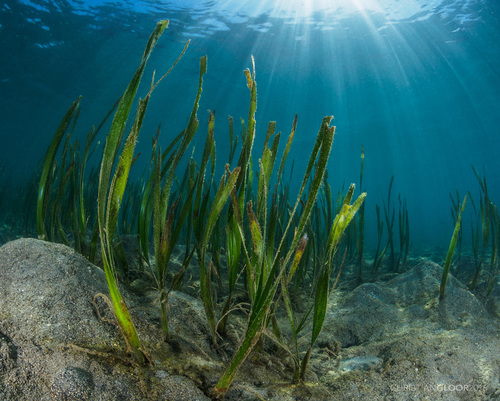
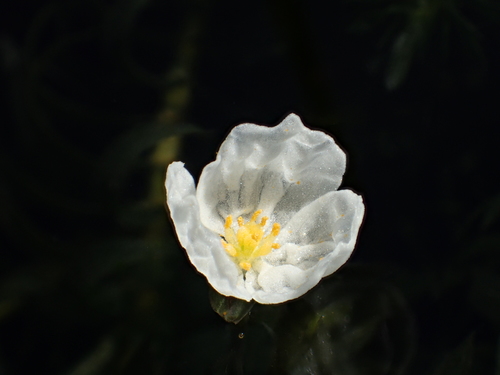
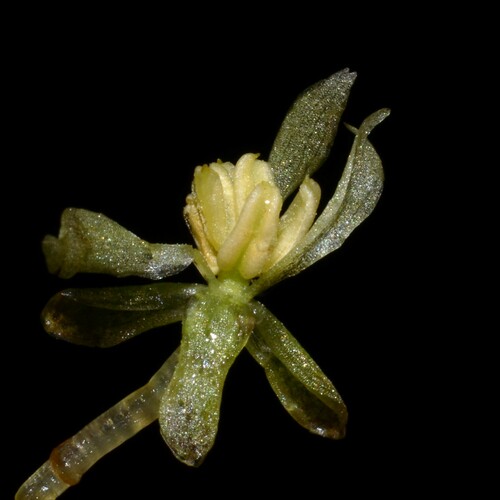
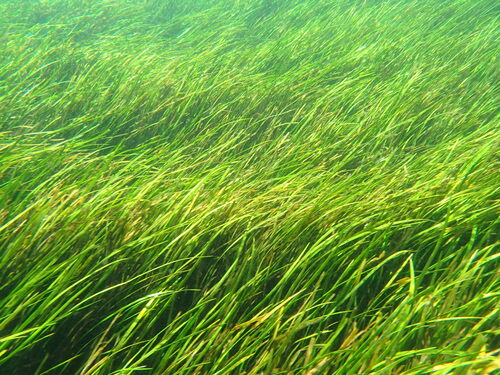
Vallisneria americana Michx. has long, limp, flat leaves with a green mid-ridge. The species generally maintains its population through clonal reproduction via runners, but it is also capable of reproducing from seeds. Salinity affects the germination process of this species the same way it affects the plant's growth. Female flowers are solitary, growing at the end of an extremely long, thin pedicel that can reach up to 3 m (10 ft) in length while remaining less than 1 mm thick.
Vallisneria americana is native to Canada, the United States, Mexico, Guatemala, Honduras, Cuba, the Dominican Republic, Haiti, and Venezuela. It occurs primarily in eastern North America, ranging west from Nova Scotia to South Dakota and south to the Gulf of Mexico. It has also been recorded in the western U.S. states of Washington, Nebraska, New Mexico, and Arizona, with recent reports of occurrence in Oregon.
Salinity tolerance in V. americana has been debated, and has been the focus of many scientific studies and experiments. It has been proposed that discrepancies between collected data sets stem from differing experiment durations and varying research methodologies. The highest recorded salinity tolerance for the species generally falls between 10 parts per thousand and 20 parts per thousand. Many experiments confirm a general growth trend: as water salinity increases, plant growth decreases, and plant roots show greater salinity tolerance than shoots.
Like many seagrass ecosystems, V. americana beds provide abundant prey that serves as food for other species, and act as a refuge for many organisms including commercial, recreational, endangered, and invasive species. They also function as nursery habitats for fishery species. V. americana beds, particularly those in Louisiana, host many crustaceans, gastropods, other invertebrates, and fish, and are grazed by West Indian manatees. These beds are effective at stabilizing sediment and shorelines, supporting detrital food webs, and improving water quality by filtering surrounding water.
Vallisneria americana is cultivated for the aquarium trade, where it is sold as a background plant.