About Valeriana officinalis L.
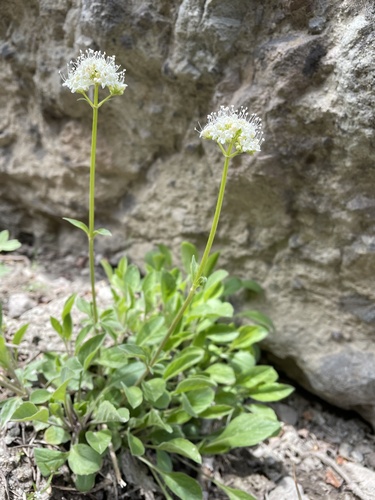
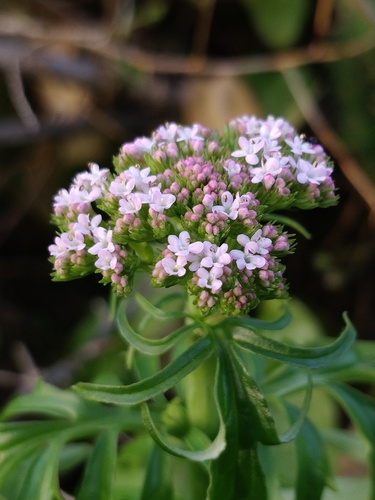
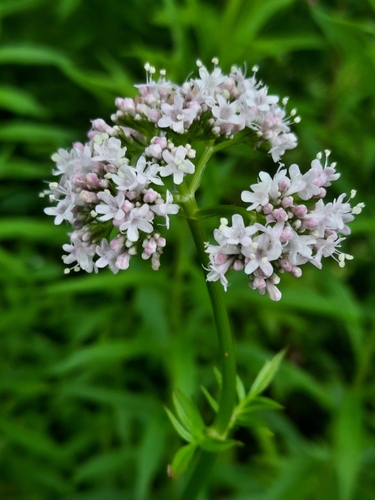
Valeriana officinalis L. grows up to 1.5 m (5 ft) tall, and rarely reaches 2 m (7 ft). It has erect, usually unbranched stems, with pinnately divided leaves up to 20 cm long, whose leaflets have margins that range from irregularly toothed to toothless. Its flowers bloom from June to August; they are 2.5–5 mm in diameter with a five-lobed corolla, have a sweet scent, are most often pale pink and occasionally white, and are grouped in both compound and secondary clusters.
It is native to a range extending from Iceland south to Portugal, north to central Scandinavia, east to European Russia, and southeast to Iran. It typically grows in wet and dry meadows, wet woodlands, and marshes; plants adapted to drier chalk grassland soils are sometimes classified as V. o. subsp. collina.
The flowers of Valeriana officinalis attract many fly species, especially hoverflies of the genus Eristalis. The plant is eaten as food by the larvae of some Lepidoptera (butterfly and moth) species, including the grey pug.
Compounds found in valerian cause central nervous system depression, so valerian should not be used alongside other depressants, such as ethanol (drinking alcohol), benzodiazepines, barbiturates, opiates, kava, or antihistamine drugs. As an unregulated product, the concentration, contents, and potential contaminants of valerian preparations cannot be easily determined. Due to this uncertainty, plus the potential for fetal toxicity and maternal hepatotoxicity, valerian use is not recommended during pregnancy. Headache and diarrhea have been reported by study participants using valerian in clinical trials.
Crude extracts of valerian root may have sedative and anxiolytic effects, but evidence for these effects is mixed and debated. Valerian is commonly sold as a dietary supplement to promote sleep. A dry ethanol extract of valerian root is recognised as a medicine for adults with mild symptoms by the European Medicines Agency. Exposure to valerian produces a catnip-like response in cats.
Valerian is a common traditional medicine used to treat insomnia. Some sources describe its effectiveness for this purpose as weak, ineffective, inconclusive, or low. Two meta-analyses have concluded that valerian may improve sleep quality. A 2006 meta-analysis found insufficient evidence to determine valerian's effectiveness or safety for anxiety disorders. Another meta-analysis found that valerian may be safe and effective for improving sleep and reducing anxiety, and that inconsistent results from earlier research may stem from variability in extract quality.
In contrast, the European Medicines Agency (EMA) approved the health claim that valerian can be used as a traditional herb to relieve mild nervous tension and aid sleep; the EMA's Committee on Herbal Medicinal Products recognises valerian dry ethanol extract as a well-established herbal medicine for relieving mild nervous tension and improving sleep. This recognition is based on multiple randomised, controlled, double-blind clinical trials, expert reports, sleep-EEG studies, and traditional use that demonstrate gradual improvements in sleep and mild nervous tension symptoms. Germany's Commission E, the scientific advisory board that evaluates the safety and efficacy of herbal substances, has approved valerian as an effective mild sedative. Valerian has not been shown to be helpful for treating restless leg syndrome.
For other uses, the young leaves of Valeriana officinalis can be cooked and eaten, and the roots can be infused into hot beverages like hot chocolate.