About Vachellia leucophloea (Roxb.) Maslin, Seigler & Ebinger
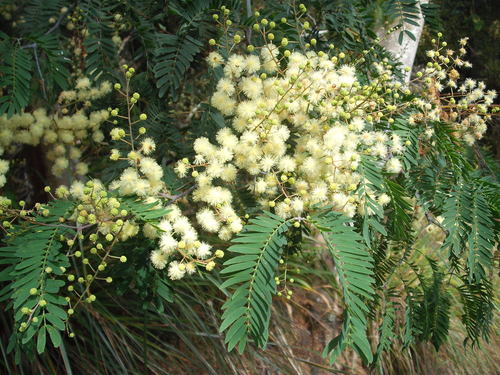
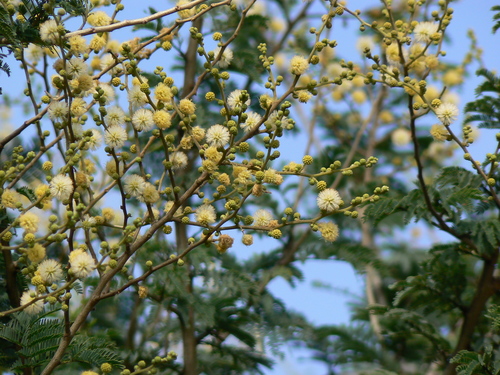
Vachellia leucophloea (Roxb.) Maslin, Seigler & Ebinger is a moderate-sized tree native to South and Southeast Asia. It is known by the common name White Bark Acacia, and by the local names reonja, रेवंजा (Hindi), and ਰੇਰੂ (Punjabi). Its native distribution covers India, Nepal, Pakistan, Sri Lanka, Myanmar, Thailand, Vietnam, and Indonesia. In Pakistani traditional medicine, bark extracts of this species are used for a wide range of purposes: as an astringent, bitter tonic, thermogenic, styptic, infection preventative, anthelmintic, vulnerary, demulcent, expectorant, antipyretic, and antidote for snake bites. It is also used to treat bronchitis, cough, vomiting, wounds, ulcers, diarrhea, dysentery, internal and external hemorrhages, dental caries, stomatitis, intermittent fevers, and skin diseases. Clinical trials have found that an ethanolic extract ointment made from the bark shows marked wound healing activity. For culinary uses, the bark is used to distill spirit from sugar and palm juice. During periods of food scarcity, the bark is ground and mixed into flour. The pods are eaten as a vegetable, and the seeds can also be ground and mixed with flour. The wood of Vachellia leucophloea is sometimes used to make attractive furniture and other implements, although it is difficult to work with and not durable.