About Vachellia constricta (Benth.) Seigler & Ebinger
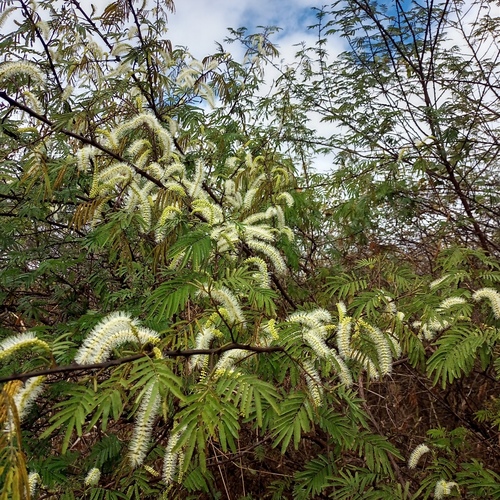
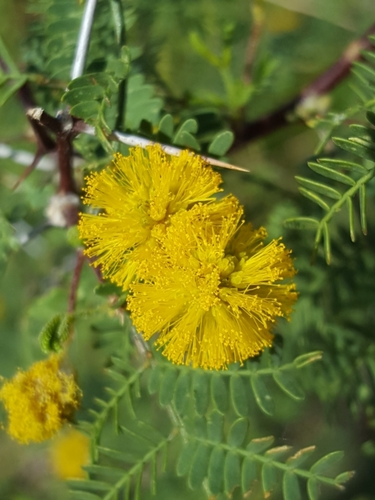
Vachellia constricta typically reaches 2 meters (6.6 ft) in height, and may occasionally grow as tall as 6 meters (20 ft). Its stems range in color from light gray to mahogany, and bear pairs of straight white spines that measure between 0.5 and 2 cm long. This species has small even-pinnate leaves that are usually 2.5–4 cm in length. Each leaf holds 3–9 pairs of pinnae, which are each made up of 4–16 pairs of leaflets; individual leaflets are about 3.5 mm long and 1 mm wide. Its flowers grow in small yellow balls roughly 1 cm in diameter. These flowers produce no nectar and very little pollen, so they rarely attract visitors. Extrafloral nectaries grow along the main stem of the compound leaves, and draw ants to the plant. The seed pods of Vachellia constricta are relatively long and thin, reaching up to 12 cm long but only 3–6 mm wide. The plant may drop its leaves when exposed to either dry conditions or cold temperatures. In the Southwestern United States, Vachellia constricta grows in the southern half of Arizona, and its range extends into New Mexico and West Texas. In Mexico, it grows as far south as Oaxaca, with small isolated disjunct populations in Baja California and on the Magdalena Plain of Baja California Sur. In the Sonoran Desert, this species grows in arroyos and washes. It blooms in late spring between April and May, and produces a second round of blooms between July and October. Blooming requires a minimum amount of rain, followed by a period of warm weather. Vachellia constricta is cultivated by specialty plant nurseries as an ornamental plant. It is used in native plant desert habitat gardens, and can be trained as a small tree or grown as a barrier hedge.