About Vaccinium stamineum L.
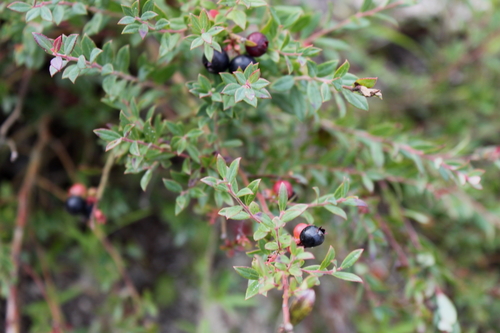
Vaccinium stamineum L. is a morphologically variable deciduous shrub. It usually reaches 1.5 meters (5 feet/60 inches) in height, though it can grow up to 3 meters (10 feet) tall at maximum. It produces multiple twisted trunks covered in peeling reddish bark, and is heavily branched, tapering into thin twigs that can be as narrow as just one millimeter wide.
Its leaves are arranged alternately along branches. The thin leaf blades are yellow-green, oval-shaped with pointed tips and smooth edges. Leaves are sometimes hairy or waxy in texture, especially on their undersides, and grow up to 7 centimeters (2.8 inches) long by 2.5 centimeters (1 inch) wide.
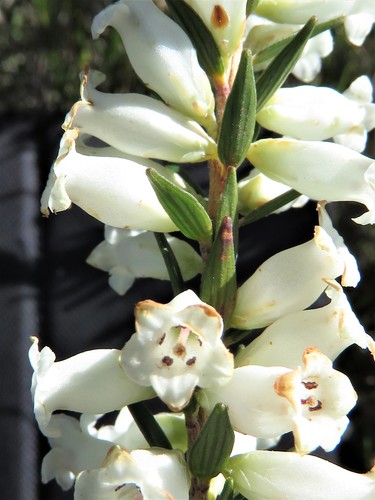
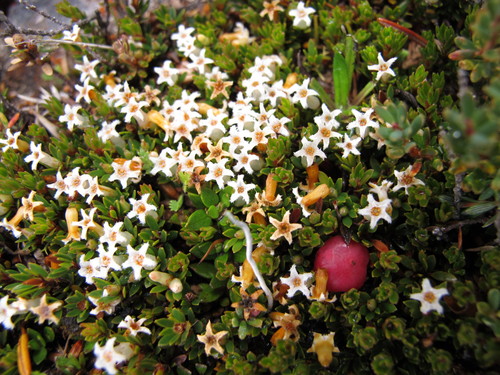
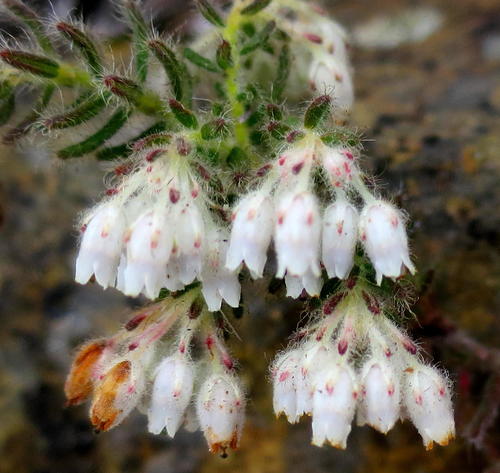
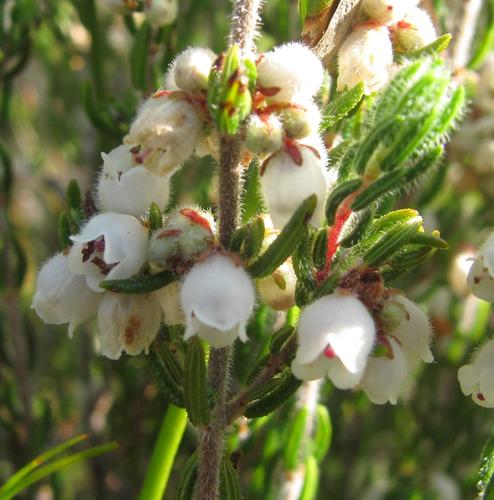
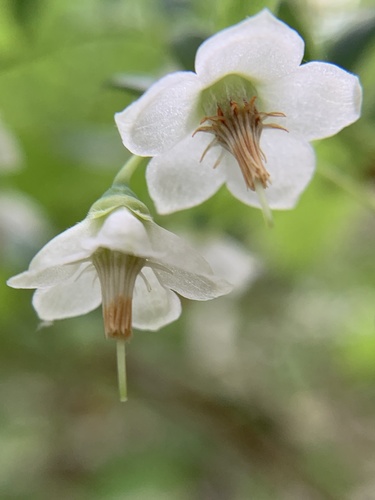
Flowers grow in hanging inflorescences from leaf axils. Each flower has five green sepals, and a bell-shaped corolla made of five fused white petals that is approximately half a centimeter (0.2 inches) long. Long yellow stamens protrude from the flower, bearing long tubular anthers, and the style is longer than these stamens.
The fruit is a spherical berry around one centimeter wide. It is greenish or yellowish, often with a purple tint. The chromosome count for this species is 2n = 24.
In terms of biology and ecology, this plant most often grows in dry, rocky habitats within forests and fields, but it can sometimes be found in moist areas including bogs and swamps. It prefers acidic, well-drained soils, is adapted to wildfire, and associates with other fire-tolerant vegetation. It establishes from seed, and commonly spreads via woody rhizomes; a single individual can form what appears to be a multi-trunked thicket. Most of the plant’s total mass is underground, so it easily survives fires and regrows its above-ground portions after burning.
For a Vaccinium species, this plant produces large fruits, which are an important food source for many types of wildlife. Deer eagerly eat the fruits, twigs, and foliage of this plant, which inspired its common names deerberry and buckberry. Smaller animals collect fallen fruits from the ground, and the fruits are consumed by many songbirds, ruffed grouse, bobwhite quail, wild turkey, foxes, raccoons, black bears, chipmunks, and squirrels.
This species is pollinated by bees, with Melitta eickworti as its primary pollinator. While foraging for nectar from the bell-shaped flowers, bees perform buzz pollination to dislodge, accumulate, and disperse the plant’s pollen. Vaccinium stamineum L. also acts as a host for the blueberry maggot (Rhagoletis mendax), a known pest of commercial blueberry crops.
The fruit is edible for humans, and its taste has been described as tart, sour, bitter, or “sweet-spicy tasting, a little reminiscent of lady's perfume”. It has long been collected in the southern United States to make preserves and pie filling. Deerberries have potent free radical scavenging activities. However, as a member of the genus Vaccinium, which typically contains high amounts of oxalates, this species follows this common trait.