About Vaccinium oxycoccos L.
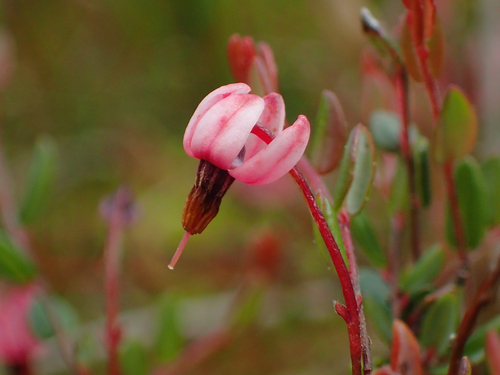
Vaccinium oxycoccos L., commonly known as small cranberry, is a small prostrate shrub with vine-like stems that root at stem nodes. Its evergreen leaves are leathery, lance-shaped, and grow up to 1.2 cm (1⁄2 in) long. Mature stems reach only a few centimeters tall, and each stem bears one to a few nodding flowers with four petals each. The flower corolla is white or pink, and curves backward away from the flower's center. The plant produces a pink or red berry, which is spotted when young, and reaches up to 1.2 cm (1⁄2 in) in width. Vaccinium oxycoccos forms mycorrhizal associations, and reproduces mainly through vegetative growth. Its fruits persist for an average of 200 days, with an average of 7 seeds per fruit. Fruits are on average 86.4% water; by dry weight, they contain 4.2% carbohydrates and 1.8% lipids. Vaccinium oxycoccos is a widespread, common species that grows across cooler climates of the temperate Northern Hemisphere, including northern Europe, northern Asia, and northern North America. It is an indicator species for moist to wet, low-nitrogen soils with a high water table, and specifically indicates coniferous swamps. It grows in bogs and fens within moist forest habitats, on peat that is saturated most of the time. Bog soils where it grows are acidic and low in nutrients, and its mycorrhizal associations help it acquire nutrients in these conditions. Fens where the species grows have somewhat less acidic soil that is also higher in nutrients than bog soil. Vaccinium oxycoccos can often be found growing on hummocks of Sphagnum mosses. In North America, common understory species that co-occur with Vaccinium oxycoccos in its forest habitat include Chamaedaphne calyculata (leatherleaf), Andromeda glaucophylla (bog rosemary), Kalmia polifolia (bog laurel), Sarracenia purpurea (pitcher plant), Rhododendron groenlandicum (Labrador tea), Rubus chamaemorus (cloudberry), Rhododendron canadense (rhodora), Rhamnus frangula (glossy buckthorn), Drosera species (sundew), Eriophorum virginatum and E. angustifolium (cottonsedge), plus various sedge and lichen species. The plant easily colonizes recently burned bog habitat, and survives fires using its underground rhizomes. The berries of Vaccinium oxycoccos are edible, and various Native American communities have used the berries as both food and medicine. Some Iñupiat groups cook this cranberry with fish eggs and blubber.