About Vaccinium myrtilloides Michx.
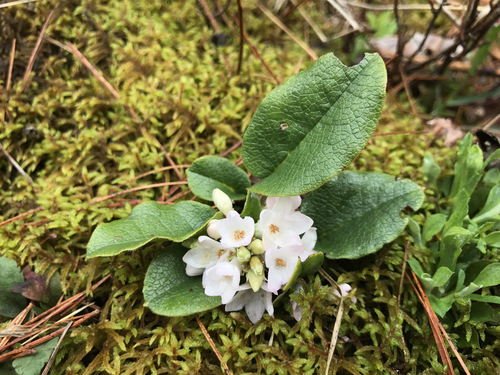
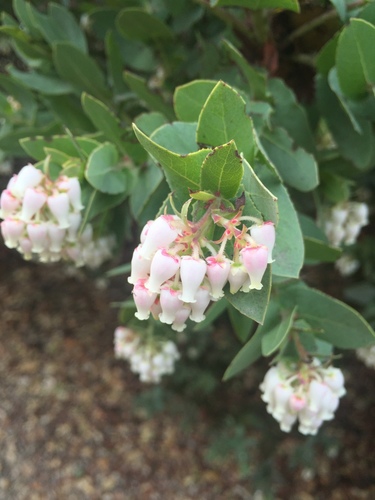
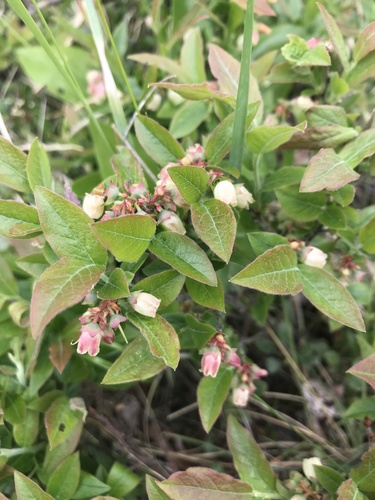
Vaccinium myrtilloides Michx. is a low, spreading deciduous shrub that reaches up to 50 centimetres (20 inches) in height, and often spreads to form small thickets. Its young stems are covered in stiff, dense bristly hairs. Leaves are 1.5–6.5 cm (1⁄2–2+1⁄2 in) long, green in color, paler on the underside and covered with velvety hairs. The flowers are white, bell-shaped, and 5 millimetres (1⁄4 in) long. It produces a small sweet berry that ranges from bright blue to dark blue. Its cytology is 2n = 24.
This species is common across much of North America. It has been recorded from all 10 Canadian provinces, plus Nunavut and the Northwest Territories, as well as the northeastern and Great Lakes states in the United States. It is also confirmed to occur in the U.S. states of Montana and Washington.
Vaccinium myrtilloides grows best in open coniferous woods with dry, loose acidic soils. It can also be found in forested bogs and rocky areas. It is fire-tolerant, and often becomes abundant after forest fires or clear-cut logging. It hybridizes in the wild with Vaccinium angustifolium, the lowbush blueberry. It is an important food source for black bears, deer, small mammals, and birds.
It is cultivated and grown commercially in Canada and the U.S. state of Maine, where it is primarily harvested from managed wild patches. Its edible fruit is one of the sweetest known blueberries.
For medicinal use, the Nihithawak Cree prepare a decoction of leafy stems to induce menstruation, prevent pregnancy, induce sweating, slow heavy menstrual bleeding, stimulate bleeding after childbirth, and prevent miscarriage. The Potawatomi use the plant's root bark to treat an unspecified ailment.
As an additional use, the Nihithawak Cree use the berries of this plant to dye porcupine quills.