About Vaccinium erythrocarpum Michx.
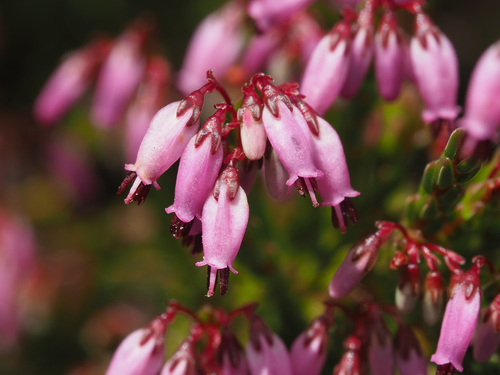
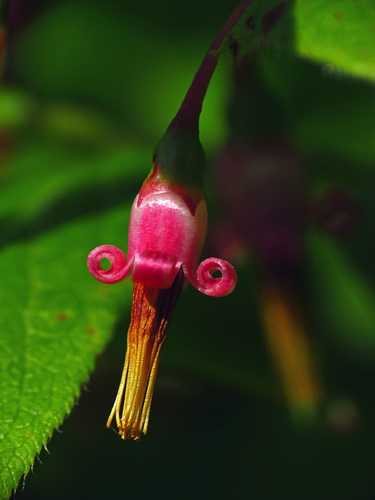
Vaccinium erythrocarpum Michx. produces flowers that bloom in June. Its flowers are hermaphroditic, with a tubular shape and reflexed petals. They also bear long tassel-like stamens that hang below the corolla. After flowering, the plant develops somewhat translucent scarlet berries that ripen in late summer or early autumn. The flavor of these berries is quite similar to that of other cranberries. This species occurs in high elevation areas of the Southern and Central Appalachians, and is often found on landscape prominences, especially at the southern end of its range. It has been recorded in the U.S. states of North Carolina, Virginia, and West Virginia; it occurs more rarely in Kentucky and Georgia. Its flowers are pollinated by insects, primarily large bees. The berries are edible, and are readily eaten by wildlife. The plant typically grows in woodlands and areas of dappled shade, most commonly in mixed oak-heath forests. It is frequently found on Southern Appalachian heath balds, where it is often a prominent component of the shrub layer. The berries of this plant are edible. Commercial production of the berries is limited by the rarity of the plants and the small volume of fruit they produce.