About Vaccinium cespitosum Michx.
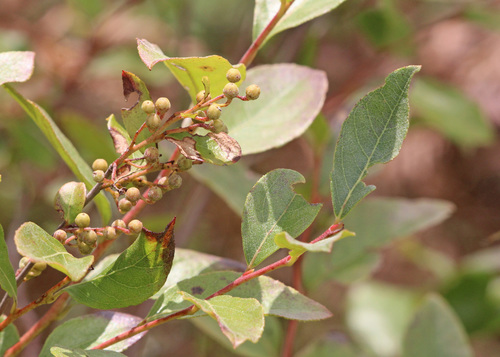
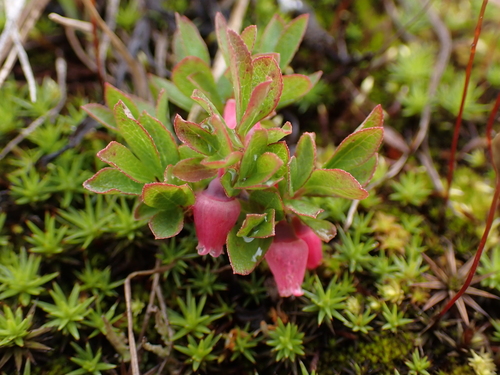
Vaccinium cespitosum Michx., commonly called dwarf bilberry, is a low-lying species that rarely reaches 0.5 meters (1.5 feet) in height. It spreads via runners or stolons to form low, carpet-like stands, and produces many somewhat angled branches. Its foliage ranges from reddish-green to green. The plant blooms from May to June, bearing single tiny waxy flowers that are light pink, urn or bell-shaped, less than 1 centimeter (<0.4 inches) wide, and formed from five united petals. This is different from true blueberries, which produce flowers in clusters. Bees and flies pollinate the flowers. By late summer, the plant develops dark blue bilberry fruits covered with a whitish bloom; the fruit contains many seeds. Vaccinium cespitosum is widespread across much of Canada, including all three Canadian Arctic territories, as well as northern and western United States, Mexico, and Guatemala. Its native habitats include gravelly or rocky mountain meadows, mountain slopes, higher elevations, spruce-fir forests, alpine heath, and shrublands. In the Great Lakes region, it most often grows in savannas or conifer forests. Both grizzly bears and black bears eat its fruit, and the plant acts as a host for the butterfly subspecies Lycaeides idas nabokovi. The blue bilberry fruits of this plant are edible.