About Utricularia resupinata B.D.Greene ex Hitchc.
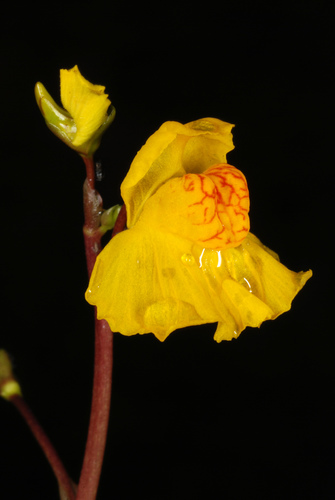
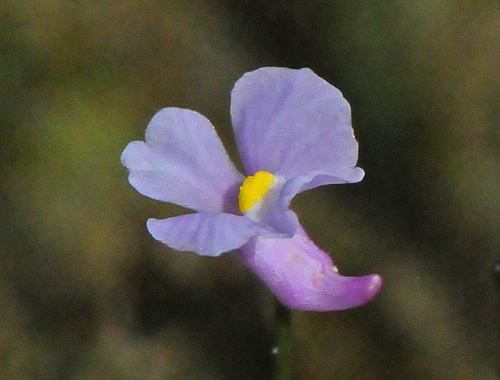
Utricularia resupinata B.D.Greene ex Hitchc. is a bladderwort species whose scientific naming is often cited in botanical publications as Utricularia resupinata B. D. Greene ex Bigelow. This naming identifies the full species name, genus Utricularia, specific epithet resupinata, original discoverer Benjamin Daniel Greene, and publisher of the first published information on the species, Jacob Bigelow. Under botanical binomial nomenclature, each species is given a two-part name consisting of a genus name and a specific epithet. The person who describes and publishes a new species cannot name it for themselves, and epithets may be named for the first collector, a location, a plant feature, or many other sources. The etymology of Utricularia resupinata draws from two Latin words: utriculus, meaning 'a small bottle', which refers to the species' insect-trapping bladders, and resupinata, meaning 'bent or thrown back', which describes the top portion of the plant's flower.
The first documented range of the species came from Asa Gray's 1848 first edition of his Manual of Botany, which noted Utricularia resupinata specimens were collected from sandy pond margins between East Maine and Rhode Island. In August 1879, the Bulletin of the Torrey Botanical Society — published in New York City by the first botanical club of its kind in the Americas — announced that a member of the Syracuse Botanical Club had found the species beyond this original range, in the North Woods at Fenton's No. 4, Lewis County, New York, growing on the marshy shore of a lake. Frank Tweedy, who had been hired in 1876 to survey and map the Beaver River basin for Verplanck Colvin's Adirondack Survey in New York state, and collected plants as a personal passion each Sunday, responded to this announcement with his own finds of Utricularia resupinata at additional locations. Tweedy had already collected the species in August 1875 at the same New York locality found by the Syracuse Botanical Club, on the muddy shore of Beaver Lake. In the prior year before his response, he also collected multiple specimens on the shore of Big Moose Lake and Twitchell Lake, both in Herkimer County, New York, and concluded the species is not uncommon across northern New York. This find was the first recorded among more than 6,000 officially reported specimens Tweedy collected over his career, most of which came from the Rocky Mountains. Following Tweedy's discoveries in the Adirondack Mountains, Utricularia resupinata has been found in Canada, the eastern United States extending as far west as the Great Lakes states, and Central America. A range map from The Floristic Synthesis of North America (BONAP) shows this expanded range, though the species is increasingly threatened or endangered in many US states.
In terms of growth and ecology, Utricularia resupinata grows on the edges of wetlands, along shorelines, or in shallow water of ponds, lakes, and rivers. It can also grow in the moist sandy soil along recently constructed roads. Its ideal growing habitat features a sandy substrate covered by a thin layer of mud or muck. In the northern part of its range, the species appears to only flower when low water levels coincide with higher than average temperatures. It was believed to have been extirpated in Indiana until it was rediscovered there in 2005. One flowering specimen held in the University of South Florida herbarium was collected in May 1961 by George R. Cooley, R. J. Easton, Carroll E. Wood Jr., and C. Earle Smith Jr. from the shore of Lake Tsala Apopka, Florida, growing in half an inch of water. This dried specimen shows the species' thick network of stems and base runners, dried flowers, tiny leaves and insect-trapping bladders, and seed-bearing stems.