About Utricularia livida E.Mey.
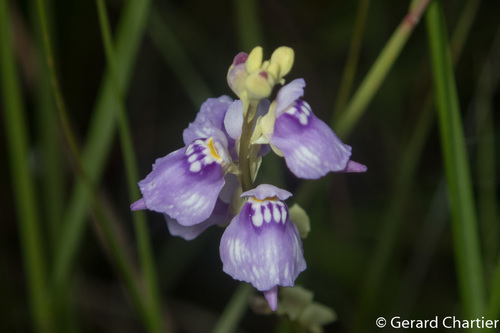
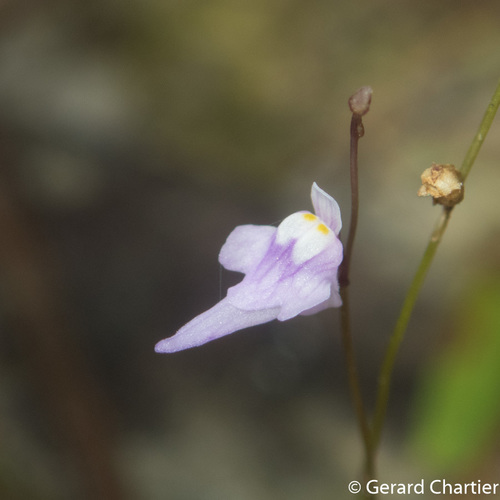
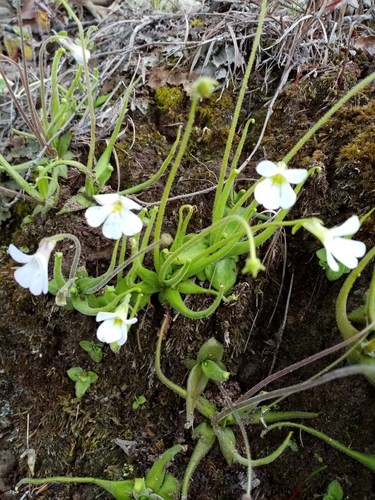
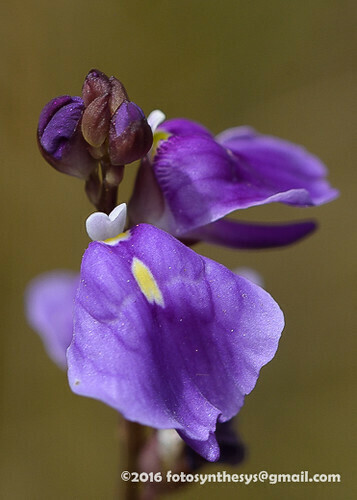
Like other members of its plant family, Utricularia livida E.Mey. has its entire leaf structure growing below ground, where it carries out carnivory. Tiny bladder traps on these underground leaves consume micro-organisms that multiply in wet soil. Above ground, the plant produces kidney-shaped, pale lavender or white flowers that grow on straight, slender stems. Flowering occurs mainly during the summer, but it can also be triggered at any time of year following a dry period.
Utricularia livida is native to Angola, the Democratic Republic of the Congo, Ethiopia, Kenya, Lesotho, Madagascar, Malawi, Mozambique, Rwanda, Somalia, South Africa, Sudan, Eswatini, Tanzania, Uganda, Zambia, and Zimbabwe. It also has a widespread native distribution in Mexico. This species is a terrestrial plant that grows in boggy areas or shallow soils covering rock, at altitudes ranging from near sea level up to 2,830 m (9,285 ft).
Like its relative Utricularia sandersonii, Utricularia livida is valued for its ornamental flowers and is cultivated as a houseplant. It cannot tolerate freezing temperatures, so it must be grown under glass in temperate regions, planted in pans of damp sand located in full sun. It has been awarded the Royal Horticultural Society's Award of Garden Merit.