About Urticaceae
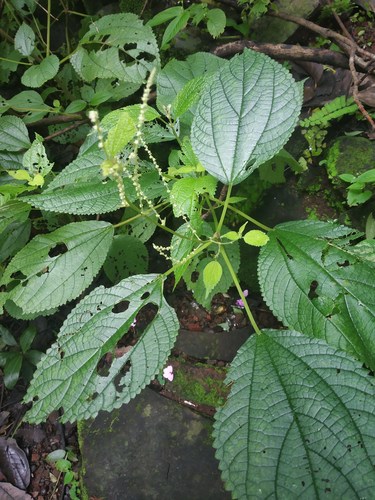
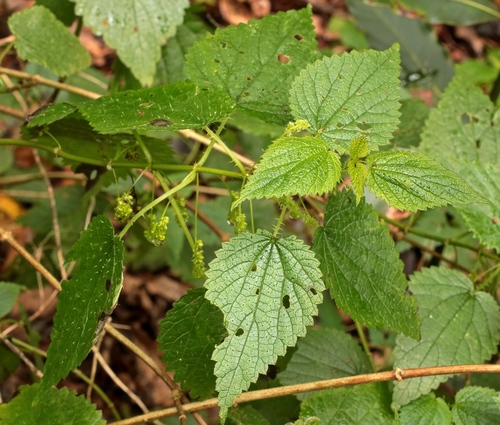
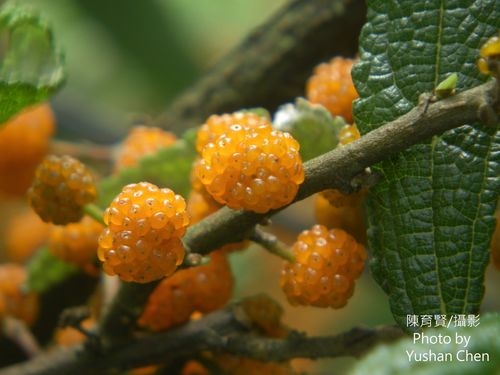
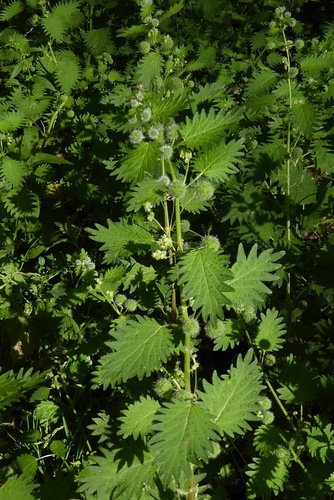
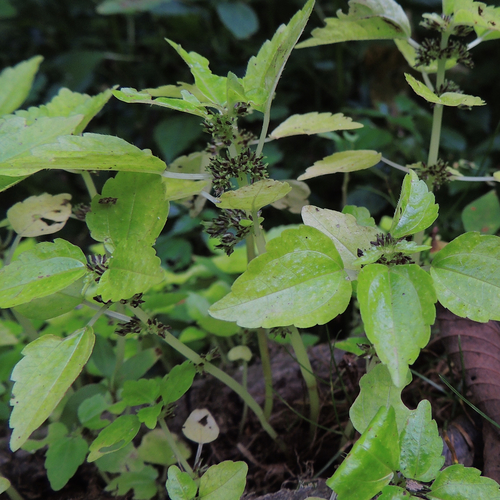
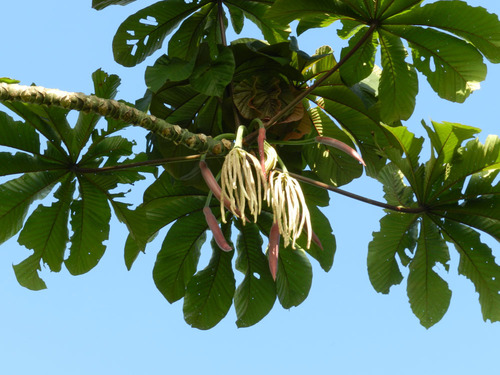
Species in the Urticaceae family can grow as shrubs (for example, Pilea), lianas, herbs (for example, Urtica, Parietaria), or rarely, trees (Dendrocnide, Cecropia). Their leaves are usually entire and have stipules. Urticating (stinging) hairs are often present on these plants. Flowers of Urticaceae are typically unisexual, with rare cases of functionally hermaphroditic flowers. Pistillate flowers have superior ovaries, a gynoecium made of two carpels, and a four to five-part perianth. When the stamens of Urticaceae dry out in heat, they explosively release pollen: the filaments straighten, and anthers release pollen in a swift motion. These plants are wind-pollinated. While stings from Urticaceae species are often unpleasant, they seldom pose any direct threat to human health, and deaths directly caused by these stings are exceedingly rare. The species known to cause human fatalities are Dendrocnide cordata and Urtica ferox.