About Urtica gracilis Aiton
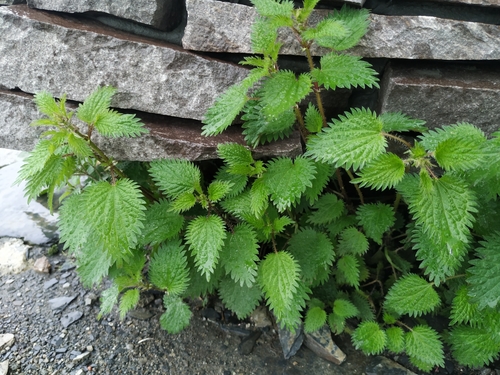
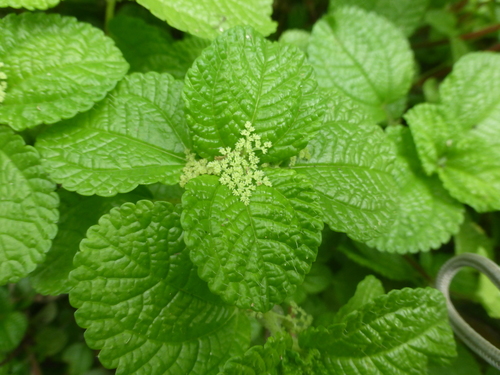
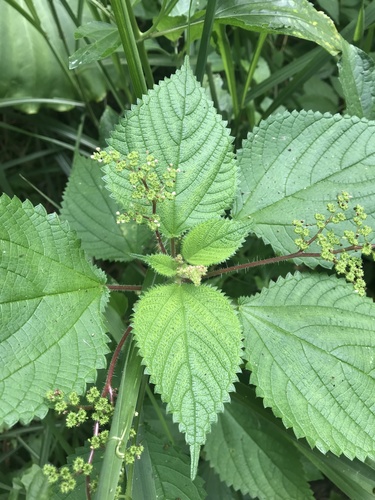
Urtica gracilis Aiton is a perennial herbaceous plant, meaning its stems die back to the ground each winter and it regrows year after year. It spreads via wind-dispersed seeds and rhizomes, and often forms dense stands in growing conditions that suit it. Mature plants reach between 50 centimeters and 3 meters in height, and their stems can be either simple or branched. Stems range from hairless to covered in stiff non-stinging hairs, and have very few of the stinging hairs that the genus is known for. The leaves of Urtica gracilis are variable in shape, and can be elliptic, lanceolate, or ovate. They measure 6–20 cm long and 2–13 cm across, with leaf bases that range from rounded to heart-shaped (cordate). Leaf edges have coarse teeth, sometimes with smaller teeth inside each larger tooth (doubly serrate), and leaf tips are pointed. The undersides of the leaves are covered in the stinging hairs that this species is known for. The upper leaf surface only rarely has any stinging hairs, and is most often smooth or covered in fine non-stinging hairs (puberulent). Urtica gracilis produces flowers in a panicle, a much-branched flowering structure with many individual flowers on short stalks. Its flowers are unisexual: each flower holds only female pistils or only male stamens. Most individual plants bear both male and female flowers, and the flowers are small and not showy. This species grows in high and low forested floodplains, and on gravel and sand bars in streams. According to Plants of the World Online (POWO), Urtica gracilis is native to the Americas. It is recorded growing across most of North America: in every state of Mexico, every province and territory of Canada except Nunavut, and all U.S. states except Hawaii, Florida, South Carolina, and Arkansas. In Central America, it is only recorded growing in Guatemala. In South America, it is restricted to more temperate regions of Peru, Chile, and Argentina.