About Ursinia nudicaulis (Thunb.) N.E.Br.
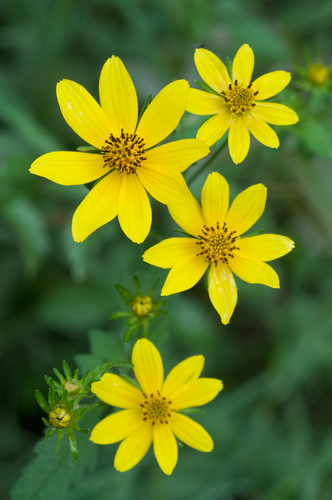
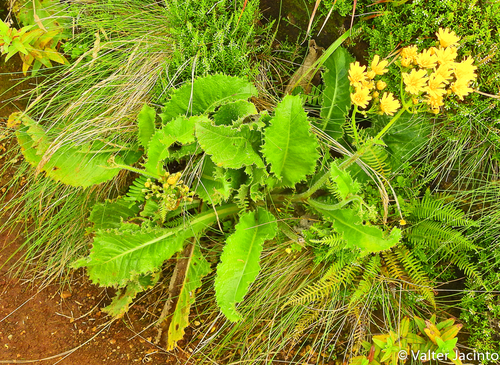
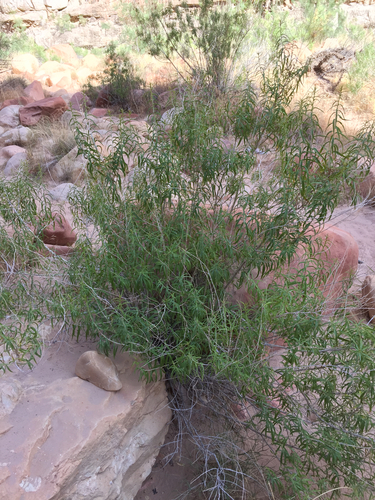
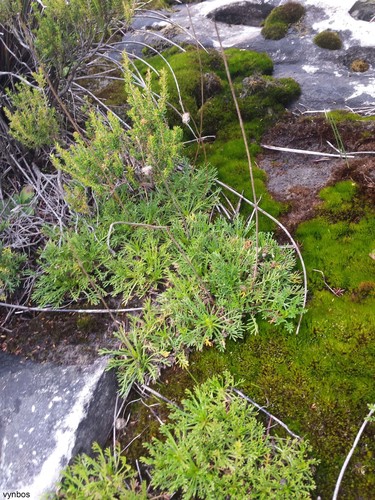
Ursinia nudicaulis (Thunb.) N.E.Br. is a tufted shrub that grows up to 0.5 m (1.6 ft) tall. Its leaves are densely crowded in the lower portion of the plant, and its linear lobes are divided all the way to the midrib. Solitary radiate yellow flowerheads grow on long, hairless stems. Each flowerhead measures 15–30 mm (0.59–1.18 in) in diameter, appears between September and March, and is surrounded by bracts that are often papery in their upper section. The outer and middle bracts have black margins. The pappus, a modified calyx, has five scales; it is white with brown spots near its base. The seeds are slightly curved, with a spiral wall thickening at the base. This species is distributed between the Cedarberg and Witteberg, and between Humansdorp and the Cape Peninsula. It grows primarily on sandstone slopes, but has also been found in wet areas such as riverbeds, including those located within indigenous forests. In the fynbos biome, this plant plays an important role during the early stages of community structure transition in primary succession. It grows in soil that accumulates within the initial moss mat, paving the way for restionaceous plants that go on to use the soil that builds up through this process.