About Uresiphita gilvata (Fabricius, 1794) Caradja, 1916
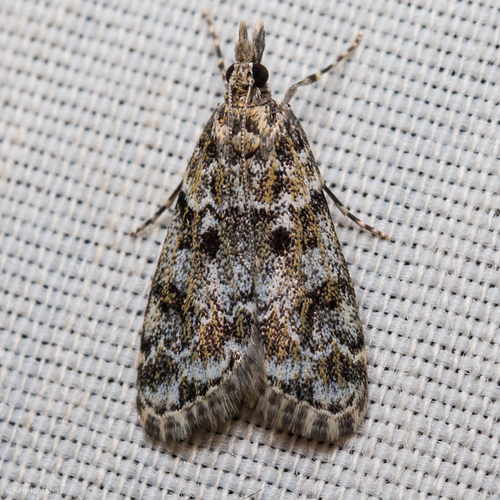
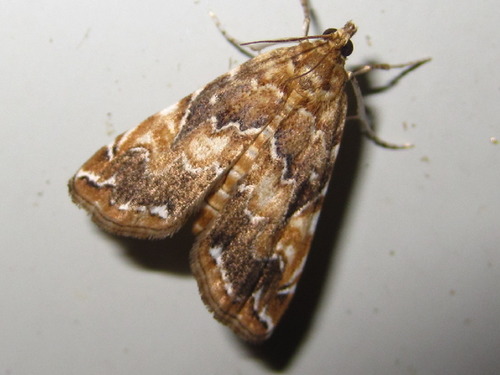
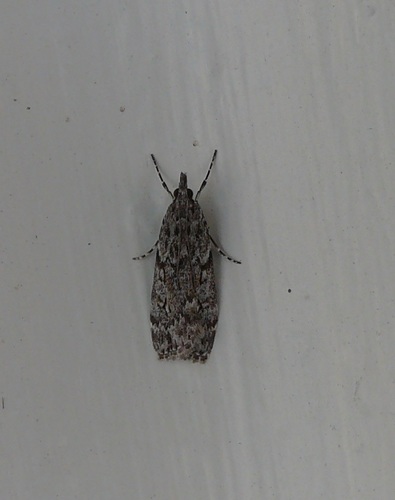
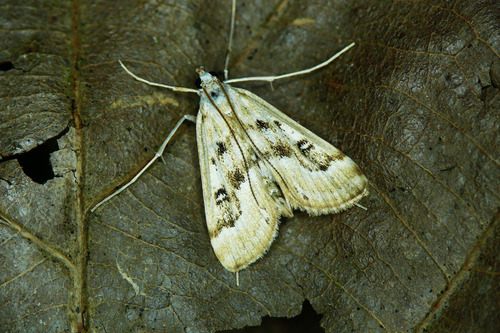
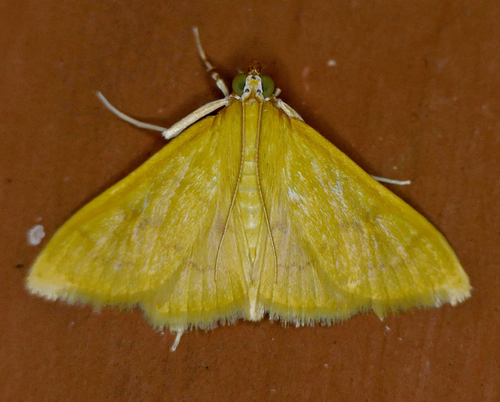
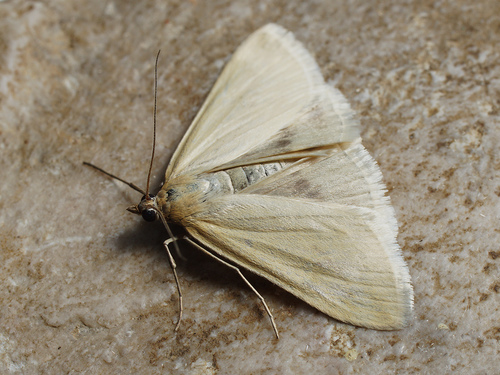
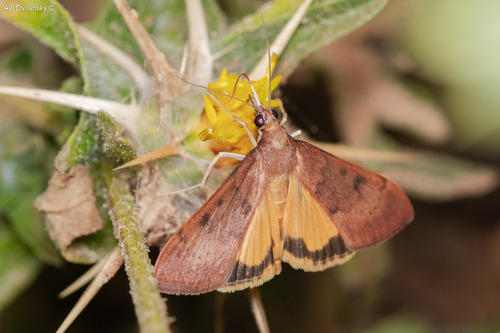
Uresiphita gilvata is a moth species in the Crambidae family. It was first described by Johan Christian Fabricius in 1794, and is distributed across Europe and North Africa. This moth has a wingspan ranging from 29 to 37 mm. Its forewings are greyish to light brown, and sometimes have whitish bands on either side of the median area, though these bands may be absent in some individuals. Its hindwings are either pale or bright yellow, with a black border along the edge. The wing lines of this moth can range from faint to clearly visible: the postmedian line is undulating, while the antemedian line is almost straight. Adult moths are active from September to October, with timing varying by location. The larvae of Uresiphita gilvata feed on a variety of low-growing herbaceous plants, including species from the genera Genista, Cytisus, and Ulex. Some taxonomic sources classify Uresiphita gilvata as a synonym of Uresiphita polygonalis.