About Uniola paniculata L.
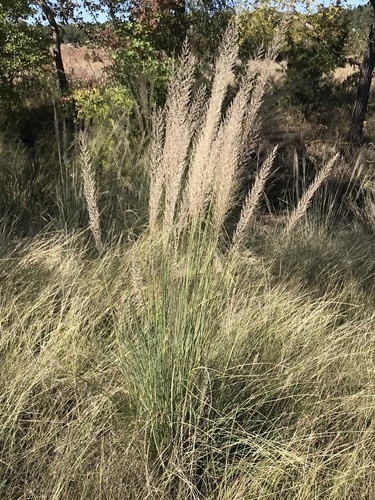
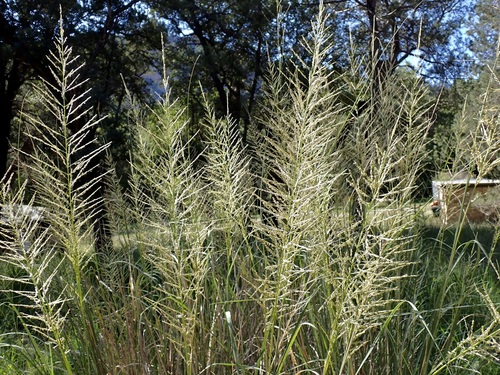
Uniola paniculata L. is a tall, erect perennial grass that reaches 1 to 2 m (3.3 to 6.6 ft) in height. Its long, thin leaves grow 20 to 40 cm (8 to 15.5 in) long and approximately 0.6 cm (0.24 in) wide, tapering to a sharp pointed tip. This grass produces inflorescences made of flat spikelets, each holding 10 to 12 wind-pollinated florets. By late summer, these ripen into golden brown seed heads (infructescences). Its seeds are dispersed by wind, and can be carried long distances by storms and ocean currents, though the species most often reproduces vegetatively via buds that form around stem bases. The plant forms two types of roots: dense roots near the soil surface, and deep penetrating roots that host beneficial organisms including mycorrhizal fungi. It produces elongated rhizomes that grow extensively outward, and root easily when buried in sand. Uniola paniculata uses the C4 photosynthetic pathway for carbon fixation.
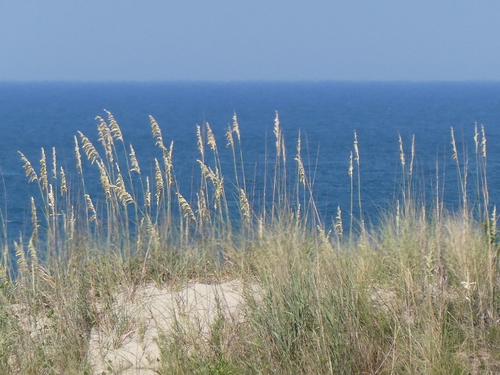
In terms of distribution and habitat, Uniola paniculata grows on beach fronts and barrier islands. It occurs along the U.S. Atlantic Coast from New Jersey to Florida, and along the Gulf Coast from Florida to Tabasco, Mexico. Its range along the U.S. Atlantic coastline is currently expanding northward. It is also found in the Bahamas and northwestern Cuba. It grows primarily on foredunes and dune crests. It is uncommon in inter-dune swales, where salt spray exposure is limited, and is very rarely found inland.
Seeds of U. paniculata provide food for red-winged blackbirds, sparrows, other songbirds, marsh rabbits, and mice.
Commonly called sea oats, this grass is well adapted to saline environments. It plays an important role in barrier island ecology, and is frequently used in sand stabilization projects because its extensive root system firmly anchors loose sand. One example of this use can be found in Fort Lauderdale, Florida, where colonies of sea oats have been planted at several beaches. The oats are a critical part of the area's hurricane defense strategy, and have helped reduce damage from tropical storms. The sea oat colonies and the new dune structure they support are expected to grow and thrive.