About Ulmus uyematsui Hayata
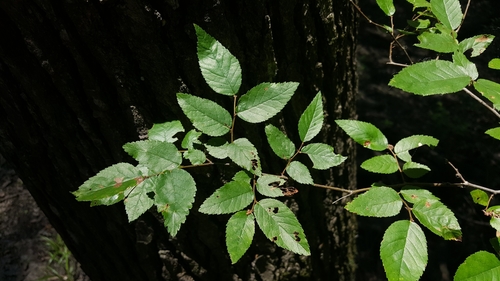
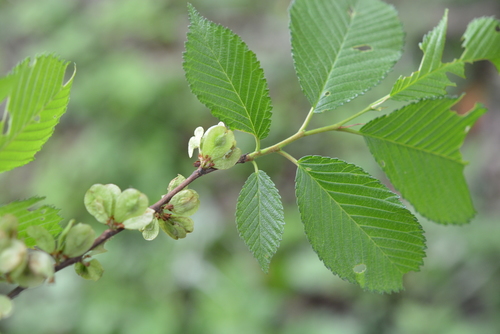
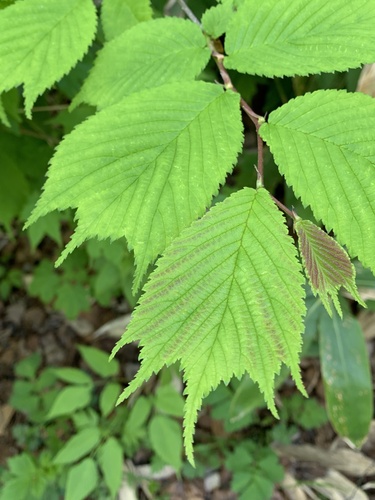
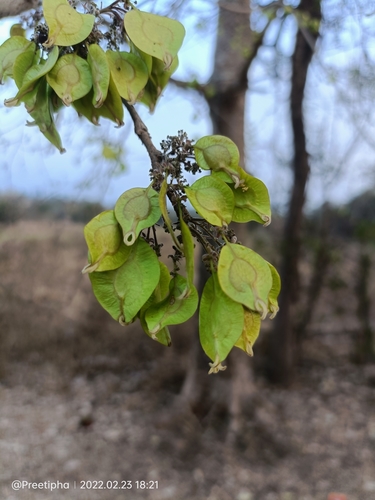
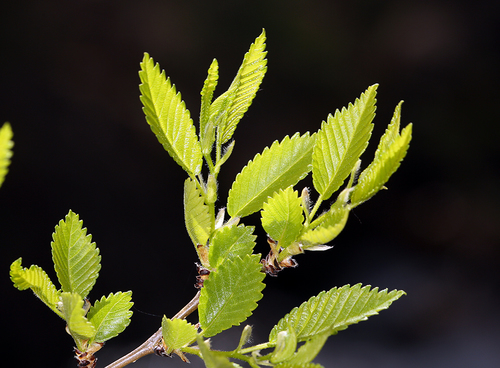
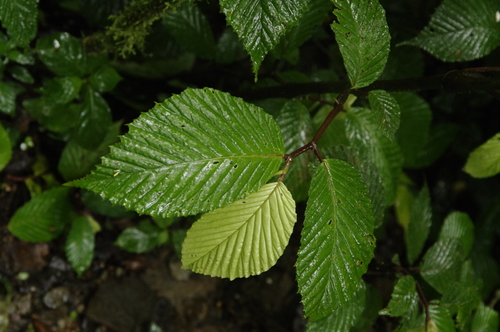
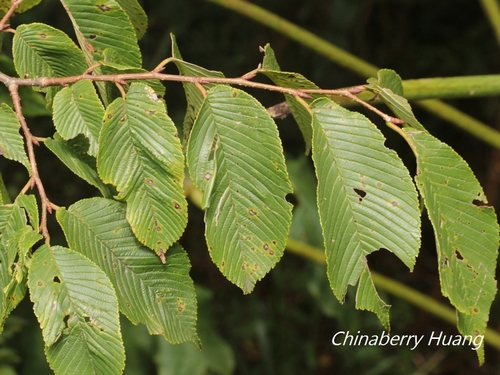
This tree reaches up to 25 m in height, with a trunk diameter at breast height of up to 80 cm. Its bark is grey, longitudinally fissured, and sheds in irregular flakes. Branchlets are brown and glabrous when mature; they are pubescent when young, and lack corky wings. Leaves are mostly glabrous, shaped elliptic to oblong-elliptic, with dimensions of 5–11 cm long by 3–4.5 cm wide; Hui-lin Li in Flora of Taiwan reports a larger size range of 6–15 cm long by 3–5 cm wide. Leaves typically have a caudate apex, with doubly serrate margins. The leaf base is oblique, petioles are short at 2–6 mm, and new leaf flushes are dark-red, colored by anthocyanin pigmentation. Perfect, wind-pollinated apetalous flowers form on second-year shoots in February. Obovate to orbicular samarae, measuring 10–15 × 8–10 mm, form on 0.5 cm pedicels in March. Hayata noted this tree is similar to Ulmus castaneifolia, differing only by its much thinner leaves and lack of pubescence on the axils of the primary lateral veins. This specific comparison has not been repeated in later published descriptions. Ulmus uyematsui Hayata is rare in cultivation outside of Taiwan; it was first introduced to commercial trade in the Netherlands in 2011. It was selected as one of eight tree species assessed as hardy enough to survive for ecological reclamation work at the Wujiazi iron mine, located 270 kilometres (170 mi) northeast of Beijing in Liaoning Province, China, where winter temperatures can drop as low as −20 °C (−4 °F).