About Ulmus minor Mill.
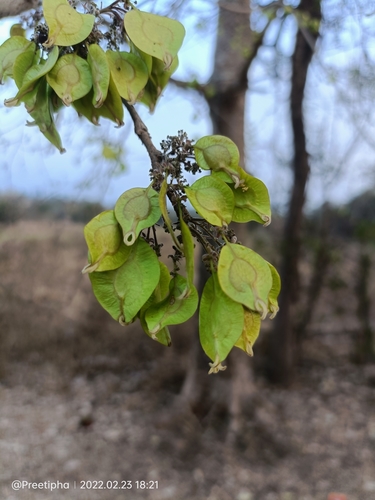
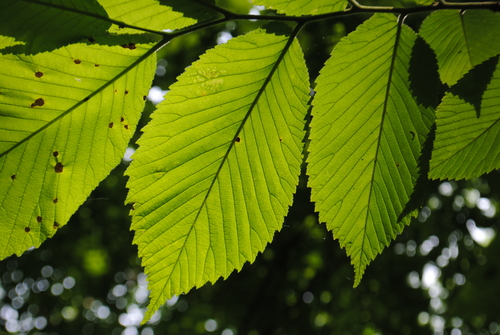
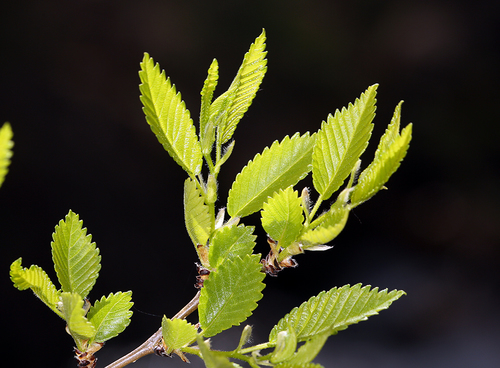
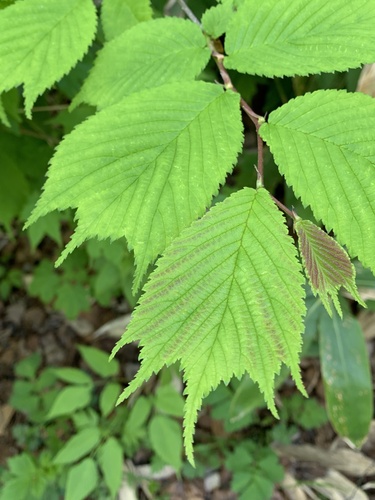
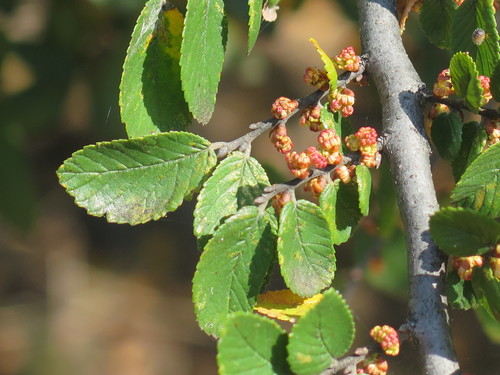
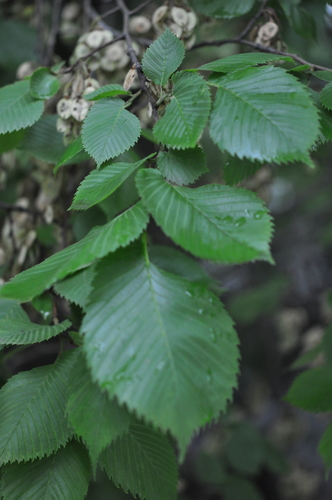
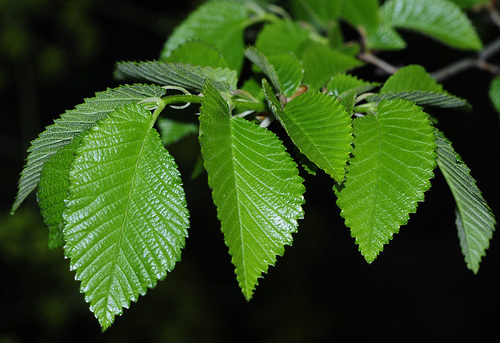
Ulmus minor Mill. is a tree that typically grows to less than 30 m (98 ft) and develops a rounded crown. The trunk bark is rough; in older trees it is lightly furrowed, forming a block pattern. Young branchlets occasionally grow corky wings. Its shoots are more slender than those of wych elm. This species has smaller leaves than other European elm species, which is why it was given the specific epithet 'minor', though leaf size and form can vary greatly based on tree maturity. Leaves on juvenile growth such as suckers and seedlings are coarse and pubescent, while leaves on mature growth are generally smooth, but still remain highly variable in shape. Leaves of Ulmus minor generally have fewer than 12 pairs of side veins. A common identifying feature is the presence of tiny black glands along the leaf veins, which can only be seen clearly with a magnifying glass. The species' samarae are oval or obovate, glabrous, 12–15 mm (15⁄32–19⁄32 in) long, notched at the top, with the seed positioned close to the notch. In France, populations of Ulmus minor typically begin flowering and fruiting when the tree is 10 years old. The species readily produces suckers from roots and stumps, even after being heavily damaged by Dutch elm disease, so its overall genetic resources are not considered endangered. Historically, Ulmus minor as a species, along with a number of specific cultivated clones, was very commonly planted across Europe in both urban and rural areas. However, because the species is highly susceptible to Dutch elm disease, it is now uncommon in cultivation. Starting in the 1990s, an ongoing project run by EU national research institutes has tested several thousand surviving field elms for innate disease resistance, with the goal of reintroducing the species to cultivation. For example, 2013 results from Spain confirmed that around 0.5% of the tested surviving trees have comparatively high tolerance to Dutch elm disease. Researchers hope that controlled crossing of these most tolerant individuals will produce disease-resistant Ulmus minor hybrids suitable for cultivation. In the United Kingdom, continental Ulmus minor was occasionally planted as an ornamental urban tree, despite its late leaf-flush in northern areas and its prolific suckering habit. Writing in 1913, Augustine Henry noted that the Ulmus minor planted in Scottish parks originated from France. More recently, Ulmus minor seed has been imported to the UK from Italy. As of 2015, mature non-cultivar surviving trees can be found in Edinburgh. Ulmus minor was introduced to the United States and Canada under the names Ulmus campestris suberosa or simply Ulmus suberosa, where a small number of old mature specimens still survive. It was also introduced to the southern hemisphere, most notably to Australasia and Argentina.