About Ulmus macrocarpa Hance
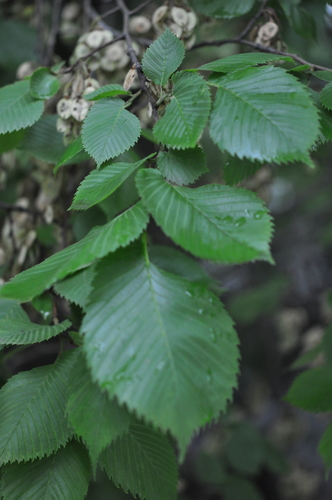
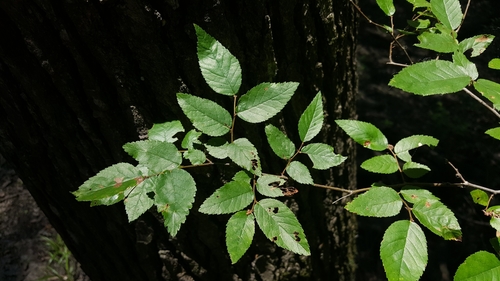
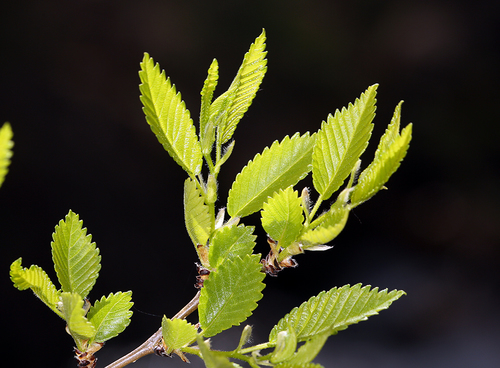
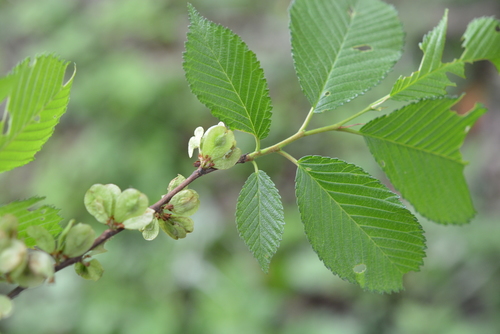
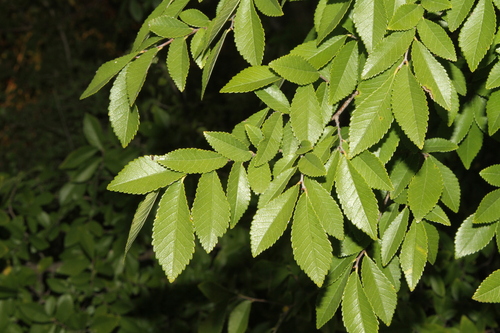
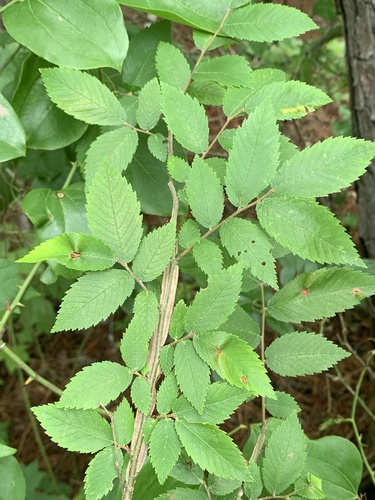
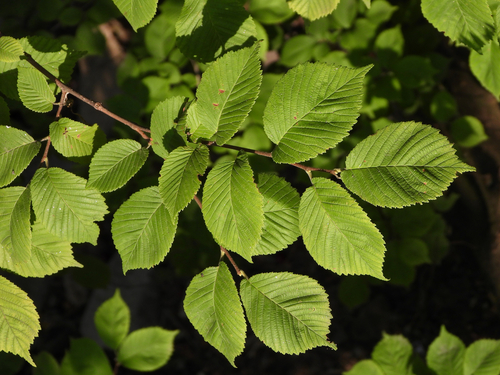
By ten years of age, Ulmus macrocarpa Hance closely resembles the American elm Ulmus americana, but never reaches the size of the American elm. This tree can grow up to 17 m tall, with a slender trunk that rarely exceeds 0.4 m diameter at breast height. Its bark is dark grey and longitudinally fissured. Twigs often develop corky wings that may persist for several years. Leaves are usually obovate, measuring less than 9 cm long by 5 cm broad, and are significantly smaller on juvenile trees. The main distinguishing features of the leaves are their thick, leathery texture and obtusely doubly or simply toothed margins. The perfect, wind-pollinated, apetalous flowers of Ulmus macrocarpa appear from March to May. As its scientific name suggests, U. macrocarpa is distinguished by its large, orbicular, wafer-like samarae, which are less than 50 mm in diameter and ripen in May and June. U. macrocarpa was first introduced to the UK at Aldenham House in Hertfordshire in the late 19th century by Vicary Gibbs (1853–1932), almost certainly as part of the quincunx elm avenue leading to the front of the house. From 1949, the tree was propagated and sold in the UK by Hillier & Sons nursery, located in Winchester, Hampshire; 47 trees were sold by the nursery between 1962 and 1977. The species was introduced to the United States at the Arnold Arboretum, Massachusetts, in 1908. It was assessed for landscape potential at the Morton Arboretum, Illinois, and is now considered suitable for open areas such as parks and campuses. Typically, U. macrocarpa is intolerant of poorly drained ground that is prone to waterlogging. Artificial freezing tests conducted at the Morton Arboretum found the species to be the most cold hardy of the Chinese elms, with an LT50 (the temperature at which 50% of tissues die) of -36 °C.