About Ulmus laevis Pall.
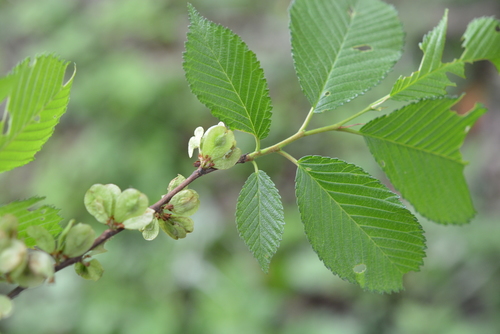
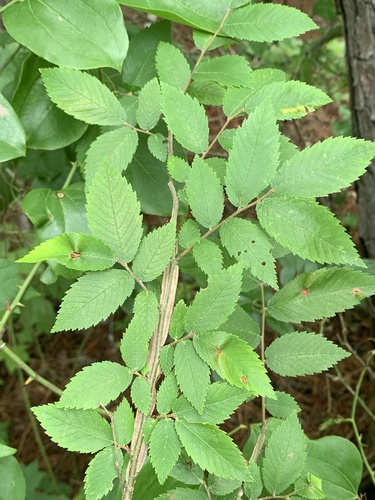
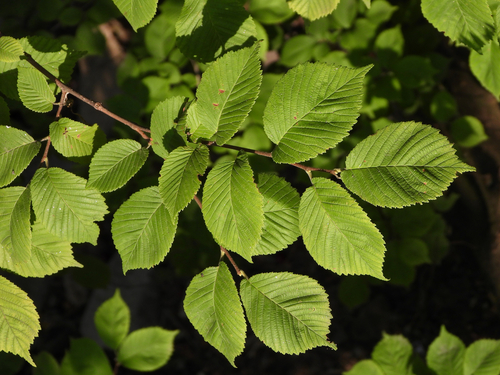
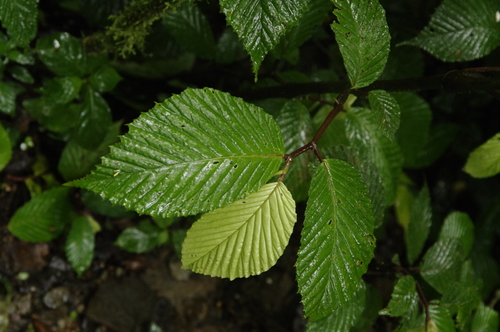
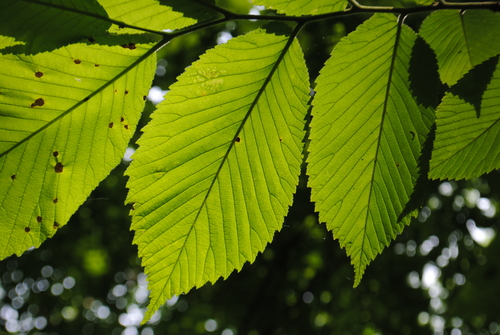
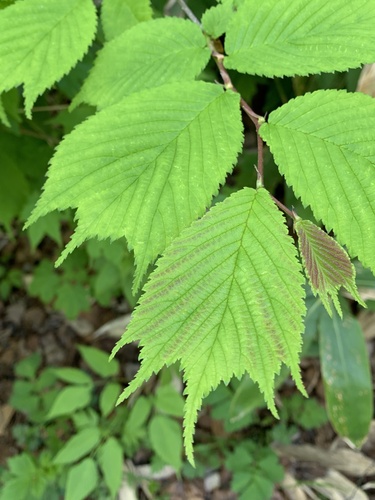
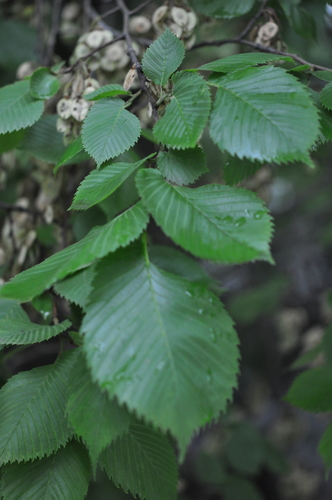
Ulmus laevis Pall. is similar in size to wych elm, but has a less symmetrical form, with a looser, untidy branch structure and a less neatly rounded crown. Mature trees typically reach a height and width of over 30 m, with a trunk diameter at breast height (d.b.h.) of less than 2 m. Its extensive shallow root system eventually forms distinctive high buttresses around the trunk base. The bark is smooth when young; in early maturity it breaks into thin grey scales, which separate with age into a network of grey-brown scales over reddish-brown underbark, and finally becomes deeply fissured in old age, like other elms. Its leaves are deciduous, alternate, simple ovate with a markedly asymmetric base, less than 10 cm long and less than 7 cm broad. Leaves are comparatively thin, often almost papery in texture and very translucent, with a smooth upper surface and downy underside. A key characteristic is that the leaf veins do not branch from the central vein out to the leaf margin. This species sheds its leaves earlier in autumn than other European elm species. U. laevis can be most reliably distinguished from other European elms by its long flower stems, which average 20 mm. Its apetalous, wind-pollinated flowers are distinctively cream-coloured; they appear before leaves in early spring in clusters of 15–30, and measure 3–4 mm across. The fruit is a winged samara less than 15 mm long by 10 mm broad with a ciliate margin. Its single round 5 mm seed matures in late spring. Seeds generally have a high germination rate, 45–60% for Serbian trees examined by Stilinović. Although the species is protandrous, it can have high levels of self-pollination. The tree grows very rapidly; when planted in consistently moist soil, 13-year-old trees gained 4 cm per year in trunk width at breast height (d.b.h.). This species differs from its closest relative, American elm, mainly in its irregular crown structure and frequent epicormic shoots; these features also give the tree a distinctive winter silhouette. American elm also has less acute leaf buds, longer petioles, narrower leaves, and a deeper apical notch in the samara that reaches the seed. In cultivation, U. laevis is essentially a riparian tree, able to withstand over 100 days of continuous flooding, but is intolerant of saline conditions. Spanish populations of the tree have been found to be calcifuge, preferring slightly acid, siliceous soils, and are also drought-intolerant, with xylem vessels prone to drought-stress cavitation. In England, the tree failed to grow well in chalk stream valleys where the soil was predominantly black peat, found at the Adventurers' Land SSSI in Cambridgeshire, due to summer dehydration. Trees planted in dry ground are notoriously short-lived. U. laevis has comparatively weak wood, much more so than field elm (Ulmus minor), so it is an inappropriate choice for exposed locations. In trials conducted in southern England by Butterfly Conservation, young trees under 5 m tall were badly damaged by wind gusts of 40 knots (75 km/h) during midsummer storms. The species was never widely introduced to the United States, but is present in several arboreta. Ulmus effusa, supplied by the Späth nursery of Berlin, was planted at the Dominion Arboretum, Ottawa, Canada, in 1896 under the name U. pedunculata. In the Far East, the tree has been planted in Xinjiang province and other areas of northern China; plantings in Tongliao City are known to have been particularly successful. This tree, also called white elm, is also known to have been introduced to Australia. Since the start of the 21st century, the tree has seen a small resurgence in planting in England. It is a popular larval host plant of the white-letter hairstreak (Satyrium w-album) butterfly across Europe, and is now planted by Butterfly Conservation and other groups to restore local butterfly populations that have been decimated by Dutch elm disease’s impact on native or archaeophytic elms. For example, the Cheshire Wildlife Trust planted numerous white elms on its reserves in the former Vale Royal district of Cheshire. In terms of uses, in Finland, young European white elm trees were traditionally grown to provide raw material for shaft bows. The leathery bark of this elm was also used to make tough bindings. The density of its timber is significantly lower than that of other European elms. However, due to its rapid growth, tolerance of soil compaction, air pollution and de-icing salts, the tree has long been used for amenity planting in towns and along roadsides.