About Ulmus laciniata (Herder) Mayr ex Schwapp.
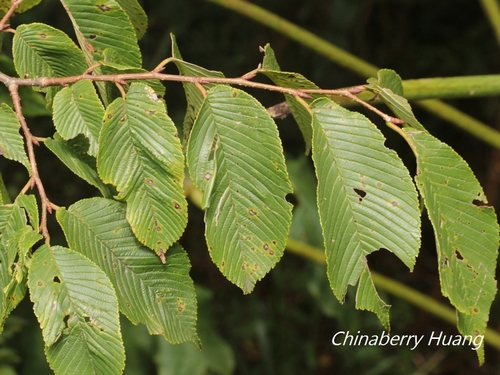
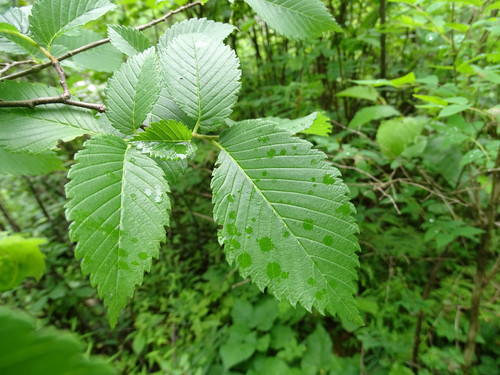
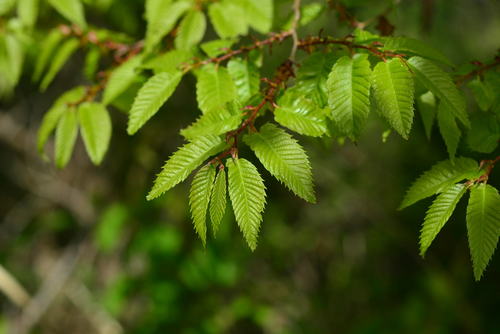
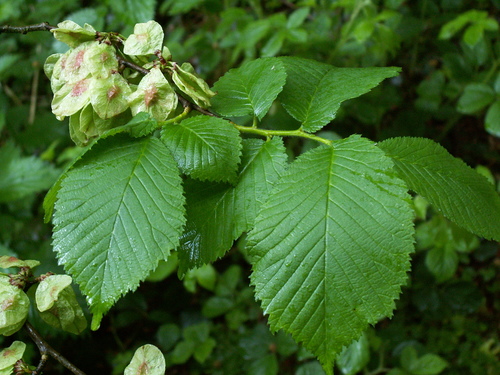
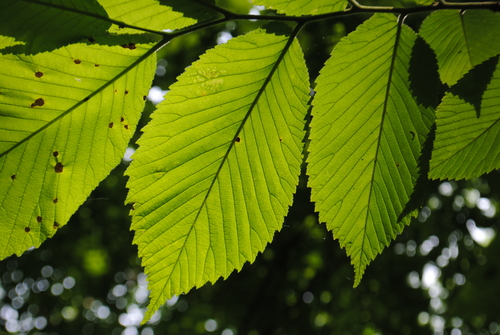
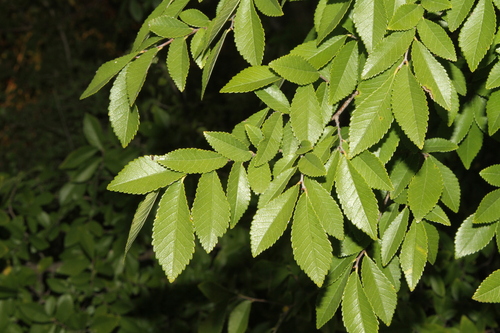
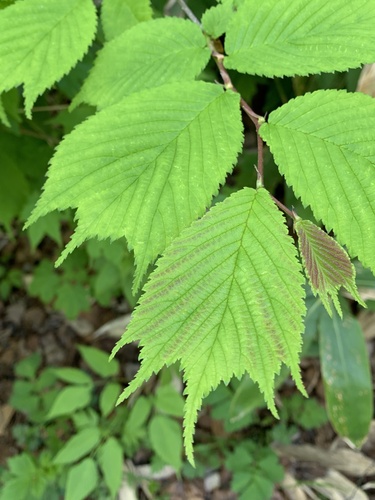
Ulmus laciniata, commonly called the cut-leaf elm, is primarily distinguished by its leaves, which are often regularly incised to form between three and seven apical lobes, the feature that gives the species its common name. These lobed, cusped leaves are normally found on adult trees, which can also grow leaves without the lobed incision. The tree can reach a height of 27 meters, and its trunk rarely exceeds 0.5 m in diameter at breast height (d.b.h.). Young trees have dark grey-brown bark that exfoliates in flakes, while mature trees have bark that becomes shallowly fissured. Its unwinged branchlets bear usually obtriangular laciniate leaves that are less than 18 cm in length. The perfect, wind-pollinated, apetalous flowers grow on second-year shoots in April (or March in England), and are followed in May by elliptic samarae that measure less than 20 × 14 mm, with a light notch at the apex. Growth of the species is moderate: one specimen planted on permanently damp, fertile soil in south Hampshire, UK, gained an average of 1.7 cm in diameter at breast height per year, a modest rate. The Ainu people traditionally use the bark of Ulmus laciniata to make Ainu bark cloth. The species was introduced to Western regions in 1905, and remains uncommon in cultivation. A specimen sourced from the Leon Chenault nursery in Orléans grew at the Ryston Hall arboretum, Norfolk, in the early 20th century. In the 1950s, the species was fully evaluated in the Netherlands as a potential source of anti-fungal genes for the Dutch elm hybridization breeding program, but was found to only tolerate the most sheltered and humid conditions. Trees planted in England at the Sir Harold Hillier Gardens (the only accession there died in 2007) and as part of Butterfly Conservation's elm trials at Great Fontley confirmed this Dutch assessment. Trees grown from seed begin flowering in their eighth year. The Dutch elm breeding program found the species has a relatively high level of self-fertility, with 39% seed viability. Ulmus laciniata is very difficult to propagate from hardwood cuttings, even when grown under mist; cuttings often root but fail to produce leaves. Despite this, the Hillier & Sons nursery in Winchester, Hampshire, UK propagated and marketed the tree from 1948, but sales were very low, with only three units sold between 1962 and 1977. There are no known registered cultivars of Ulmus laciniata, and the species is not known to be currently available in commercial plant trade.