About Ulmus glabra Huds.
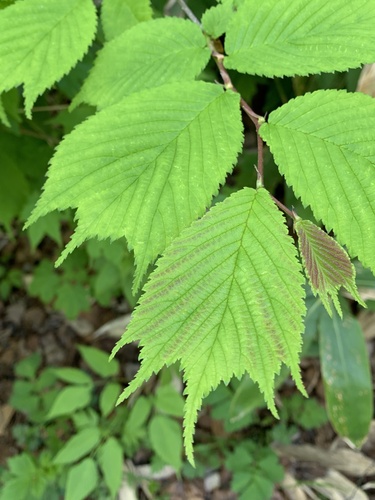
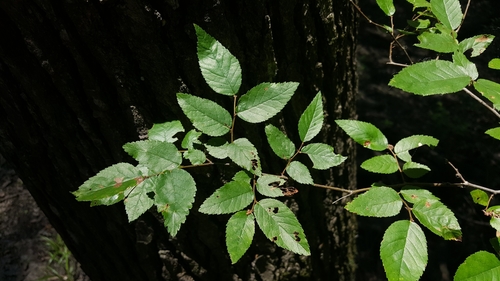
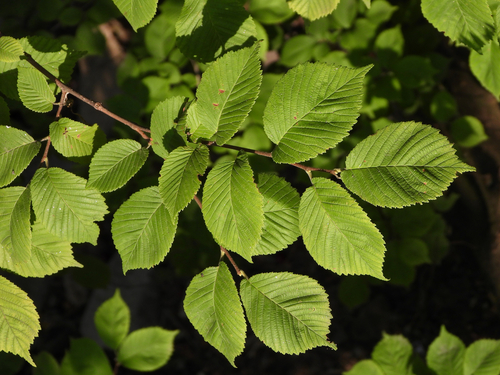
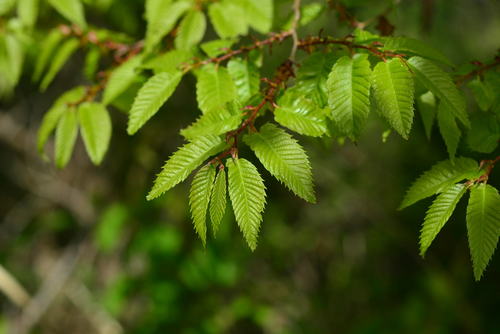
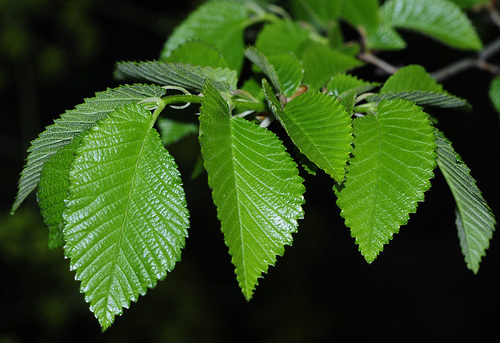
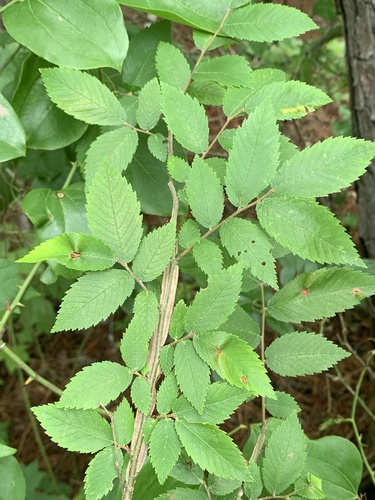
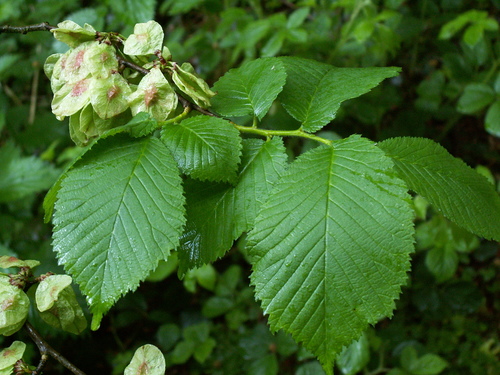
This species, scientifically named Ulmus glabra Huds., sometimes reaches heights of 40 m (130 ft). Open-grown specimens typically develop a broad crown, supported by a short trunk up to 2 m (6.6 ft) in diameter at breast height (DBH). Root suckers are not normally produced, and natural reproduction occurs only by seed. The tree is known for its very tough, flexible young shoots, which always lack the corky ridges or 'wings' that are characteristic of many other elm species. Its alternate deciduous leaves measure 6–17 cm long by 3–12 cm broad, and are usually obovate with an asymmetric base; the lobe at the base often completely covers the short petiole, which measures less than 5 mm. The upper surface of the leaf is rough. Leaves growing on juvenile or shade-grown shoots sometimes have three or more lobes near the apex. Perfect hermaphrodite flowers bloom before leaves emerge in early spring, produced in clusters of 10–20. The flowers are 4 mm across, borne on 10 mm long stems; they are wind-pollinated and lack petals. The fruit is a winged samara 20 mm long and 15 mm broad, with a single round 6 mm seed located at its centre, and matures in late spring. The roots of this species can grow to extraordinary lengths; one root from a tree at Auchencraig, Larg, Ayrshire, Scotland has been traced 110 metres from the trunk. Wych elm is moderately shade-tolerant, but requires deep, rich soils, the type typically found along river valleys. The species cannot tolerate acid soils, flooding, or prolonged drought. Although it is rarely grown as a street tree due to its growth shape, it can be surprisingly tolerant of urban air pollution, constricted growing conditions, and severe pollarding. Because wych elm does not produce root suckers, and most wild seedlings are eaten by uncontrolled deer populations, natural regeneration is very restricted, limited only to sprouts from the stumps of young trees. This has led to an extreme decline, and wych elm is now uncommon across most of its former range. It is best propagated from seed or by layering stooled stock plants, though softwood cuttings taken in early June will root fairly reliably when kept under mist. Wych elm was widely planted in Edinburgh in the 19th century as a park and avenue tree, and despite losses, it remains abundant there, regenerating naturally through seedlings. It was introduced to New England in the 18th century, introduced to Canada in the 19th century (listed as U. montana at the Dominion Arboretum, Ottawa), where a small number of old specimens still survive, and was also introduced to Australia. In 18th century France, the inner bark of Ulmus glabra, called orme pyramidale, held a brief reputation as a panacea. It was prepared and used as a powder, an extract, an elixir, and even added to baths. It was claimed to be good for ailments of the nerves, chest, and stomach, and was considered a true general cure-all. Michel-Philippe Bouvart famously quipped about this so-called "pyramidal elm bark": "Take it, Madame... and hurry up while it [still] cures." Ulmus glabra bark still appeared in a pharmacopeia published in 1893.