About Ulmus alata Michx.
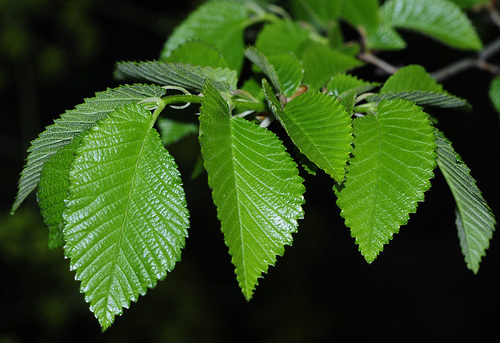
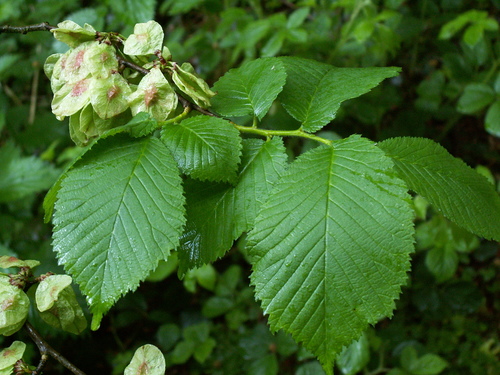
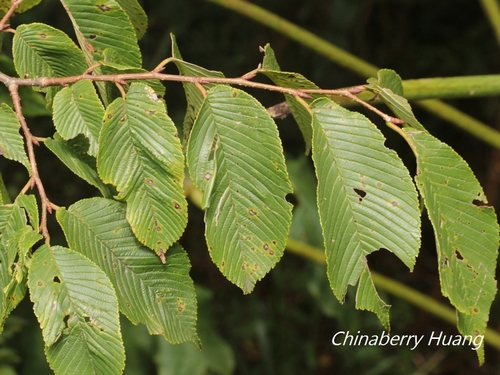
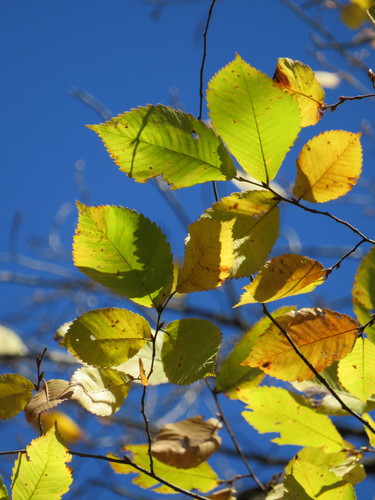
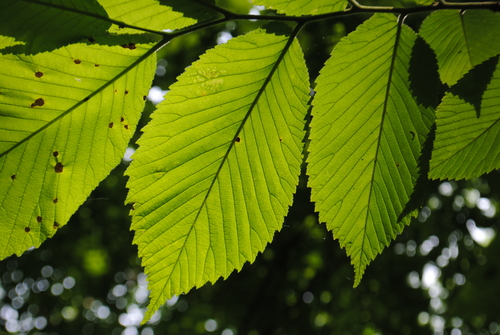
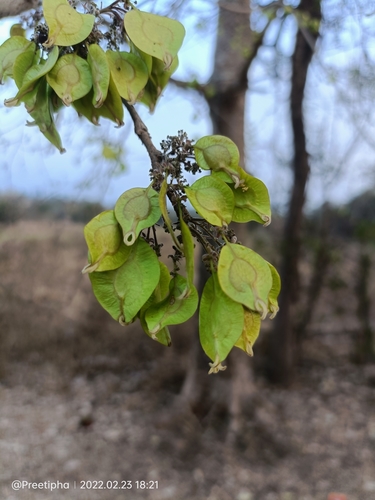
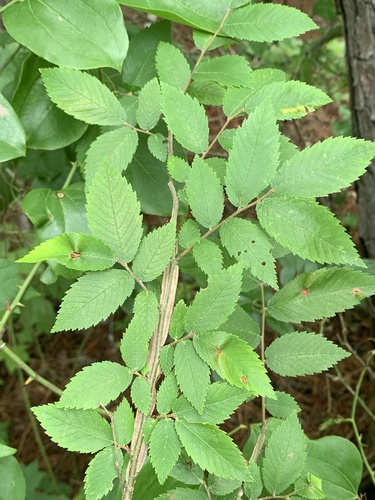
Scientific name: Ulmus alata Michx. As suggested by both its common and scientific names, winged elm is most easily identified by the very broad, thin pair of corky wings that develop along its branchlets after a couple of years. The tree typically grows to a maximum height and spread of around 13 m × 13 m (43 ft × 43 ft). On fertile alluvial soils like those of the Mississippi River Delta, however, some specimens have grown to twice that height. The tree’s crown can be either rounded or pyramidal, and its branches are pendulous. The leaves are comparatively small for the Ulmus genus, less than 6.5 cm (2+1⁄2 in) long and less than 2.0 cm (3⁄4 in) broad. They are oblong-lanceolate to narrowly elliptic, thin in texture, and smooth on the upper surface, with serrate or doubly serrate margins. The leaves turn bright yellow in autumn. The wind-pollinated, perfect, apetalous flowers grow on long pedicels during March and April, appearing before the leaves. The reddish samaras are also relatively small, less than 8 mm (5⁄16 in) long, and narrowly elliptic with two long incurving stigmas at the tip; they usually complete dispersal before the end of April. Ulmus alata is rarely cultivated outside of its natural range. It remains in commercial production in the United States, and is occasionally available in Europe. At the start of the 19th century, the tree was one of three American elm species cultivated in ornamental plantations in Britain, but it is now rare there. Several specimens are grown in New Zealand. Ulmus alata has minimal commercial significance. Its hard timber is considered no more distinctive than that of other American elms, and its small common tree size limits its usefulness. However, due to its resistance to splitting, it is used to make high-quality hockey sticks.