About Udea prunalis (Denis & Schiffermüller), 1775
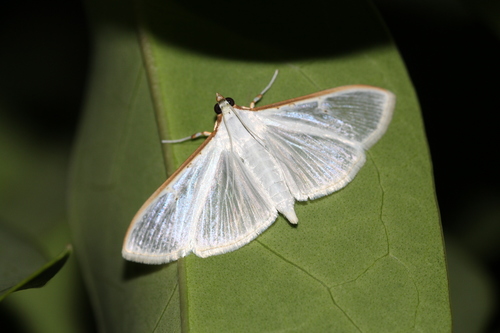
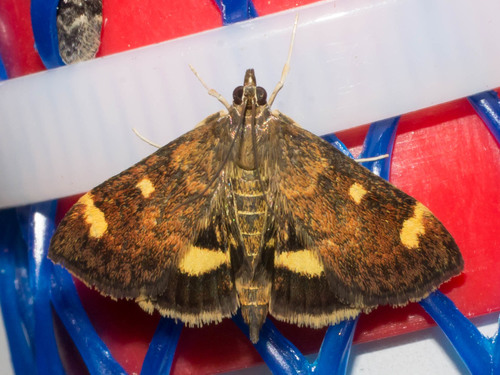
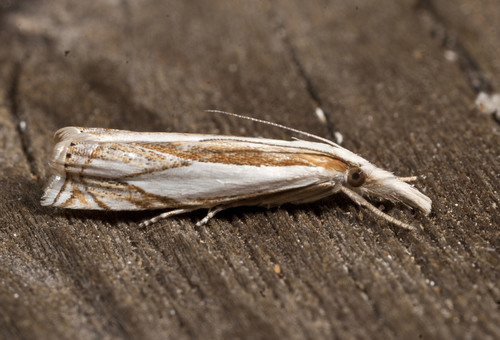
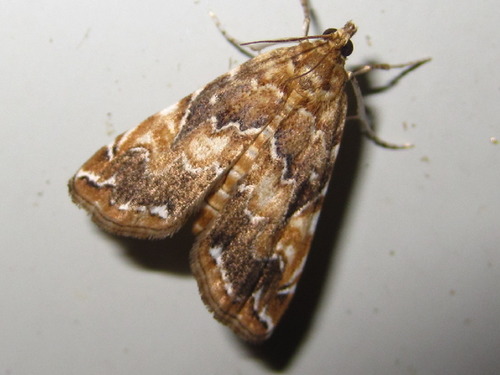
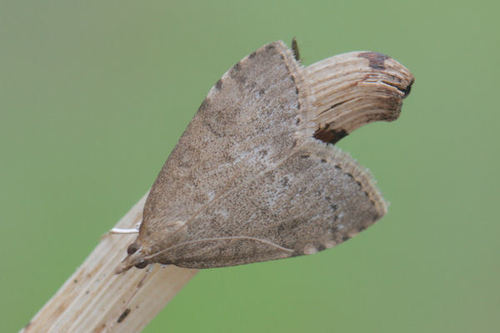
Udea prunalis is a species of moth in the Crambidae family. It was first described by Matthew Denis and Ignaz Schiffermüller in 1775. This moth is found in Europe, and in multiple regions of China: Gansu, Heilongjiang, Ningxia, Shanxi, Sichuan, and Xinjiang. In the 2011 Microlepidoptera Report from Butterfly Conservation, the species was classified as common in the United Kingdom. Udea prunalis has a wingspan measuring 23 to 26 mm. Its forewings are fuscous-grey with a brownish base. The first line marking on the forewings is indistinct. The second line is serrate, blackish, and curved, with a narrow deep inward sinuation below the middle, and it has a whitish posterior edge on the dorsum. The orbicular and 8-shaped discal spots are darker grey. The posterior section of the costa is spotted with darker color, and sometimes whitish markings. The hindwings are fuscous-grey, with a darker apex, two dark fuscous discal dots, and a faint second line marking. Fully grown larvae are bright deep green, with a shining white subdorsal line and a grey-whitish head. Adult moths fly from June to August, with flight timing varying by location. Larvae of this species feed on a wide range of host plants, including various herbaceous plants, shrubs, and deciduous trees.