About Tylecodon wallichii (Harv.) Toelken
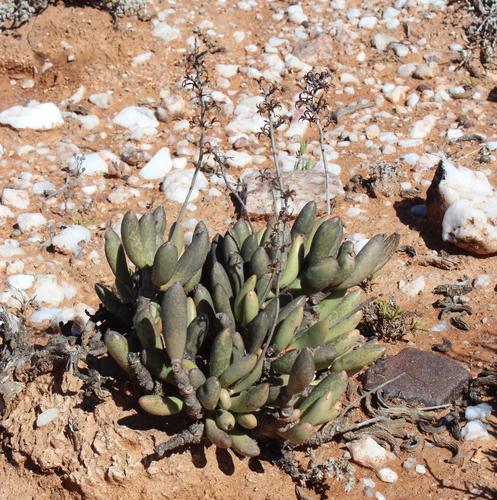
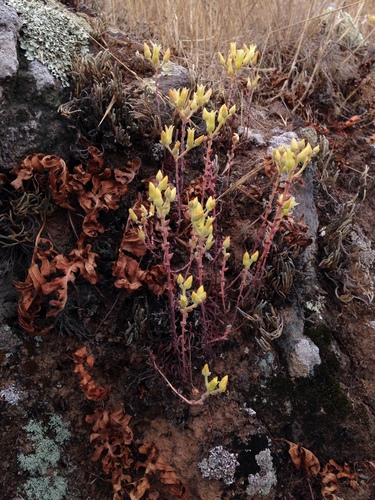
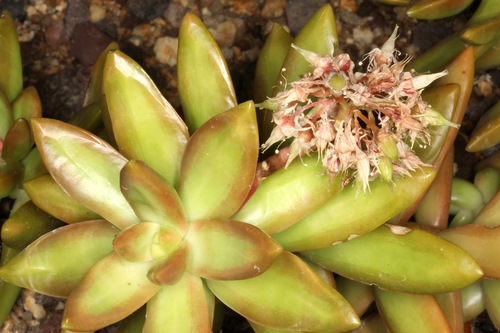
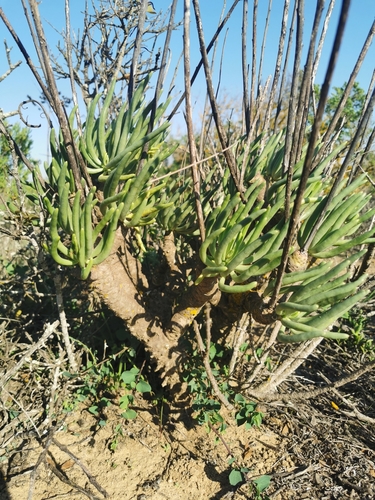
Tylecodon wallichii (Harv.) Toelken is a low, sparsely branched shrublet. It typically grows to around 50 cm in height, and can reach up to 1 m tall. It has a single thick succulent stem that can grow up to 6 cm in diameter. Its greyish branches are densely covered with residual leaf bases called phyllopodia, which reach up to 1.5 cm long, and have crowded leaves at their tips. The leaves are yellowish to ash-green, hairless, ascending, and slightly curved inward. They taper toward the apex, have a shallow groove along the upper side, and measure 6.5 to 9.5 cm long, reaching up to 15 cm. This species flowers in summer, producing spreading to pendent clusters of dangling, yellowish-green, urn-shaped flowers that are 7 to 12 mm long, with spreading to recurved lobes. It can hybridize with Tylecodon paniculatus. It grows on gravelly or sandy slopes in southern Namibia and the Republic of South Africa, ranging from Namaqualand into the Great and Little Karoo. This plant contains the bufadienolide-type cardiac glycoside cotyledoside, which causes nenta poisoning, also known as "krimpsiekte", in livestock.