About Turdus rufitorques Hartlaub, 1844
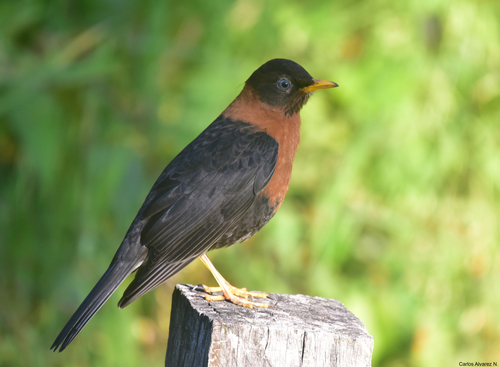
The rufous-collared thrush, scientifically named Turdus rufitorques Hartlaub, 1844, measures 23 to 25.5 cm (9.1 to 10 in) in total length. Three recorded individuals of the species weighed between 70 and 74 g (2.5 to 2.6 oz). This species shows clear sexual dimorphism. Adult males have a mostly black head, a whitish chin, and a throat streaked with both black and cinnamon-rufous. They have a wide cinnamon-rufous or chestnut-rufous collar covering the nape and sides of the neck, which extends forward to include the breast. Their flanks, belly, and undertail coverts are all black. Adult females share a similar overall pattern to adult males, but their plumage is lighter and duller in tone. Their crown is brownish with darker streaks; the rest of their head is mostly grayish brown. Their chin and throat are dull white to dull cinnamon, marked with dusky streaks. Their upperparts are grayish brown, with gray feather edges along the back and rump. Their collar and breast are colored buffy cinnamon or tawny. Their flanks, belly, and undertail coverts are buffy grayish, and the undertail coverts have white streaks. Juveniles have brown upperparts, with brownish buff underparts marked by black or dusky spots; more specifically, juvenile rufous-collared thrushes have a dark brown head and upperparts with cinnamon-buff spots, a whitish throat, and cinnamon-buff underparts with dark brown spots. Immature males are similar in appearance to adult females, but have a brighter collar and breast, and often have a cinnamon wash across the belly. Immature females resemble adult females, but have a less contrasting collar and dusky grayish underparts with little to no cinnamon coloring. Individuals of all ages have a dark brown iris. Adult males have bright yellow-orange bills, legs, and feet. Immature males have dull yellow-orange bills, legs, and feet. Both adult and immature females have light orange-brown bills, legs, and feet. Juveniles have a dark brown bill with a paler base on the lower mandible. This species has a disjunct geographic distribution. One separate population lives in central Chiapas, a southern state of Mexico. A second population ranges from southern Chiapas across most of southern Guatemala. A third population spans south-central Honduras, and the final known population is located in western El Salvador. The rufous-collared thrush lives in primary montane evergreen forest, pine-oak forest, and secondary forest within the subtropical and lower temperate zones. It can also be found in grassy clearings, villages, and urban areas. It occurs at elevations between 1,500 and 3,300 m (4,900 and 10,800 ft).