About Turdus nigriceps Cabanis, 1874
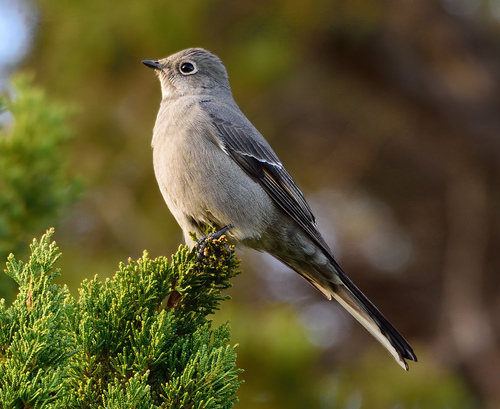
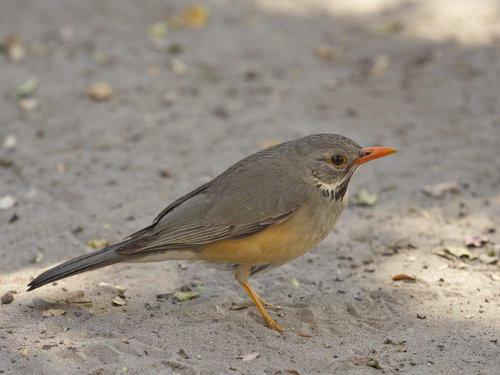
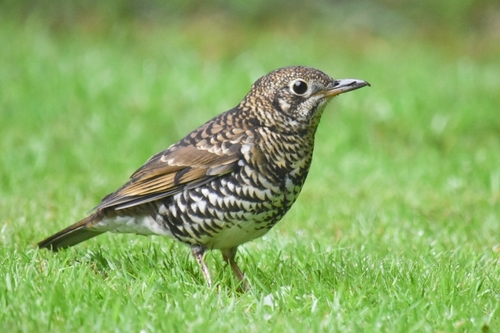
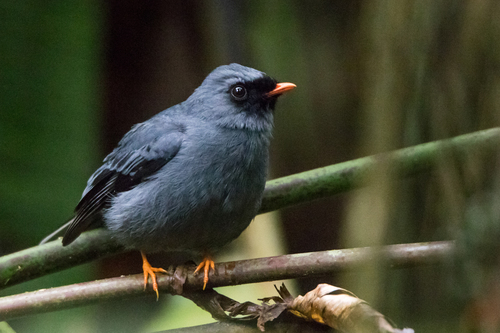
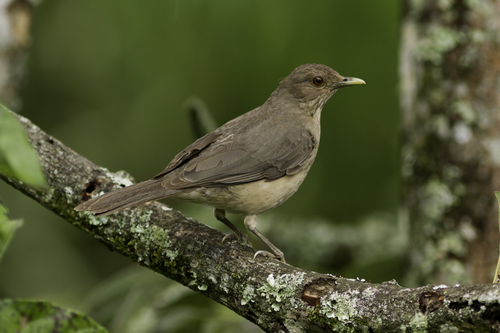
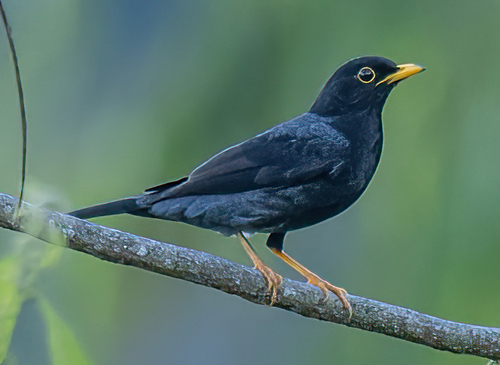
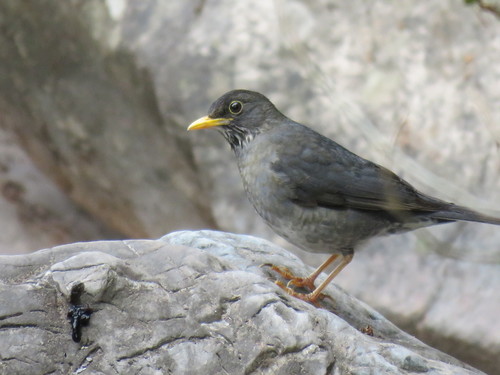
Scientific name: Turdus nigriceps Cabanis, 1874, common name Andean slaty thrush. This bird species measures 18 to 23.5 cm (7.1 to 9.3 in) in length and weighs 50 to 67.5 g (1.8 to 2.4 oz), and displays clear sexual dimorphism. Adult males have a mostly slate-gray head with a pale eye-ring and a white throat streaked with dark markings. Their upperparts, wings, and tail are all slate-gray, and their underparts are a slightly paler shade of slate-gray. Individuals living in the northern part of the species' range have darker underparts than those living in the south. Adult females have greenish brown heads and upperparts, with underparts that are a somewhat paler greenish brown. Both sexes have a dark iris, a yellow bill, and yellow legs and feet. Juveniles look similar to adult females, but have orange-buff spots and streaks on their upperparts, and buff to orangey underparts marked with a darker scaly pattern. The Andean slaty thrush is distributed along the Andes in western South America. It occurs on the western slope of the Andes from Loja Province in far southern Ecuador into the Piura and Cajamarca departments of northwestern Peru. It also occurs on the eastern slope of the Andes from extreme southeastern Ecuador, south through Peru and Bolivia, to Córdoba Province in central Argentina. This species inhabits a variety of subtropical landscapes, including humid montane forest, secondary woodlands, and Eucalyptus plantations that retain native undergrowth. It prefers areas with dense vegetation growing along streams. Its elevation range varies by region: it mostly occurs between 1,400 and 1,800 m (4,600 and 5,900 ft) in Ecuador; between 1,500 and 1,850 m (4,900 and 6,100 ft) on Peru's western slope; mostly between 700 and 1,800 m (2,300 and 5,900 ft) and occasionally as high as 2,650 m (8,700 ft) on Peru's eastern slope; from about 500 to 3,450 m (1,600 to 11,300 ft) in Bolivia; and between 300 and 3,000 m (1,000 and 9,800 ft) in Argentina.