About Turdus fumigatus Lichtenstein, 1823
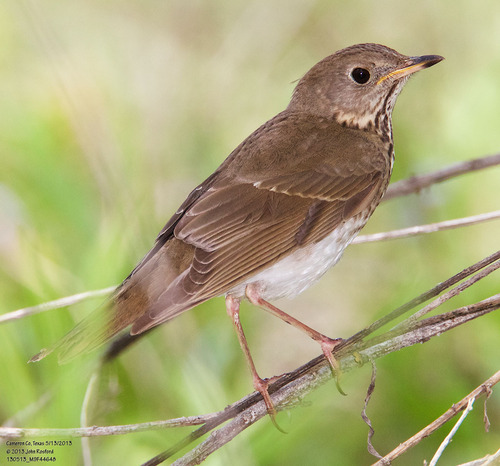
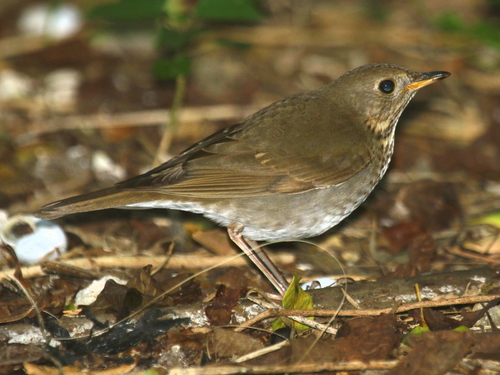
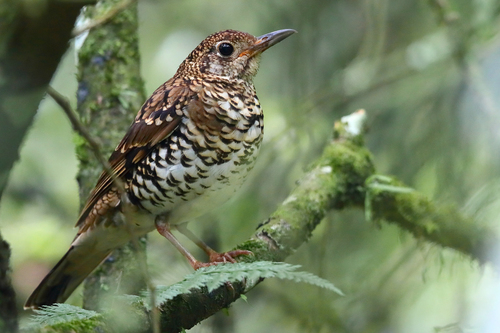
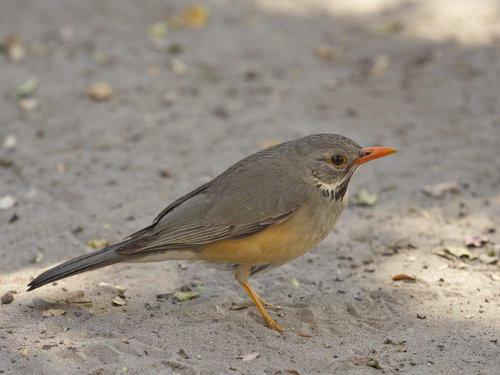
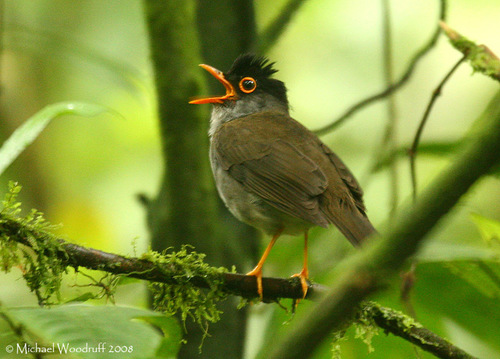
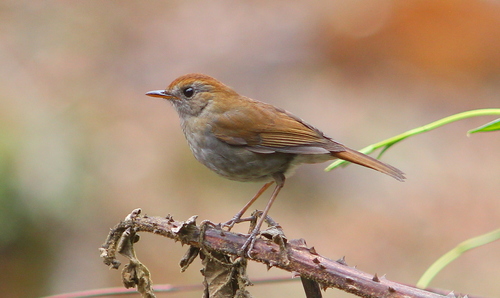
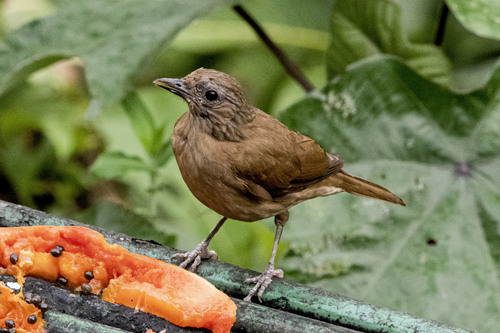
Scientific name: Turdus fumigatus Lichtenstein, 1823. The cocoa thrush measures 22–24 cm in length. It has dark rufous brown plumage on its upperparts, and paler rufous brown plumage on its underparts. There are five poorly defined subspecies, which differ primarily in how bright their plumage is. Male and female cocoa thrushes are similar in appearance. Young birds are duller than adults, and have scalloped underparts, a trait common in immature thrushes. The cocoa thrush's song is a musical warble, and it also makes a variety of chuck and chak calls typical of thrushes. In South America, besides the Amazon Basin, the Guianas, and the Guiana Shield, the cocoa thrush occupies two additional disjunct ranges. One medium-sized disconnected population lives in southeast coastal Brazil; this narrow coastal range is 300 km wide and stretches from Alagoas state in the north to southern Rio de Janeiro state, a total distance of approximately 2300 km. The other separate range is in northeast Colombia and southwest Venezuela. It covers parts of the headwaters of the Orinoco River, which drains into the Caribbean, as well as adjacent Amazonian headwaters that feed into the Rio Negro. The Rio Negro flows southeast into the northwest quadrant of the Amazon. This Colombian-Venezuelan range extends to the coast, and runs along the coast of northern Venezuela as an extension of the range from the Guianas, specifically western Guyana. The species' overall range covers the downstream eastern half of the Amazon Basin. In the northeast of the basin, it occurs in Pará and Amapá states alongside the Guianas. In the southeast of the basin, it is found in the Tapajos River and Xingu River drainages, and also occupies two thirds of the adjacent lower Araguaia–Tocantins River drainage system. The cocoa thrush's preferred habitat is dense forest. It builds its nest as a bulky, lined cup made of twigs, placed low in a tree or treefern. The female lays two to three greenish-blue eggs marked with reddish blotches, and incubates them for around 13 days until hatching. The young birds fledge 13–15 days after hatching.