About Turanana panagea (Herrich-Schäffer, 1851)
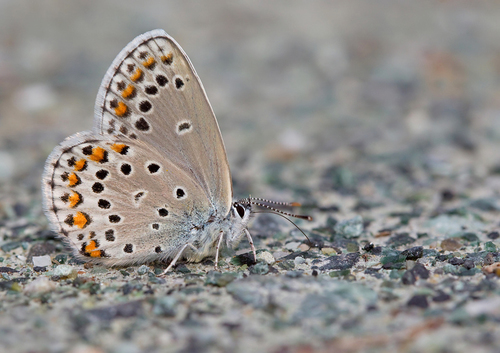
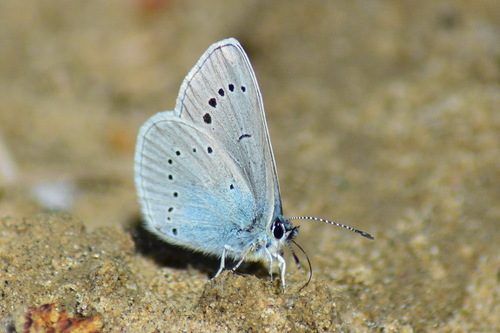
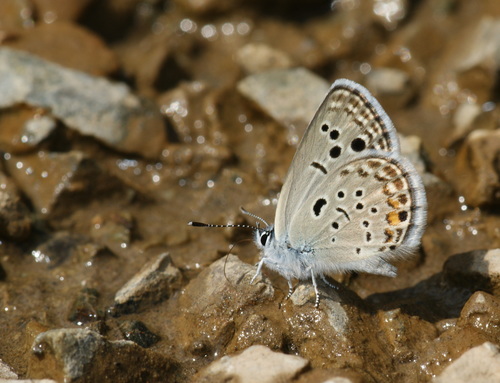
This species was originally described as *Lycaena panagaea* by Herrich-Schäffer, and is currently classified as Turanana panagea (Herrich-Schäffer, 1851), with synonyms including Lycaena endymion Frr. This description is drawn from Seitz's work, referencing the illustration marked 79 b. The upper wing surfaces resemble a smaller version of Kretania alcedo (Christoph, 1877). Males have blue scales with a very broad black wing margin, while females have black-brown upper wings. The species can be immediately distinguished by the pattern on the undersides of its wings: on the forewing, the fourth spot in the discal row of ocelli, which sits before the upper median vein, is shifted toward the outer margin and completely displaced from the original row. Turanana panagea occurs in Syria, Asia Minor (especially near Amasia), Armenia, Persia, and Turkestan. It is found in damp localities, flies from June to August, and is not rare in its range. Its larvae feed on species of the genus Acantholimon.