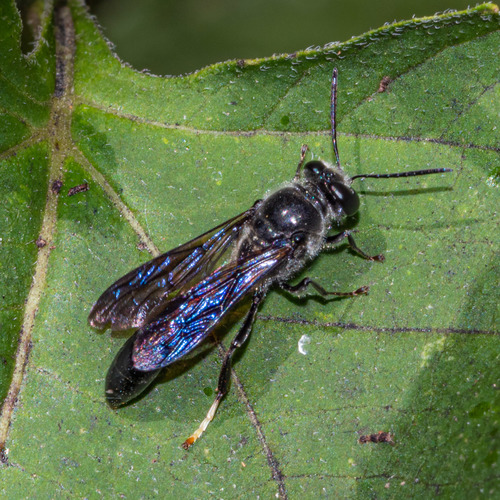
About Trypoxylon lactitarse de Saussure, 1867
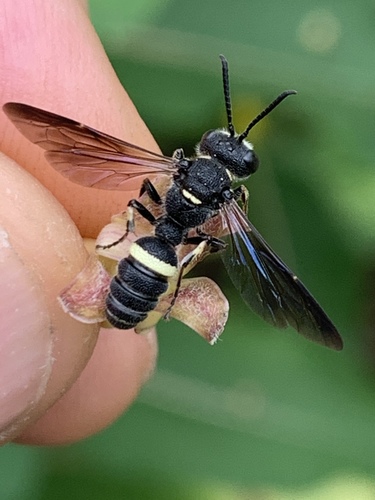
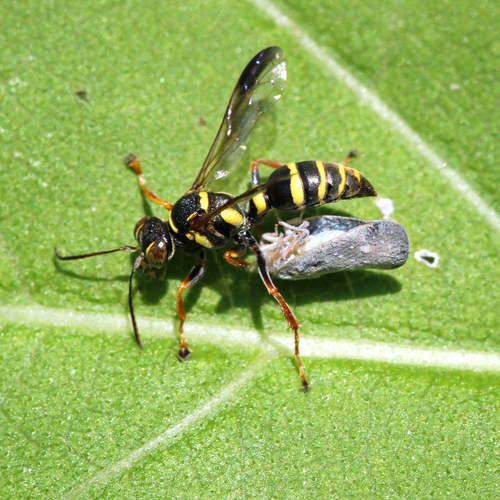
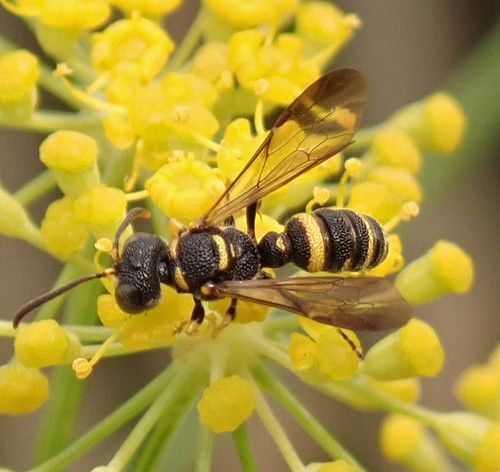
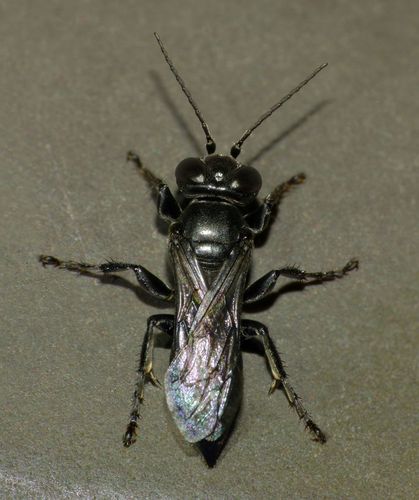
Trypoxylon lactitarse is a species of square-headed wasp belonging to the family Crabronidae. It can be found across North America, Central America, and South America, with a documented range extending from Canada to Argentina. This is a fairly common, harmless species of solitary wasp. Like other species in the same genus, adult males can be observed guarding nests. The species is well known for nesting in pre-existing cavities, a trait that has made it easier to conduct ecological studies on the species, because females are readily attracted to nest in human-made trap-nests. Females build a linear series of cells, which are separated from each other by mud partitions. In the southern part of the species' range, nesting activity has been recorded year-round, though it is more common during certain months. Wasps may start nest construction by adding a layer of mud at the bottom of the first provisioned cell, then go on to form a linear series of 6 to 8 cells. Nests are stocked with spiders that have been captured and paralyzed by the female wasp. The female lays one egg inside each elongated brood cell, placed on one of the immobilized spiders. Each larva consumes the provided spider as food while developing inside its own sealed brood cell. Similar to the related species Trypoxylon rogenhoferi, this species may go through three or four larval moults before finishing development as a pupa inside a black cocoon. Unlike some other cavity-nesting wasp species, no significant correlation was found between larval sex and the position of the brood cell within the nest.