About Tropidacris cristata (Linnaeus, 1758)
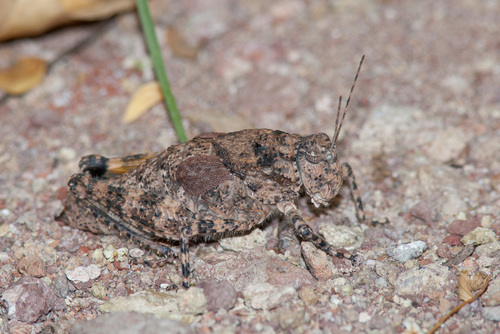
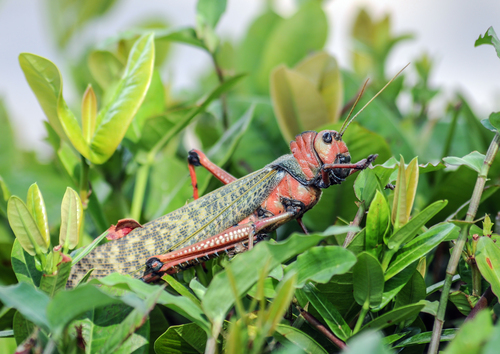
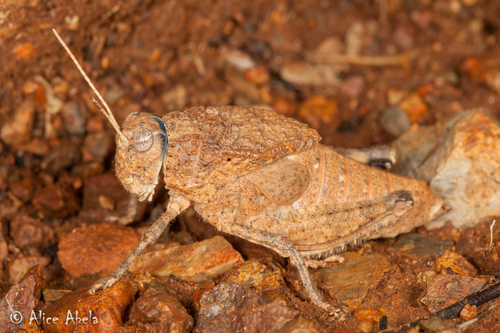
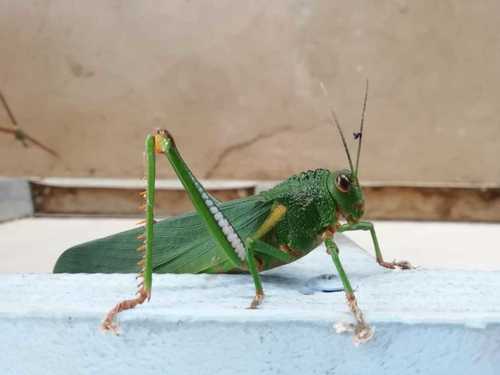
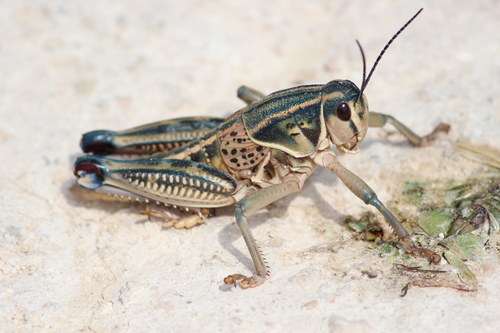
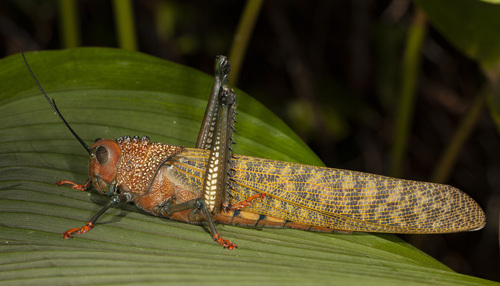
Tropidacris cristata, commonly known as the giant red-winged grasshopper, is a widespread lubber grasshopper species in the family Romaleidae native to tropical South America, Central America, and Mexico. It ranks among the largest grasshopper species in the world when measured by length and wingspan, reaching maximum sizes of up to 14.5 cm (5.7 in) in body length and 24 cm (9.4 in) in wingspan. Typical adult body sizes differ by sex: males usually measure 5.5–7 cm (2.2–2.8 in) long, with an average length of 6.5 cm (2.6 in), while females are larger, with a typical length of 7–12 cm (2.8–4.7 in) and an average length of 11 cm (4.3 in). As its common name suggests, adult giant red-winged grasshoppers have distinctly bright red wings that are visible when they fly, though the exact shade of red can vary between individuals. Nymphs of this species are flightless, gregarious, and have bold aposematic dark-and-yellow stripes, and they are thought to be toxic. This species can live in a wide variety of habitats, ranging from lowlands to highlands. In the southern portion of its range, it is mostly restricted to humid and semi-humid forested habitats, and it avoids open, dry areas. In the northern portion of its range, however, it can also live in somewhat drier habitats. Overall, this species is quite common. Where its range overlaps with the blue-winged Tropidacris collaris in South America, T. collaris is often more abundant; T. cristata is the only species of this genus found in parts of northwestern South America and across all of Central America. Tropidacris cristata feeds on many different types of plants, and it is occasionally considered an agricultural pest. It has an annual lifecycle with overlapping generations, though in some regions the occurrence of adults and nymphs follows a degree of seasonal patterns. Females lay egg sacs containing up to 100 eggs into soil.