About Tropidacris collaris (Stoll, 1813)
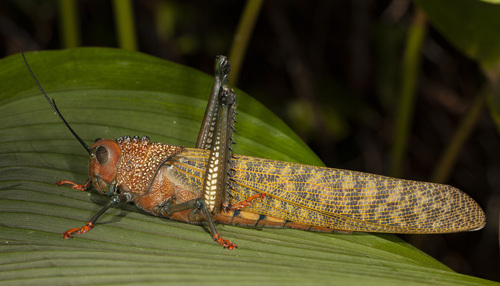
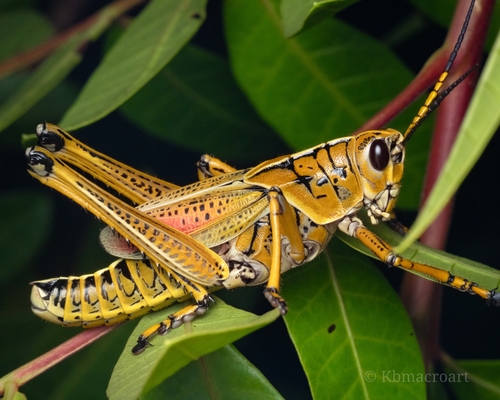
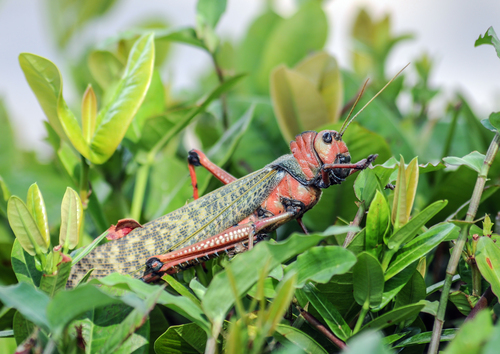
Tropidacris collaris, commonly called the blue-winged grasshopper or violet-winged grasshopper, is a large South American grasshopper species belonging to the family Romaleidae. As its common names suggest, its wings are usually distinctly bright blue when the insect is in flight, though they may occasionally appear grayish or greenish instead. Fully grown adult males typically measure 5–7 cm (2.0–2.8 in) in body length, while adult females are larger, usually reaching 8.5–10.5 cm (3.3–4.1 in) in body length. The average wingspan of this species is around 18 cm (7 in). The nymphs of this species are gregarious, cannot fly, and have aposematic warning coloration made up of black, red, and yellow. They are thought to be toxic: one researcher who tasted a nymph reported it was extremely bitter, comparable in taste to a monarch butterfly. Tropidacris collaris is common across a broad variety of habitats, ranging from rainforests to dry open areas such as the Caatinga and Cerrado biomes. It has a wide distribution across South America east of the Andes Mountains, occurring from Colombia and the Guianas south to central Argentina, and it generally avoids high elevation regions. It feeds on a wide variety of plants, including multiple agricultural crop species, plantation-grown timber trees, and ornamental plants, and it is classified as a pest in some parts of its range. It is also popular with insect collectors and terrarium hobbyists. One individual of this species became well-known for landing on the arm of footballer James Rodríguez shortly after he scored a goal during Colombia's 1–2 quarter-final loss to Brazil at the 2014 FIFA World Cup.