About Trite auricoma (Urquhart, 1886)
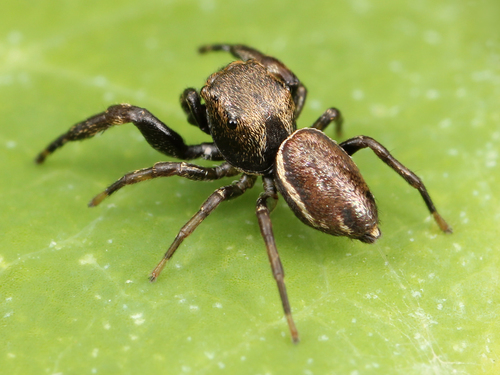
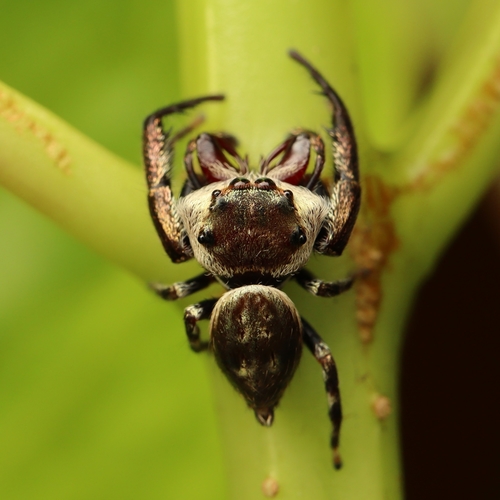
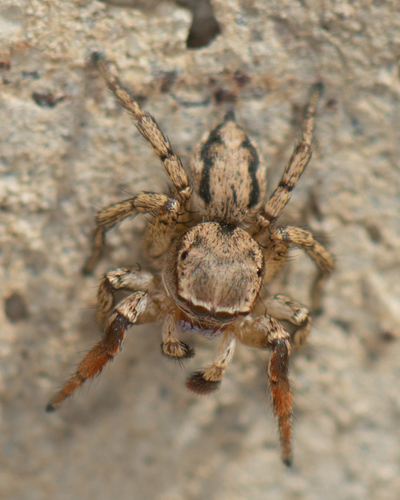
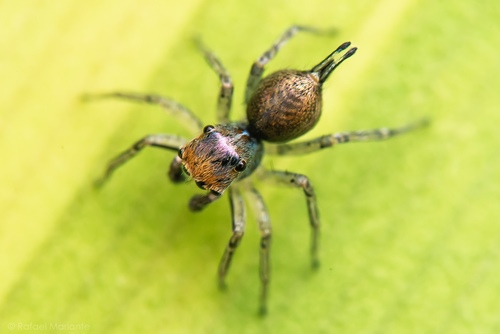
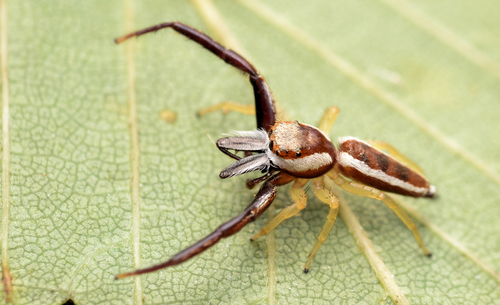
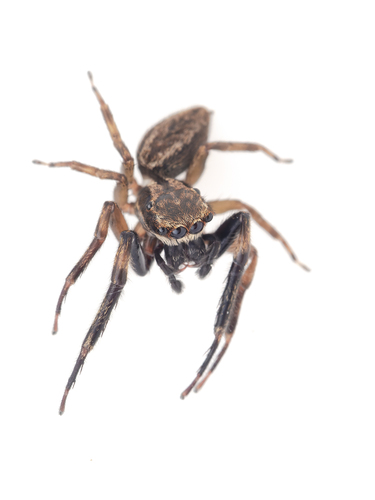
Adult Trite auricoma measure 8.4–8.8 mm (0.33–0.35 in) in body length. The male has a broad, rectangular cephalothorax — the fused head and thorax of the spider — that is brown overall, with a black area around the eyes and a light brown area on the top. This body region is covered in whitish setae, which are hair-like structures. Mature males have a yellow clypeal band shaped like a mustache, a feature that females do not have. For the male’s first pair of legs, the patella and tarsi are light brown, while the other segments of this first leg are dark brown. The remaining legs are somewhat smaller: these legs are yellow-orange at the base of each segment and dark orange at the tip, and all legs are covered in setae. The upper surface of the abdomen is greyish brown. The male palpal bulb, a male reproductive structure, has a short embolus, and a long, narrow tibial apophysis that angles toward the hollow section of the cymbium. The female epigynum, a female reproductive structure, has relatively short copulatory canals that lead to dual-chambered, kidney-shaped spermathecae. There is a depression on the side of the epigastric furrow. The second instar of Trite auricoma is 1.75 mm (0.069 in) in length before it feeds. After feeding, its abdomen becomes pinkish and distended. Trite auricoma is widely distributed across all of New Zealand, including offshore islands such as the Poor Knights Islands and Three Kings Islands. This species is most often found in rolled flax (Phormium) leaves, or under fallen cabbage tree (Cordyline) leaves. It can also occur under stones, within general vegetation, and directly on the ground.