About Triplasis purpurea (Walter) Chapm.
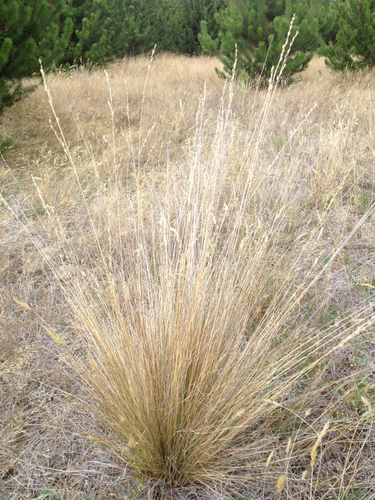
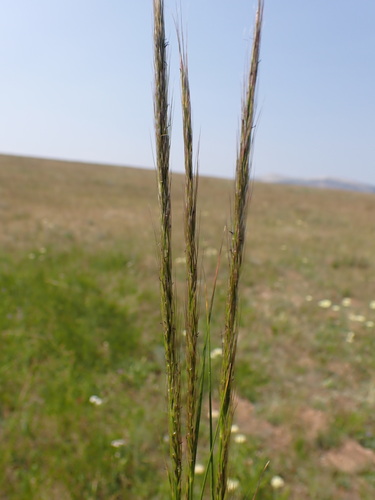
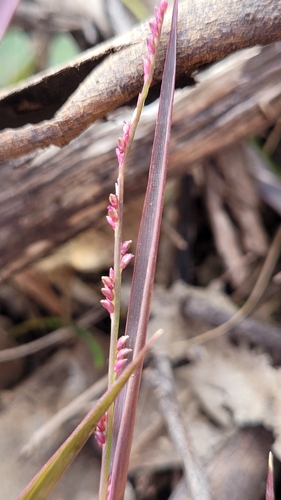
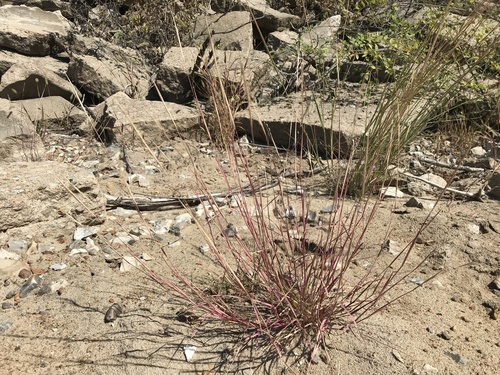
Triplasis purpurea (Walter) Chapm. grows up to 13 decimetres (51 inches) tall. This grass produces wiry, tufted culms that are either widely spreading or ascending, and its culm nodes are covered in fine short hairs. Both its leaf sheaths and small, rigid leaves have a rough, scabrous texture. The ligule is formed as a ring of short hairs. Its terminal panicles measure 3–7 cm (1.2–2.8 in) long, and bear rigid, divergent branches. Its rose-purple spikelets are 5–8 mm (0.20–0.31 in) long, each holding two to five flowers, and are attached by rather short pedicels. The flowering scales are oblong in shape and twice lobed at the apex, with hairless lower scales. The joints of the rachilla are half as long as the flowering scales. The awn of the lemma barely extends past its truncate lobes. This grass flowers from August to October. Triplasis purpurea is endemic to North America. It is distributed mostly along the eastern coast of the continent, and can also be found in the midwest. It prefers sandy dunes and beaches along the Atlantic coast, Gulf coast, and Great Lakes, but it can also grow in inland disturbed areas such as roadsides.