About Triphasia trifolia (Burm.fil.) P.Wilson
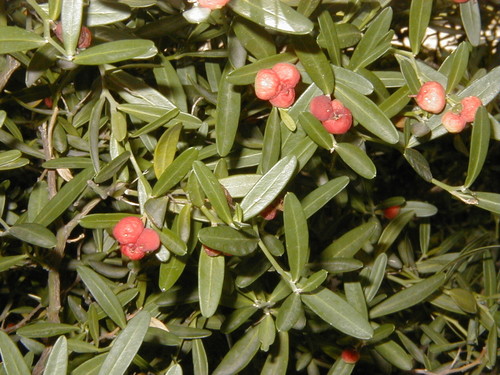
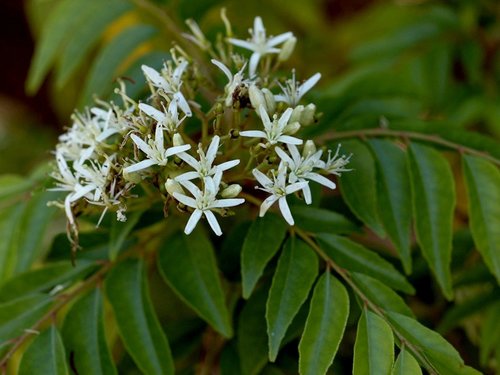
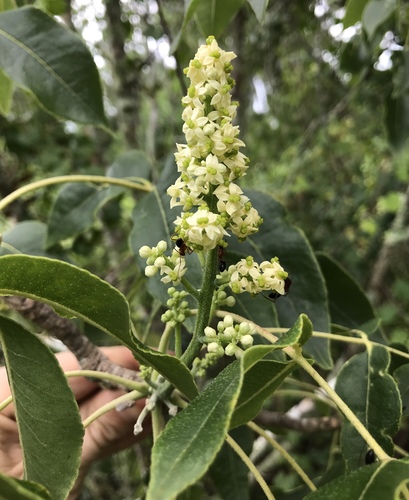
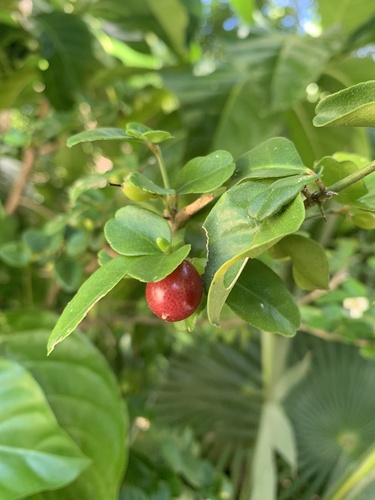
Triphasia trifolia is a spiny evergreen shrub, rarely growing as a small tree, that reaches up to 3 meters in height. Its leaves are trifoliate, with a glossy dark green color; each individual leaflet measures 2 to 4 centimeters long and 1.5 to 2 centimeters broad. The species produces white flowers that have three petals, each 10 to 13 millimeters long and 4 millimeters broad. Its fruit is a red edible hesperidium with a diameter of 10 to 15 millimeters, similar in appearance to a small Citrus fruit. The fruit has pulpy flesh, with a flavor reminiscent of a slightly sweet lime. It is cultivated for its edible fruit, and has been widely introduced to subtropical to tropical regions across the globe, where it has become naturalized on a number of islands in the tropical Pacific Ocean. It has been identified as a potential invasive species in several Indian Ocean archipelagos, along the United States Gulf Coast from Florida to Texas, and in the Caribbean. It is also considered a weed in other introduced locations where it has been brought. This species, commonly called limeberry, has gained some popularity as a bonsai plant. It is more adapted to tropical conditions than true citrus, so it must be kept in greenhouses even in many locations where true citrus grow successfully. In full tropical locations, limeberry shows some promise as a potential commercial fruit crop. The leaves of the limeberry plant are known to contain antimicrobial properties within a chemical component also found in the species' flowers. There have been recorded uses of consumed limeberry to treat lung cancer and pneumonia in North Pacific Islands. However, additional studies are required to make any definitive claim about the species' medicinal uses.