About Trigona spinipes (Fabricius, 1793)
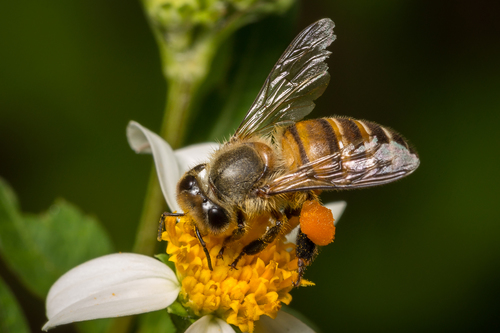
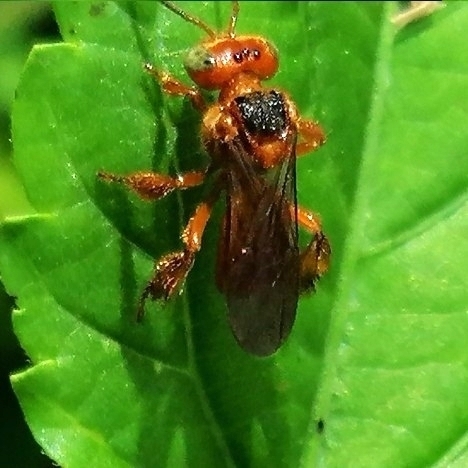
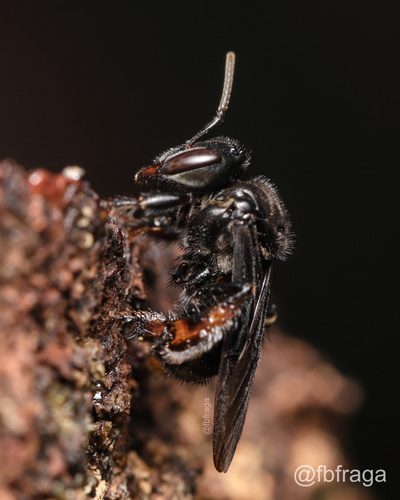
Trigona spinipes constructs large external nests on trees. In comparison to other Trigona species like T. hyalinata, T. spinipes nests are built quite high above the ground, usually positioned on tree branch forks 4 to 7 meters from ground level. Mature nests can reach 50–60 cm in both length and width. Nest material is made up of mud, wax, plant fragments, and resins. Inside the nest, honeycombs hold the developing brood — eggs, larvae, and pupae — alongside stored honey and pollen. Early studies of T. spinipes nests identified a dense internal structure called the “scutellum”, which was often used to paralyze fish due to its high acetylcholine content. This dense structure is composed of nest waste, including adult bee excrement, and researchers suggest its primary function is as internal support that honeycombs are built upon. For diet, Trigona spinipes collects pollen from a wide range of plant species, with particular preference for Eucalyptus spp., Aloe sp., and Archontophonix sp. Trigona spinipes is common across large areas of Brazil, Paraguay, Argentina, and other regions of South America. It occupies a variety of habitats, including the cerrado neotropical savannah and tropical forests. Most studies on Trigona spinipes have been carried out in Eastern and Southeastern Brazilian states: São Paulo, Alagoas, and Minas Gerais. Trigona spinipes is an effective pollinator of Nymphaea pulchella. In some cases, pollen-coated bees of this species fall into the plant's stigmatic fluid and die.